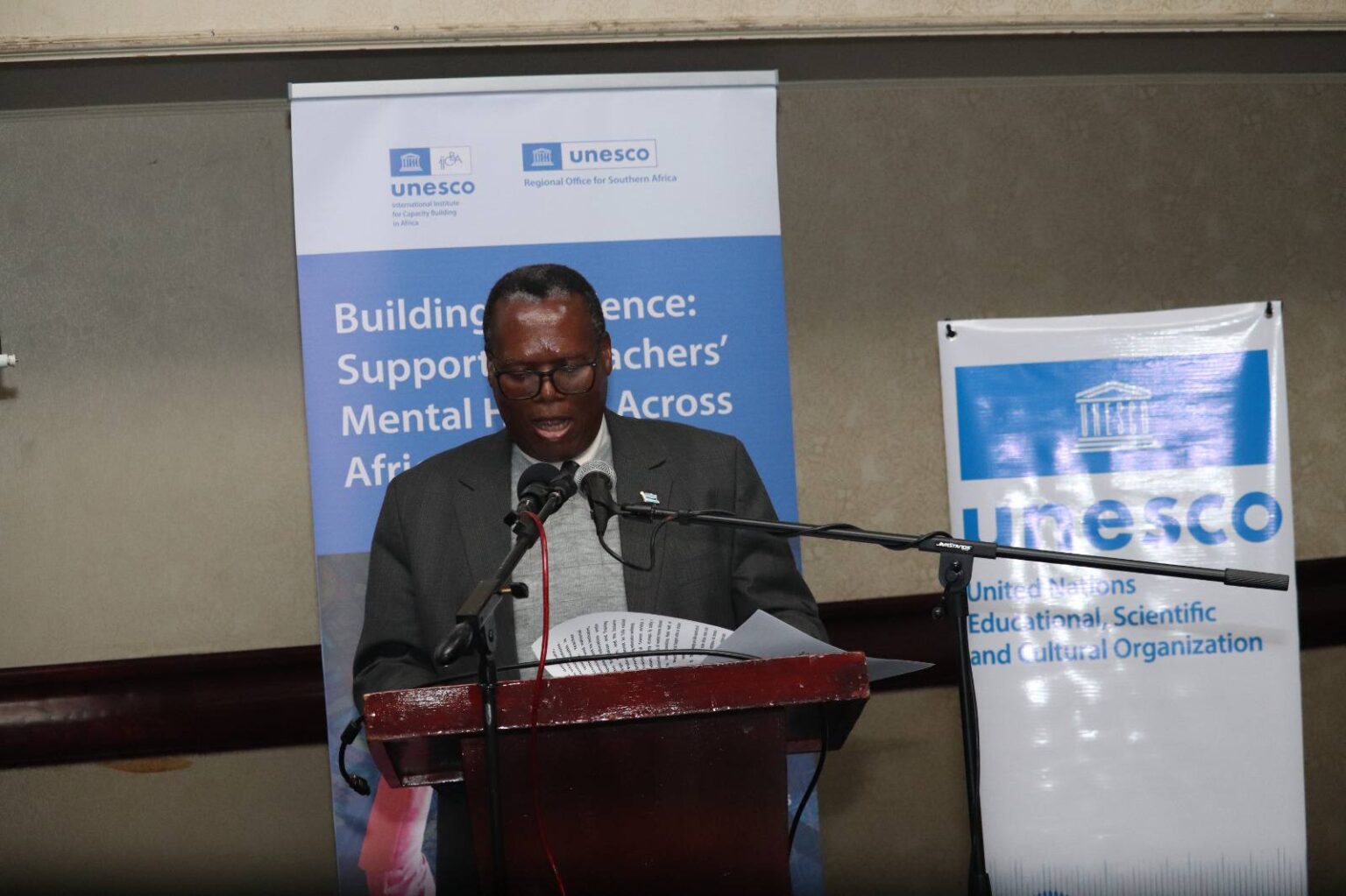
Botswana is placing stronger focus on teacher wellbeing as a foundation for improving the quality of education across the country. The Deputy Permanent Secretary for Child Welfare in the Ministry of Child Welfare and Basic Education, Dr Morena Rankopo, has highlighted that the mental health of educators must be treated as a national priority. His message came during a week long National Training of Master Trainers on Mental Health and Psychosocial Support for Educators held in Botswana. The workshop brought together education professionals to strengthen awareness, skills, and systems that support teachers in their daily work. Dr Rankopo stressed that a strong education system depends on teachers who are emotionally and mentally supported. He noted that the pressures facing educators continue to grow, making structured mental health support essential. The initiative reflects a broader national commitment to improving both teaching conditions and learner outcomes.
During the training, Dr Rankopo explained that teachers play a central role in shaping learners’ academic performance, behaviour, and overall development. He emphasized that when teachers are mentally healthy, they are more capable of creating stable and positive learning environments. He stated that a teacher who is supported psychologically is better positioned to inspire, mentor, and protect learners in the classroom. This message underlined the direct connection between educator wellbeing and student success. The workshop focused on practical tools that educators can use to manage stress, build resilience, and identify early signs of mental health challenges. Participants were also trained to support colleagues and create stronger support networks within schools. The aim was to ensure that mental health awareness becomes part of everyday school culture rather than a once-off discussion.
The initiative also reflects growing recognition that teachers face increasing workloads, emotional demands, and classroom challenges that can affect performance if left unaddressed. Many educators are expected to manage large class sizes, administrative responsibilities, and diverse learner needs at the same time. Dr Rankopo highlighted that these pressures require structured support systems that go beyond traditional training. The introduction of psychosocial support training is intended to equip master trainers who can then cascade knowledge to schools across the country. This approach ensures that mental health support reaches educators at all levels of the education system. It also strengthens long term capacity within the sector by building internal expertise. The Ministry’s focus on training indicates a shift toward proactive rather than reactive support for teachers.
The broader goal of the programme is to create a healthier and more sustainable education environment in Botswana. By investing in teacher wellbeing, the Ministry aims to improve classroom engagement, reduce burnout, and strengthen learner outcomes. Dr Rankopo reiterated that supporting teachers is not an optional intervention but a necessary investment in the country’s future. He explained that education quality cannot improve without addressing the wellbeing of those delivering it daily. The training also encourages collaboration between educators, health professionals, and education administrators to ensure a coordinated support system. This integrated approach is expected to improve both prevention and response to mental health challenges within schools. It also aligns with national priorities focused on child welfare and educational development.
Botswana’s focus on teacher mental health marks an important step toward building a stronger and more resilient education system. The remarks by Dr Morena Rankopo highlight the critical link between educator wellbeing and learner success. By prioritising mental health and psychosocial support, the Ministry of Child Welfare and Basic Education is addressing one of the key challenges facing the education sector. The National Training of Master Trainers represents a practical effort to equip educators with the tools they need to cope with daily pressures. It also reinforces the message that teachers are central to national development and must be supported accordingly. As Botswana continues to invest in education reform, the wellbeing of teachers will remain a core pillar of progress. This approach is expected to create long term benefits for both educators and learners across the country.