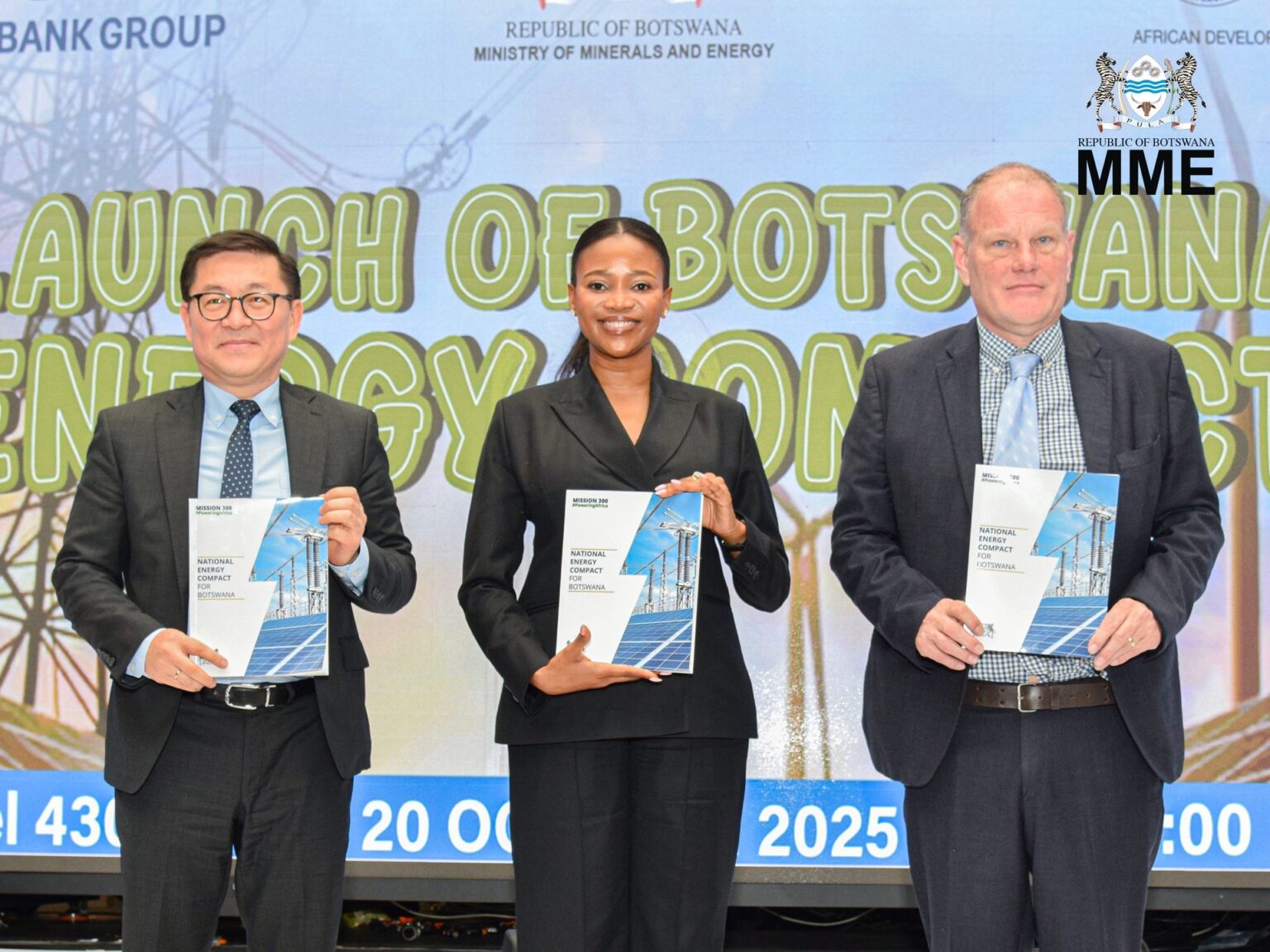
The Minister of Minerals and Energy, Honourable Bogolo Joy Kenewendo, has reaffirmed Botswana’s commitment to a sustainable and inclusive energy future with the official launch of the National Energy Compact in Gaborone today. The launch represents a major milestone in the country’s clean energy transformation agenda and sets a clear roadmap for achieving universal access to clean and affordable energy by 2030.
Minister Kenewendo outlined that the Energy Compact will connect over 220 new households to electricity and enable 260,000 households to transition to clean cooking solutions. The initiative also aims to increase the share of renewable energy in Botswana’s energy mix from 8% to 50% by 2030, reflecting the government’s strong commitment to reducing reliance on fossil fuels and promoting environmental sustainability.
In a significant development for renewable energy tracking, Botswana has received authorisation to issue International Renewable Energy Certificates (I-RECs). Through the I-TRACK Foundation, the country is now recognised as an authorised issuing nation, with the Green Certificates Company serving as the national issuing body. This system provides a transparent, digital mechanism to track and verify every megawatt-hour of renewable electricity generated and consumed within Botswana, boosting accountability and investor confidence.
The Minister also highlighted progress under the Rooftop Solar Programme, designed to empower citizens and businesses through decentralised energy generation. Initially limited to a capacity of 10 MW, the programme’s cap was increased to 75 MW in September 2025, reflecting growing demand and confidence in renewable energy solutions. The expansion allows more households and businesses to generate their own clean energy while reducing pressure on the national grid.
The National Energy Compact demonstrates Botswana’s strategic approach to energy planning, combining policy innovation, technological advancement, and community engagement. With a clear focus on inclusivity, sustainability, and renewable energy adoption, the initiative positions Botswana to achieve its energy goals and contribute to global climate action commitments.
Through these measures, the government aims to create a reliable, affordable, and environmentally responsible energy system that benefits all Batswana while attracting investment and fostering economic growth.