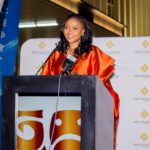
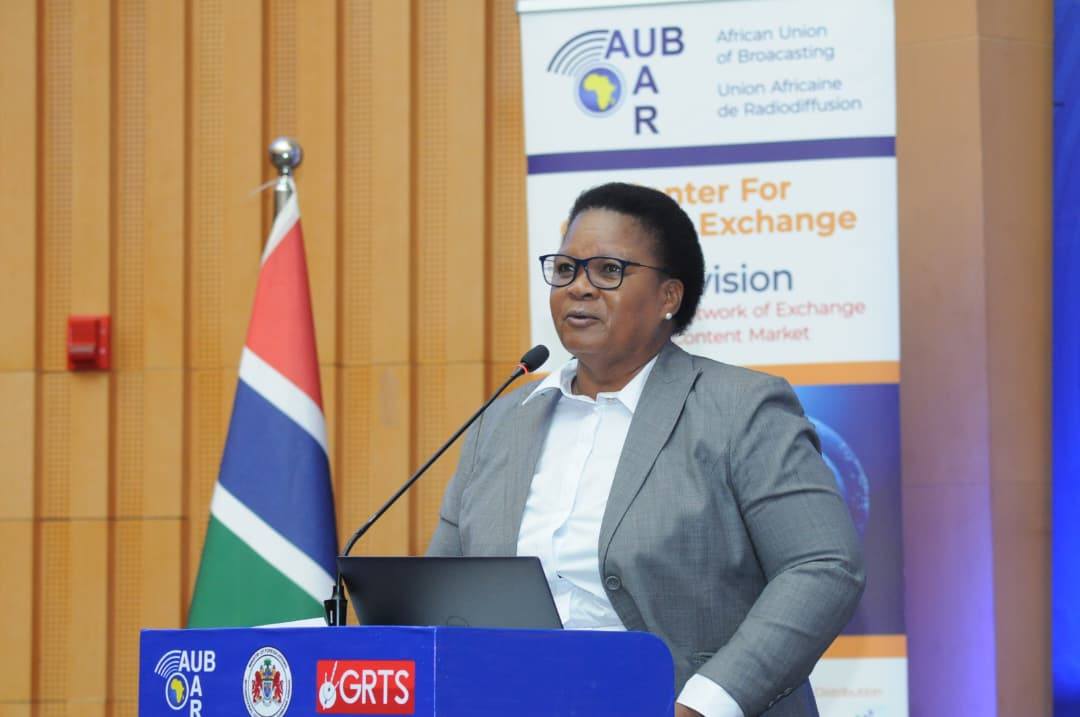
Speaking on 18 April 2026 at the 17th General Assembly of the African Union of Broadcasting, Debswana Diamond Company’s Corporate Communications Lead Montlenyane Baaitse delivered a strong message calling on African media leaders to take control of the continent’s economic narrative. African Union of Broadcasting brought together media leaders from 54 African countries in Banjul, where discussions focused on media responsibility, narrative control and economic sovereignty. Baaitse stressed that the way Africa is represented in global media directly influences economic negotiations and long term development outcomes. She warned that narrative control often comes before political and commercial negotiations, making media positioning a critical factor in shaping Africa’s future. Her address focused on the need for African broadcasters to actively defend and reshape how the continent’s resources are portrayed globally. The message was framed around urgency, sovereignty and economic self-determination.
Baaitse cautioned that Africa’s mineral wealth is increasingly shaped by competing global narratives rather than factual realities. She highlighted that while 99 percent of global natural diamonds are conflict free, a large portion of social media content continues to portray African minerals negatively. She attributed this imbalance to coordinated messaging strategies that promote synthetic alternatives and undermine confidence in natural resources. According to her, these narratives are not accidental but part of a broader global information competition affecting African economies. She urged media practitioners to recognise these patterns and respond with accurate and consistent reporting. Her remarks positioned African media as a key line of defence in protecting economic interests tied to natural resources.
In her address, Baaitse presented Botswana’s development journey as a practical example of what she described as resource impact. She referenced the long standing partnership between the Botswana government and De Beers, which has played a central role in national economic transformation. De Beers Group was highlighted as a key partner in shaping Botswana’s growth since independence. She noted that infrastructure development expanded significantly over time, including road networks that grew from 12 kilometres in 1966 to more than 20,000 kilometres today. She also explained that diamond revenues have been used to fund education systems and sustain major referral hospitals in Orapa and Jwaneng. These institutions now serve more than 200,000 people in mining impacted communities.
Baaitse further explained that Botswana became the first African country to provide free HIV treatment, funded through diamond revenues. This achievement was presented as evidence of how mineral wealth can directly support public health and social development. She emphasised that such outcomes demonstrate the tangible benefits of well managed natural resources. Her message reinforced the idea that resource wealth can translate into long term national progress when properly governed. She argued that these successes are often overlooked in global media narratives that focus instead on extraction challenges. The Botswana example was used to challenge simplified global perceptions of African mining economies.
During the same engagement in Banjul, Baaitse warned of a growing global shift toward critical minerals such as lithium, cobalt and copper. She described this as a new phase of competition that could mirror the narrative battles already seen in the diamond sector. She expressed concern that propaganda used against natural diamonds could soon be extended to other strategic minerals. She also pointed to global discussions that increasingly compare natural diamonds with laboratory grown alternatives as part of a broader market shift. According to her, similar messaging could eventually emerge around synthetic gold and other commodities. She urged African media to remain alert and proactive in defending factual reporting about natural resources.
To strengthen Africa’s position, Baaitse called for the creation of a Pan African Media Front that would coordinate storytelling and amplify consistent messaging across the continent. She encouraged collaboration among broadcasters to ensure that African perspectives are unified on global platforms. She also emphasised the importance of humanising data by telling real stories of how mineral revenues support education, healthcare and infrastructure. She argued that placing people at the centre of reporting would shift focus from extraction to development impact. This shift would also highlight value addition and manufacturing opportunities in African cities such as Gaborone and Lubumbashi. Her proposal focused on building a stronger, more coordinated African media voice.
Baaitse concluded with a strong warning that every media headline shapes perception and influences economic outcomes. She stressed that losing control of the narrative would weaken Africa’s leverage in global negotiations. She urged journalists and broadcasters to understand their role in protecting economic sovereignty through accurate and responsible reporting. The 17th General Assembly of the African Union of Broadcasting, hosted by Gambia Radio and Television Services in Banjul, also marked the 20th anniversary of the union. The gathering reinforced the importance of cooperation among African media institutions in shaping continental narratives. The discussions ended with a clear focus on strengthening Africa’s voice in global media spaces while safeguarding its economic interests.