
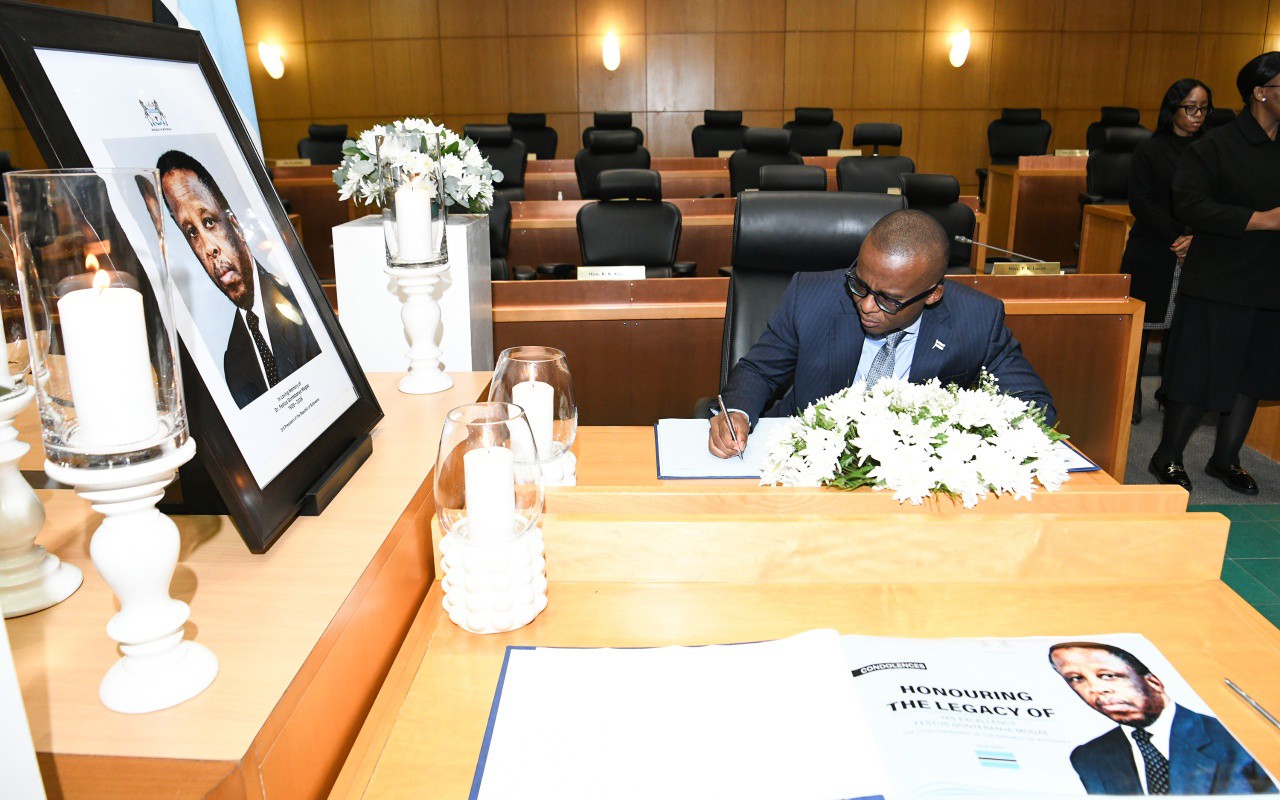
Acting President Ndaba Gaolathe was among the first senior leaders to sign the book of condolences for former President Festus Mogae at Parliament on Tuesday. The nation continues to mourn the passing of the respected statesman whose leadership shaped modern Botswana. His death on May 8 has triggered a national period of reflection across government, institutions and communities. The signing at Parliament marked a formal and emotional moment for leaders who served alongside him or under his administration. It also reinforced the importance of national unity during periods of loss.
Acting President Gaolathe was joined by Speaker of the National Assembly Dithapelo Keorapetse, Commissioner of Police Dinah Marathe and Chief Justice Gaolapelwe Ketlogetswe. They were accompanied by Cabinet ministers, Members of Parliament, senior government officials and members of the public who also came to sign the book. Each leader took time to reflect on the legacy of Dr Mogae and his contribution to Botswana’s democratic stability. The presence of top state officials highlighted the broad respect he commanded across government branches. The gathering showed a unified state response to the passing of a former Head of State.
Parliament has become the central point of national mourning, with mourners continuing to stream in to sign the book of condolences. Members of the public have joined leaders in expressing grief and appreciation for Dr Mogae’s service to the country. Many citizens have described him as a leader who guided Botswana through economic growth and strengthened its international reputation. The steady flow of visitors at Parliament reflects the deep national respect for his leadership and achievements. Security and administrative arrangements have been maintained to accommodate the continuous movement of mourners paying their last respects.
Dr Mogae is being remembered for his significant contribution to Botswana’s economic growth, democratic governance and international reputation for stability. His leadership period is widely associated with policy continuity and strengthening of national institutions. Many leaders who served during his administration continue to reflect on his focus on development and public service. His legacy remains visible in Botswana’s governance structures and economic progress. The national mourning process has provided an opportunity for reflection on his long-term impact on the country’s direction.
His body is scheduled to be laid to rest on May 16 at Phomolong Memorial Park, where final state funeral arrangements will take place. The days leading up to the burial continue to draw leaders, officials and citizens to Parliament to honour his memory. The ongoing tributes reflect a shared sense of loss across political, judicial and civil institutions. As Botswana prepares for the final farewell, the signing of the book of condolences stands as a key moment of national unity and respect. The country continues to honour a leader whose influence shaped its modern history and development path.