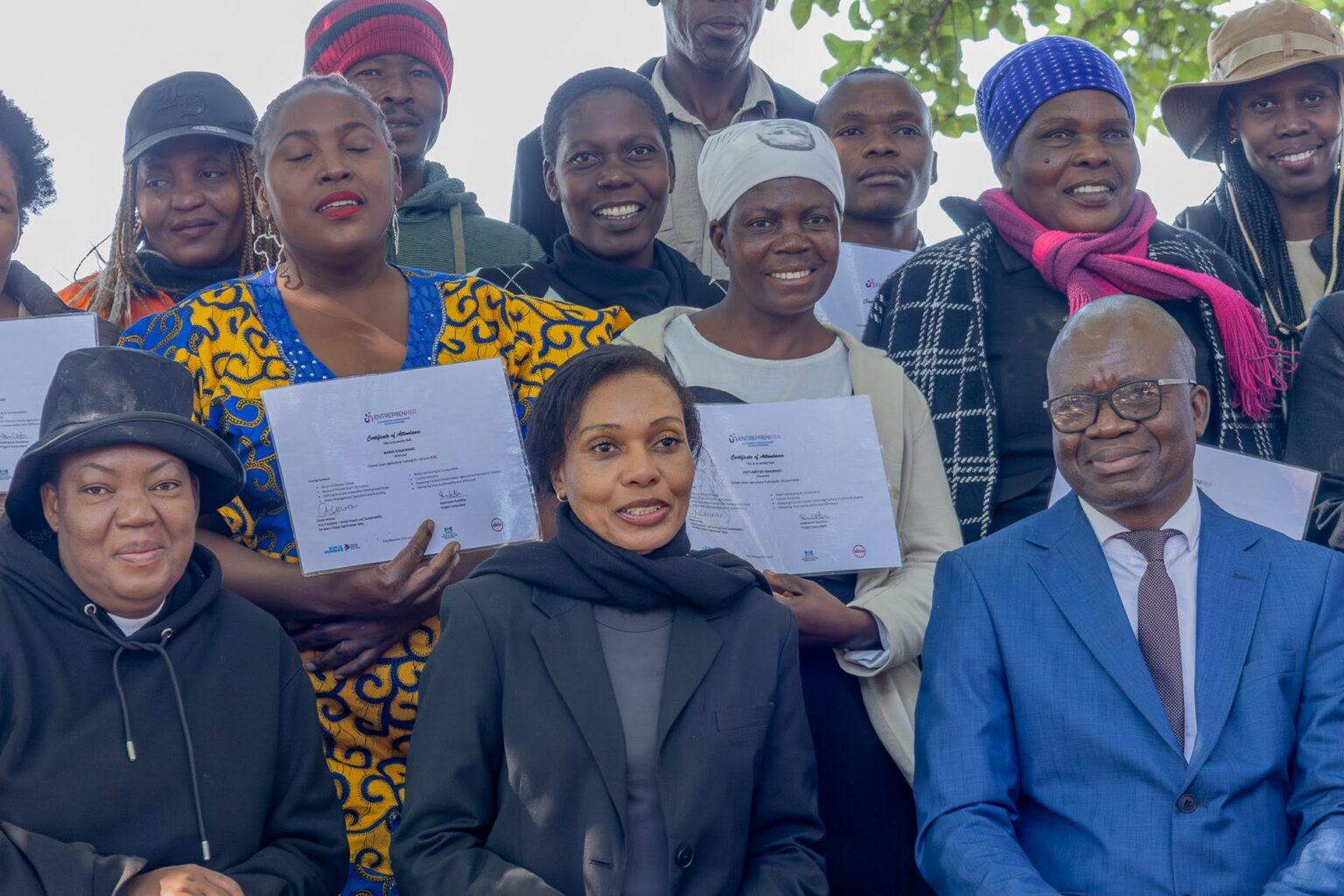
Thirty entrepreneurs celebrated a significant milestone on 5 June 2026 when they graduated from the EntreprenHER Climate Smart Agriculture Training at the Nkashi Knowledge Centre in Beetsha, Okavango District. The week-long programme was designed to strengthen sustainable agricultural practices while helping participants develop the business skills needed to grow resilient enterprises. The graduation ceremony marked the culmination of intensive learning and practical engagement focused on agriculture, entrepreneurship and environmental sustainability. Participants left the programme equipped with valuable knowledge that can help them navigate the challenges facing modern agriculture. The initiative also highlighted the importance of empowering women entrepreneurs to play a greater role in local economic development and food security.
In his welcome remarks, Deputy Council Secretary for the Okavango District, Mr. Michael Israel, emphasized the critical role agriculture continues to play throughout the district. He noted that while the Okavango District is widely recognized for its thriving tourism industry, many residents rely heavily on farming as a source of income and sustenance. The district stretches from Habu to Gudigwa and encompasses the constituencies of Ngami, Okavango West and Okavango East. Agriculture remains an essential livelihood activity across these communities, supporting households and contributing to local economic growth. His remarks underscored the importance of equipping farmers with the knowledge and tools required to adapt to changing agricultural conditions.
Israel encouraged the graduates to apply the skills and lessons they gained during the training. Drawing on the Setswana proverb “Thuto ke boswa,” meaning education is a valuable inheritance, he reminded participants that knowledge becomes meaningful when it is translated into action. He urged them to view their certificates not merely as documents of completion but as symbols of transformation and future success. According to Israel, the true value of the programme lies in how graduates use the knowledge to improve productivity, strengthen businesses and create sustainable livelihoods. His message reinforced the idea that education and continuous learning remain powerful drivers of personal and economic development.
The training reflection was delivered by Climate Smart Agriculture Consultant Ms. Godiraone Goaletsa, who highlighted the growing importance of sustainable farming practices in the face of climate-related challenges. She explained that many farming communities experience difficulties caused by flooding, which can destroy crops and threaten household food security. To address these concerns, the training covered key topics such as soil management, water conservation, livestock grazing practices and environmental stewardship. Participants also learned about the 17 Sustainable Development Goals and their connection to agriculture, environmental protection and responsible business practices. Goaletsa encouraged farmers to develop practical action plans that can help reduce risks associated with natural disasters, pests and crop losses.
Entrepreneurship and financial management formed another important component of the programme. Mr. Opelo Petso, the ABSA Branch Manager for Shakawe, urged participants to take ownership of their business journeys and embrace the opportunities available to them. Referring to the bank’s slogan, “Your Story Matters,” he stressed that business success depends on dedication, discipline and the consistent application of acquired knowledge. He encouraged graduates to become intentional about creating positive and sustainable business stories that can inspire others in their communities. His remarks highlighted the importance of combining technical agricultural knowledge with sound business management practices. This combination can help entrepreneurs build enterprises that are both profitable and sustainable over the long term.
During the graduation ceremony, Israel expressed appreciation to the many stakeholders whose support made the programme possible. He acknowledged the contributions of the Ministry of Youth and Gender Affairs, represented by EntreprenHER Coordinator Ms. Lydia Mafhoko-Ditsa, along with De Beers Botswana Group representative Ms. Otsile Mabeo, UN Women, ABSA Bank and other partners. He emphasized that empowering women generates benefits that extend beyond individual participants and positively affect families, communities and the nation as a whole. Israel also encouraged graduates to collaborate with one another, form cooperatives, maintain accurate business records and invest in product branding. Additionally, he advised them to make greater use of social media platforms to market their products and expand their customer reach.
A strong sense of appreciation and optimism was evident in the vote of thanks delivered by Ms. Kampharo Ditshameko from Sepopa Village. Speaking on behalf of the trainees, she thanked the Ministry of Youth and Gender Affairs and all programme partners for creating opportunities that support women entrepreneurs. She noted that participants gained valuable insights into sustainable farming methods, environmental conservation and entrepreneurship. One of the most impactful lessons for many attendees was learning that small businesses can own and operate mobile point-of-sale machines, opening doors to improved financial management and customer service. She also praised the facilitator for presenting the training in Setswana, which ensured that participants could fully understand and engage with the content.
The successful completion of the EntreprenHER Climate Smart Agriculture Training in Beetsha represents an important step toward building stronger and more resilient agricultural enterprises in the Okavango District. By combining climate-smart farming techniques with entrepreneurship and business development training, the programme equipped participants with practical skills that can be applied immediately within their communities. The initiative demonstrated the value of partnerships between government institutions, financial organizations, development agencies and private sector stakeholders in advancing sustainable development goals. As these graduates return to their farms and businesses, they carry with them new knowledge, fresh ideas and greater confidence in their ability to succeed. Their achievements reflect the growing importance of empowering women entrepreneurs to strengthen food security, promote environmental sustainability and contribute to long-term economic growth across Botswana.