
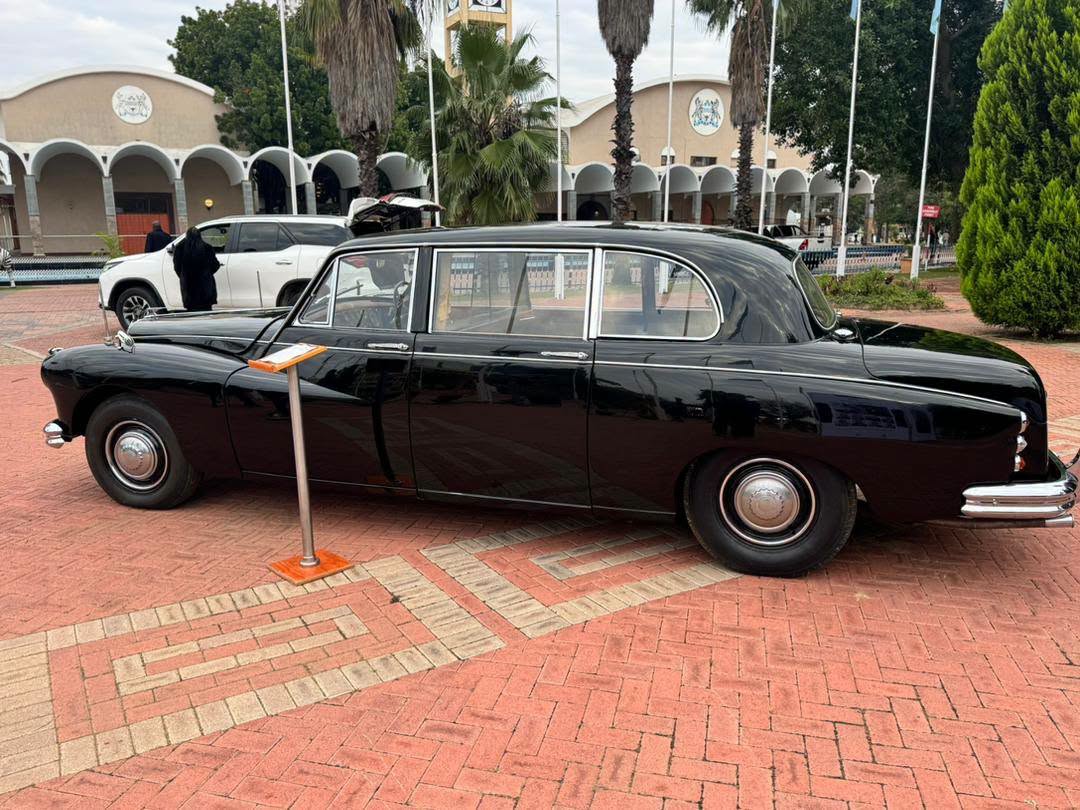
The Daimler vehicles once used by Botswana’s founding president, Sir Seretse Khama, now stand as preserved national treasures at the National Museum, reflecting an important chapter in the country’s political and cultural history. These luxury cars are more than historic vehicles, they represent the early identity of Botswana’s leadership and its diplomatic connections during and after independence. The preservation of the Daimlers highlights how material artifacts can carry national memory and showcase the evolution of governance in Botswana. The collection also offers insight into the ceremonial and official life of the country’s first presidency. By protecting these vehicles, Botswana preserves a visible link between its colonial past, independence journey and state formation.
The first Daimler acquired for presidential use arrived in Botswana before independence and was initially associated with a significant royal visit. It was used by Princess Marina during her visit to the then Bechuanaland Protectorate, marking one of the earliest high-profile uses of the vehicle in the country. This early association with royalty helped establish the Daimler as a symbol of prestige and official state function. After independence, the vehicle was incorporated into the Presidential fleet under Sir Seretse Khama’s leadership. Its continued use reflected both practicality and the symbolic importance of maintaining dignified transport for state affairs. Over time, it became part of the growing collection of vehicles used in the formal representation of the young nation.
Between 1975 and 1979, two additional Daimler vehicles were acquired to support presidential transport needs as Botswana’s government expanded its operations. These cars complemented the original pre-independence Daimler and together formed a small but significant fleet used during official duties. The acquisition of multiple vehicles during this period reflected the increasing demands of state administration and the need for reliable executive transport. Each of these vehicles played a role in transporting the president and supporting the functions of government at a time when Botswana was building its institutions. Their presence also demonstrated continuity in the choice of luxury British automotive engineering for official use. Together, the three Daimlers became closely associated with the image of early presidential authority in Botswana.
The choice of Daimler vehicles for presidential use was influenced by historical ties between Botswana and Britain, particularly during the early years of independence. The Daimler brand was widely favoured by British royalty and carried strong associations with prestige, reliability and formal state use. This made it a natural choice for many Commonwealth countries establishing their own symbols of leadership and authority. In Botswana’s case, the use of Daimler vehicles reflected both practical considerations and the diplomatic relationships that existed at the time. The vehicles symbolised a blend of tradition, respect and continuity in state protocol. They also helped shape the visual identity of presidential travel during the formative years of the nation.
Today, the preservation of these Daimler cars at the National Museum ensures that future generations can connect with Botswana’s early political history in a tangible way. The vehicles are carefully maintained as part of the country’s national heritage collection, allowing visitors to view and appreciate their historical significance. They serve as educational tools that illustrate the development of the presidency and the evolution of state symbols over time. The museum setting provides context that helps visitors understand the broader story of Botswana’s independence and governance. By displaying these vehicles, the institution reinforces the importance of protecting artifacts that represent national identity. The Daimlers stand as physical reminders of the leadership and decisions that shaped the country’s early years.
The legacy of Sir Seretse Khama is deeply connected to the preservation of these presidential vehicles, as they reflect the dignity and vision of Botswana’s first head of state. His leadership during the post-independence period set the foundation for a stable and respected nation, and the use of such vehicles formed part of the ceremonial expression of that leadership. The Daimlers now function as historical markers that capture a specific era of Botswana’s development. They remind citizens of the country’s journey from colonial administration to independent governance. Their preservation also demonstrates the value placed on history, memory and cultural identity within Botswana’s national institutions. As national treasures, they continue to educate and inspire those who visit the museum.
The Daimler cars preserved at the National Museum remain powerful symbols of Botswana’s political heritage and early statehood. From their association with royal visits to their role in the presidential fleet, they reflect a period of transition, growth and nation-building. Their continued preservation ensures that the story of Botswana’s founding leadership remains accessible and visible to the public. They also highlight the importance of maintaining historical artifacts that represent key milestones in national development. Through these preserved vehicles, Botswana safeguards a unique part of its past while reinforcing the values of heritage and continuity.