
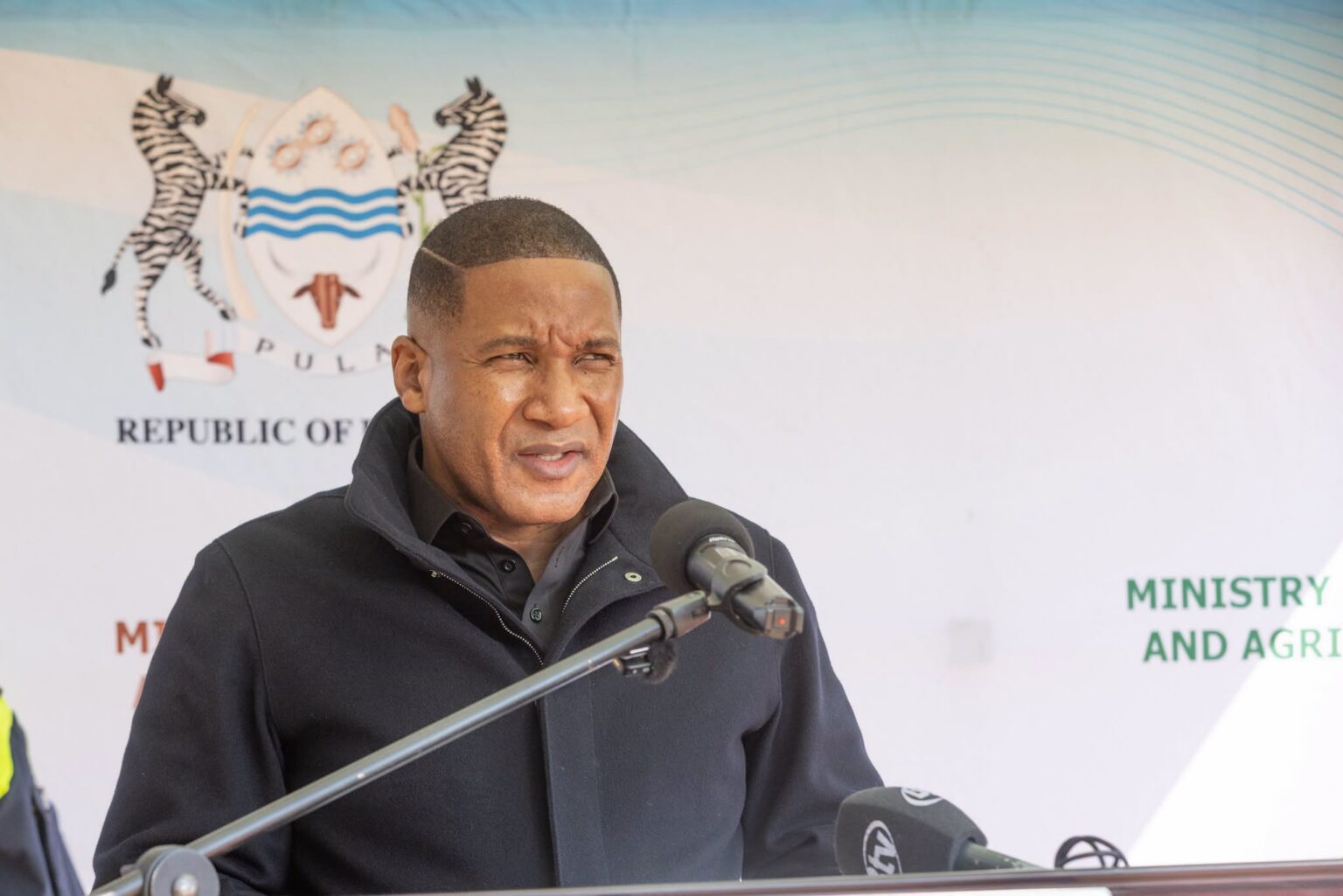
President Duma Boko has called on ostrich farmers across Botswana to maximise the value chain and play a greater role in diversifying the country’s economy. Speaking during a tour of the Dibete Ostrich Multiplication Unit (DOMU), the President highlighted the significant economic opportunities that exist within the ostrich farming industry. He emphasized that Botswana has the resources and potential to build a competitive ostrich sector that creates jobs, supports local businesses and reduces dependence on imports. His remarks reflected the government’s broader commitment to strengthening agriculture as a pillar of sustainable economic growth. The visit also showcased the progress being made in reviving the country’s ostrich industry after years of operational setbacks.
During his address, President Boko pointed out that Botswana currently imports ostrich feed from neighboring countries, creating an opportunity for local farmers to fill an important gap in the market. He explained that producing feed ingredients within Botswana would reduce production costs, strengthen food security and keep more economic value within the country. Instead of relying on imported products, local farmers could supply the growing ostrich farming industry while expanding their own agricultural enterprises. The President stressed that agriculture should not only focus on primary production but also on developing industries that support one another. This approach would create stronger agricultural value chains and generate wider economic benefits for communities across the country.
One of the key opportunities identified by President Boko was the cultivation of sunflower, which is an essential ingredient in ostrich feed. He encouraged farmers to increase sunflower production to meet domestic demand while also supplying other agricultural and industrial sectors. Expanding sunflower farming would create additional income opportunities for crop producers while reducing Botswana’s dependence on imported raw materials. The President explained that this kind of integrated agricultural development would improve resilience and create new business opportunities throughout the farming sector. By investing in locally produced feed ingredients, Botswana can strengthen both crop farming and livestock production at the same time.
President Boko also highlighted the considerable entrepreneurial potential within the ostrich industry. He noted that the sector offers opportunities that extend beyond raising birds, including feed production, meat processing, leather manufacturing, feather products, transport, marketing and export development. Building a complete value chain allows businesses of different sizes to participate while creating employment in both rural and urban communities. The President encouraged aspiring entrepreneurs to recognize the industry’s long term potential and invest in businesses that support ostrich farming. He assured local farmers that the industry has sufficient capacity to support sustainable commercial growth if stakeholders work together.
In addition to its economic value, the President emphasized the health benefits of ostrich meat and called for greater public awareness about its nutritional qualities. Ostrich meat is widely recognized for being lean, high in protein and lower in fat compared to many traditional red meats. Encouraging more consumers to include ostrich meat in their diets could support healthier eating habits while increasing domestic demand for locally produced products. A stronger local market would provide farmers with more stable income opportunities and encourage further investment in production. Raising awareness through public education campaigns could therefore benefit both consumers and the agricultural sector.
The revival of the Dibete Ostrich Multiplication Unit represents an important milestone in Botswana’s efforts to rebuild the ostrich farming industry. Minister of Lands and Agriculture Dr Edwin Dikoloti explained that DOMU was originally established in 2006 but was forced to close after experiencing operational challenges. Recognizing the importance of the facility, the government made the decision last year to revive its operations. Since reopening, the multiplication unit has already achieved encouraging results by hatching 269 ostriches and supplying 29 farmers. These achievements demonstrate that targeted government investment can help restore confidence and stimulate growth in promising agricultural industries.
Dr Dikoloti revealed that the Ministry of Lands and Agriculture has set an ambitious target of hatching more than 6,000 ostriches before the end of the year. Achieving this goal would significantly increase the national ostrich population and provide many more farmers with opportunities to enter the industry. The Ministry’s long term vision is to attract hundreds of Batswana into commercial ostrich farming, recognizing the sector’s proven ability to generate income and create employment. Expanding production would also strengthen Botswana’s capacity to meet both domestic and international demand for ostrich products. Continued investment in breeding and multiplication programs will be essential to sustaining this growth.
Another major initiative announced by Dr Dikoloti is the development of an agricultural financing strategy designed to support investment throughout the sector. Access to affordable financing remains one of the biggest challenges facing many emerging farmers and agribusiness entrepreneurs. By introducing financial support mechanisms, the government hopes to encourage greater participation while helping existing farmers expand their operations. Improved access to funding can enable farmers to purchase quality breeding stock, modern equipment, feed and infrastructure needed for successful commercial production. Such financial support will play an important role in unlocking the industry’s full economic potential.
President Duma Boko’s visit to the Dibete Ostrich Multiplication Unit reinforced Botswana’s commitment to transforming agriculture into a major driver of economic diversification and sustainable development. His call for stronger value chains, increased local feed production and greater investment in ostrich farming presents a clear vision for expanding the industry’s contribution to the national economy. Combined with the successful revival of DOMU, ambitious production targets and plans for improved agricultural financing, Botswana is laying the foundation for long term growth in the sector. The collaboration between government, farmers and private investors will be essential to achieving these objectives. As more Batswana embrace the opportunities within ostrich farming, the industry has the potential to create jobs, strengthen rural livelihoods, reduce imports and contribute significantly to Botswana’s economic future.