
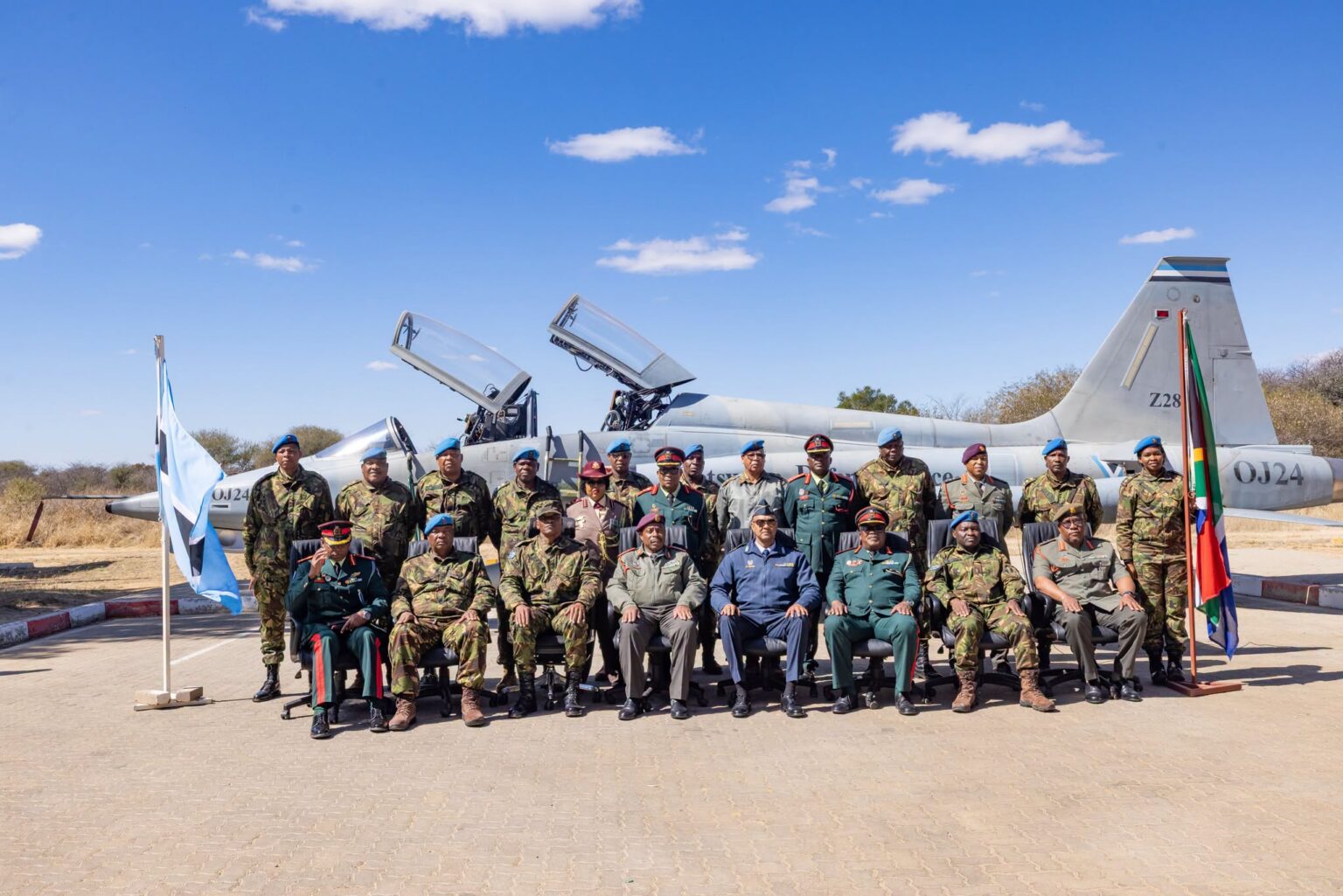
The Botswana Defence Force (BDF) is strengthening its military aviation relationship with South Africa following a high-level visit to Thebephatshwa Air Base in Kweneng by South African National Defence Force (SANDF) Chief General Rudzani Maphwanya. BDF Air Arm Commander Major General Hendrick Rakgantshwana hosted the South African military delegation at the strategic air base, providing an opportunity to discuss regional defence cooperation and aviation capabilities. The visit highlighted the importance of military partnerships between Botswana and South Africa as both countries work to support peace, security and stability across Southern Africa. It also provided the SANDF delegation with an opportunity to gain a deeper understanding of the role and capabilities of one of Botswana’s high-value military assets. The engagement comes as both countries continue to explore practical areas of cooperation within their broader defence relationship.
Thebephatshwa Air Base holds significant strategic value for Botswana because of its role in military aviation, training and national defence capabilities. The visit allowed General Maphwanya and the South African delegation to see the facilities and gain a clearer understanding of what the base represents within Botswana’s defence architecture. Its location and aviation capabilities also give it wider relevance in the context of regional security cooperation. Military air bases provide more than operational infrastructure because they support training, technical expertise, logistics and the development of specialised personnel. The visit therefore provided an opportunity to demonstrate how Thebephatshwa contributes to Botswana’s national defence capabilities while also supporting the country’s potential role in regional aviation cooperation.
Welcoming the South African military chiefs, Major General Rakgantshwana expressed his delight at finally hosting General Maphwanya at Thebephatshwa Air Base. He highlighted the BDF Air Arm’s interest in expanding regional collaboration in military aviation, particularly in training, maintenance, research and development. These areas represent important opportunities for the two countries to share expertise and strengthen their respective aviation capabilities. Cooperation in training can support the development of skilled personnel, while maintenance partnerships can help improve technical knowledge and operational readiness. Research and development collaboration could also create opportunities for both countries to explore new approaches to military aviation and respond to evolving regional security requirements.
General Maphwanya responded by emphasising the importance of regional cooperation and strong partnerships in protecting the security and stability of Southern Africa. His position reflects the wider role that defence cooperation can play in helping neighbouring countries respond to shared security challenges. Botswana and South Africa have established historical and strategic ties, making military cooperation an important component of their bilateral relationship. Strong relationships between defence institutions can improve communication, build trust and create opportunities for coordinated responses when regional security challenges emerge. Cooperation between the BDF and SANDF can also contribute to broader regional defence initiatives through structures such as the Southern African Development Community.
During the visit, General Maphwanya was given a tour of Thebephatshwa Air Base’s military aviation training facility. The facility was presented as a highly advanced training centre with a strong record of producing skilled pilots for both domestic and international service. Military aviation training requires specialised infrastructure, experienced instructors and rigorous programmes that prepare personnel for demanding operational environments. The development of these capabilities allows Botswana to strengthen its own defence readiness while creating potential opportunities for regional training cooperation. Sharing training expertise and facilities with partner countries could further strengthen aviation standards and promote greater interoperability among defence forces in Southern Africa.
The visit also highlighted the importance of technical and maintenance capabilities within military aviation. Aircraft readiness depends on highly trained technical personnel, reliable maintenance systems and access to appropriate facilities and equipment. Cooperation between Botswana and South Africa in this area could create opportunities for knowledge sharing and professional development. Joint programmes could expose personnel to different technical practices while helping both defence forces strengthen their ability to maintain aviation assets. Such collaboration would complement broader training initiatives and could contribute to the development of sustainable military aviation capabilities within the region.
Throughout the engagement, the BDF Air Arm, represented by its blue berets, briefed General Maphwanya on the strategic significance of Thebephatshwa Air Base. The briefings covered the base’s contribution to Botswana’s military aviation capabilities as well as its potential contribution to broader regional aviation capacity. The BDF personnel also identified opportunities for collaboration with South Africa, reinforcing the practical focus of the visit. These discussions demonstrate that defence cooperation can extend beyond high-level diplomatic engagements into specific areas where military institutions can work together. By identifying practical areas for cooperation, the two countries can create partnerships that deliver measurable benefits for personnel and defence capabilities.
The focus on aviation cooperation is particularly significant because military aviation requires specialised skills and substantial investment in training, maintenance and technology. Regional partnerships can help countries share expertise and develop capabilities without working entirely in isolation. Botswana’s experience in aviation training can complement South Africa’s broader military capabilities, while South African expertise can potentially support areas identified by the BDF Air Arm. Collaboration can also strengthen professional relationships between personnel and create greater understanding between the two defence forces. Over time, these relationships can support more effective coordination during joint exercises, peace-support operations and other regional security initiatives.
The visit to Thebephatshwa Air Base also forms part of a broader effort to deepen defence relations between Botswana and South Africa. General Maphwanya’s engagement with BDF leadership demonstrates the importance both countries place on maintaining direct military-to-military communication. Continued dialogue allows defence leaders to identify shared priorities and develop practical responses to common challenges. It also provides an opportunity to build on existing bilateral defence arrangements and explore new areas of cooperation as security needs change. Strong defence relationships between neighbouring countries can contribute to a more coordinated approach to maintaining peace and stability across Southern Africa.
The engagement at Thebephatshwa Air Base ultimately demonstrated the potential for Botswana and South Africa to strengthen cooperation in military aviation and regional defence. Major General Rakgantshwana’s call for expanded collaboration in training, maintenance, research and development provides a practical framework for future engagement between the BDF Air Arm and SANDF. General Maphwanya’s emphasis on robust regional partnerships further underlined the shared interest in building stronger defence relationships across Southern Africa. Thebephatshwa Air Base remains an important national military asset, while its aviation training capabilities create opportunities for broader regional cooperation. Continued collaboration between Botswana and South Africa could strengthen aviation expertise, improve defence readiness and contribute to the wider goal of maintaining peace, security and stability in the region.