
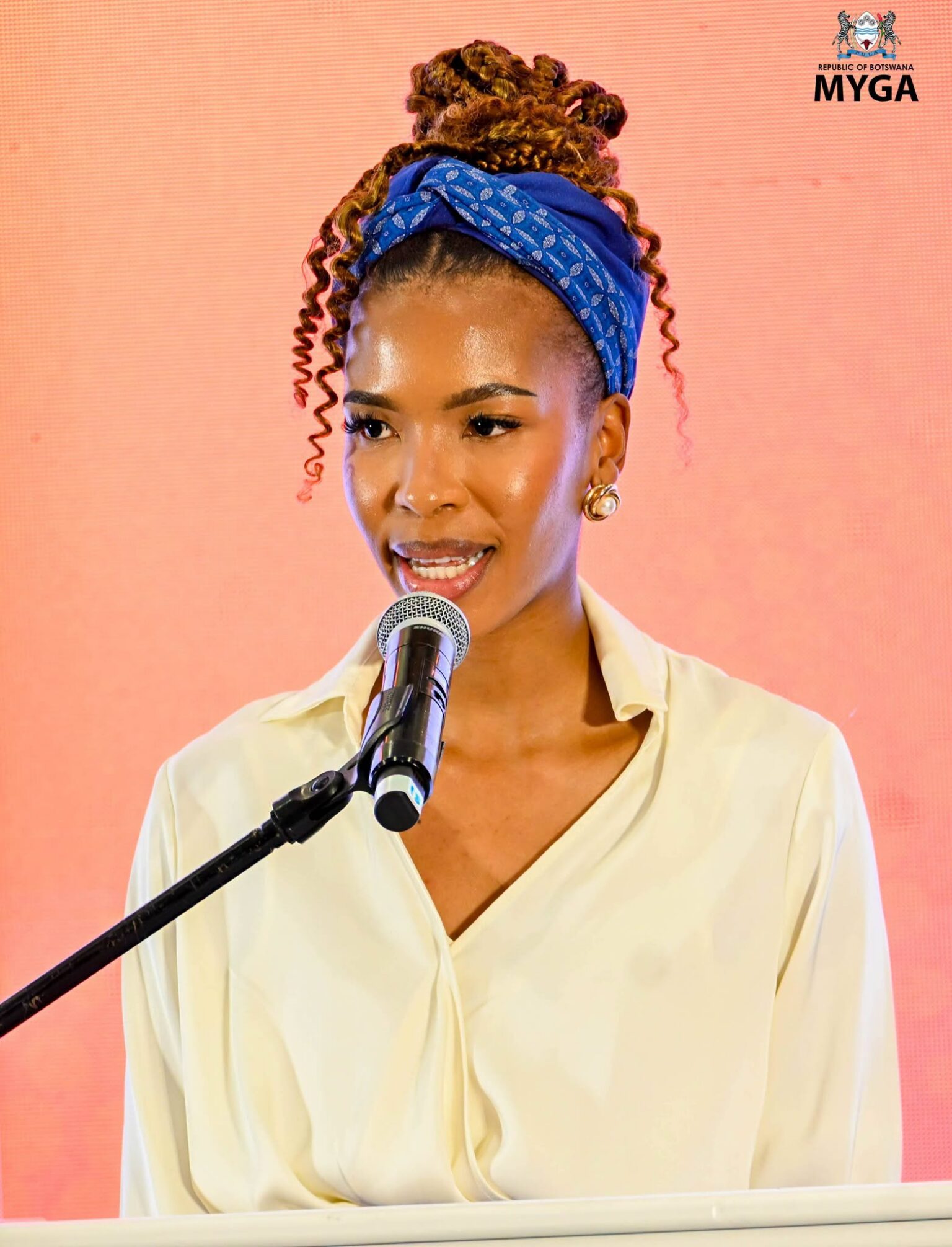
Botswana is strengthening collaboration between the government and traditional institutions to address gender-based violence (GBV) and promote gender equality through the Revised National Policy on Gender and Development. Minister of Youth and Gender Affairs, Hon. Lesego Chombo, highlighted the importance of traditional leadership during a consultative engagement with Ntlo ya Dikgosi, where members received updates on the revised policy and other national gender response initiatives. She emphasised that traditional institutions remain essential to community governance, conflict resolution, social cohesion and the preservation of Botswana’s cultural heritage. The engagement provided an opportunity for the government to brief dikgosi on proposed measures to address gender-based violence and gather their views on improving prevention and support services. It also reinforced the need for a coordinated national response that brings together public institutions, communities, families and civil society to build a safer and more inclusive Botswana.
Hon. Chombo said traditional institutions continue to serve as important pillars of communities and play a meaningful role in maintaining social stability. Through their established relationships with residents, traditional leaders can help communicate public policies, encourage community participation and address social concerns. Their influence can also support efforts to challenge harmful attitudes and promote respect, equality and accountability. In the fight against gender-based violence, these institutions can help raise awareness, encourage survivors to seek assistance and direct affected individuals towards appropriate support services. The Minister’s remarks highlighted the value of working with traditional leaders as partners in addressing social challenges that require community understanding and sustained public engagement.
The consultation focused on the Revised National Policy on Gender and Development, known as NPGAD, which provides a policy framework for advancing gender equality and addressing gender-related challenges in Botswana. Gender development policies aim to promote fair access to opportunities, strengthen protection against discrimination and support the participation of women and men in social, economic and public life. Revising such a policy creates an opportunity to assess existing approaches and identify areas where government action and community involvement can be strengthened. The engagement with Ntlo ya Dikgosi allowed traditional leaders to hear about the policy and consider how their institutions could contribute to its implementation. Their participation is important because national policies often depend on effective communication and cooperation at community level to achieve their intended results.
Hon. Chombo reiterated that addressing gender-based violence requires a multisectoral approach involving government, traditional institutions, civil society, communities, families, young people, men and women. This approach recognises that GBV cannot be addressed by a single ministry or institution working alone. Government departments may be responsible for policy development, law enforcement, healthcare and social support, while civil society organisations can contribute through awareness programmes, counselling and assistance for survivors. Families and communities also have a role in promoting respectful relationships and challenging attitudes that excuse abuse. By bringing these groups together, Botswana can strengthen prevention efforts, improve coordination and support a shared vision of a safe, just and inclusive society.
During the consultation, representatives from the Ministry of Youth and Gender Affairs presented information on the Draft Gender Based Violence Bill, District Gender Committees and other national initiatives aimed at responding to gender-related challenges. The proposed legislation was among the key issues discussed as part of the broader effort to strengthen Botswana’s response to GBV. The presentation provided an opportunity for dikgosi to become familiar with the proposed legal framework and related policy measures. As the bill was described as a draft, its presentation should not be taken to mean that it has already become law. Consultation with traditional leaders can help identify practical concerns, improve understanding of proposed measures and support cooperation between communities and institutions responsible for responding to gender-based violence.
The discussion of District Gender Committees highlighted the importance of coordination at local level. District structures can help bring relevant stakeholders together to discuss gender-related challenges, identify service gaps and improve communication between institutions. Effective coordination is especially important when survivors need assistance from more than one service provider, such as healthcare facilities, social workers, law enforcement agencies or counselling services. When these institutions work in isolation, survivors may face delays, confusion or difficulties accessing the support they need. Stronger linkages between district structures and traditional leadership can help communities understand available services and improve the way cases and support needs are addressed.
Kgosi Puso commended the Ministry of Youth and Gender Affairs for its efforts to combat gender-based violence in collaboration with Ntlo ya Dikgosi. He recognised the value of the partnership and expressed appreciation for the work being undertaken to address the problem. At the same time, he urged the Ministry to strengthen institutional linkages to improve service delivery. His remarks highlighted the need to move beyond consultation and ensure that cooperation leads to practical outcomes for communities. Strong working relationships between traditional institutions and government departments can help clarify responsibilities, improve referrals and ensure that people affected by GBV receive appropriate assistance.
The call to strengthen institutional linkages is particularly relevant because survivors may require different forms of support depending on their circumstances. A person experiencing abuse may need immediate protection, medical attention, counselling, legal assistance or help finding a safe place to stay. These services are often delivered by different organisations, making coordination essential. Clear referral procedures can help ensure that survivors do not have to navigate complex systems without guidance. Improved cooperation can also help service providers respond more consistently while protecting survivors’ privacy, dignity and safety.
Kgosi Mosadi Seboko emphasised the need to expand the availability of gender-based violence survivor centres across Botswana, describing GBV as a national crisis. Her remarks drew attention to the importance of ensuring that support services are accessible to people regardless of where they live. Survivors in remote or underserved communities may face additional barriers when seeking help, including travel distances, limited transport and a lack of information about available services. Expanding access to survivor centres could help address some of these challenges, depending on how services are planned, staffed and funded. Her call highlighted the importance of treating survivor support as a national priority rather than a service concentrated in a limited number of locations.
Survivor centres can provide an important point of access for people affected by gender-based violence. Depending on their facilities and operating arrangements, such centres may connect survivors with counselling, social work support, healthcare, legal guidance and referrals to other services. Safe and accessible support can help survivors understand their options and make informed decisions about their next steps. Staff must also be equipped to respond sensitively, protect confidential information and avoid actions that could expose survivors to further harm. Expanding these services requires planning, trained personnel, sustainable resources and clear coordination with other organisations involved in GBV response.
Preventing gender-based violence also requires action before abuse occurs. Public education can help communities recognise different forms of violence, including physical, sexual, emotional and economic abuse. Awareness initiatives can challenge harmful beliefs about power, control and the treatment of women and girls while encouraging respectful relationships. Men and boys have an important role in prevention by rejecting violence, supporting equality and challenging behaviour that normalises abuse. Young people can also contribute by learning about consent, personal safety and healthy relationships. These efforts need to be supported by effective laws, accessible services and institutions that respond appropriately when violence is reported.
Traditional leaders can make a valuable contribution to these prevention efforts because of their connection to community life. Through community meetings and other established forums, dikgosi can help share accurate information about gender-based violence and explain where people can seek assistance. They can also encourage families to address harmful attitudes and support community members who experience abuse. However, community mediation or informal dispute resolution should not replace appropriate protection, medical care or legal processes in cases involving violence or criminal conduct. Effective collaboration requires traditional institutions to understand their role and work with trained service providers and relevant authorities to protect survivors.
The engagement also highlighted the broader importance of preserving cultural heritage while advancing gender equality and human rights. Botswana’s traditional institutions continue to contribute to community identity, consultation and local governance. Their involvement in national gender initiatives can help ensure that policy discussions take account of local experiences and the realities facing families and communities. At the same time, cultural practices and community expectations must be considered alongside the need to prevent abuse and protect the rights and safety of individuals. Constructive engagement can help traditional leaders and government institutions identify approaches that respect cultural identity while supporting equality, dignity and accountability.
The Ministry of Youth and Gender Affairs has reaffirmed its commitment to fighting gender-based violence as part of its responsibility for gender affairs in Botswana. Achieving progress will require sustained cooperation between ministries, traditional leaders, district structures, civil society organisations and communities. It will also require continued attention to the availability of survivor services, the effectiveness of referral systems and the implementation of relevant laws and policies. Consultative engagements such as the meeting with Ntlo ya Dikgosi provide a platform for exchanging views and identifying areas where collaboration can improve. The next challenge is to translate these discussions into consistent action that responds to the needs of survivors and strengthens prevention across the country.
Botswana’s engagement with Ntlo ya Dikgosi demonstrates the importance of combining traditional leadership with coordinated government action in the fight against gender-based violence. Hon. Lesego Chombo’s call for a multisectoral approach, Kgosi Puso’s appeal for stronger institutional linkages and Kgosi Mosadi Seboko’s call for wider access to survivor centres all point to the need for practical, sustained cooperation. The Revised National Policy on Gender and Development, the Draft Gender Based Violence Bill and District Gender Committees form part of the wider national discussion on improving gender protection and service delivery. Progress will depend on effective implementation, adequate support for survivors and the willingness of institutions and communities to challenge violence wherever it occurs. By strengthening these partnerships and improving access to assistance, Botswana can work towards a society in which every person can live with dignity, safety and equal protection.