
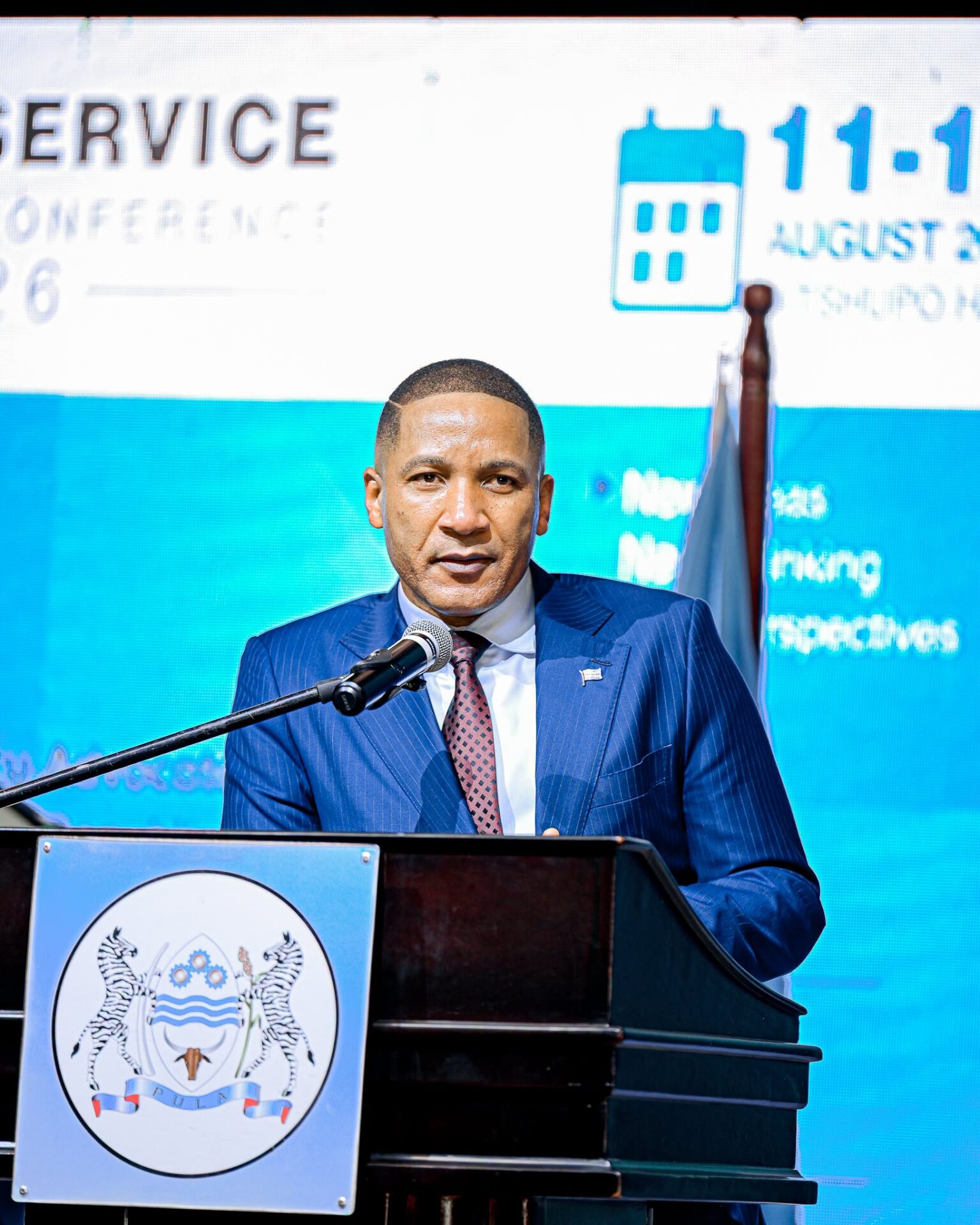
President Advocate Duma Boko has called on public servants to embrace transformation, innovation and citizen-centred service delivery as Botswana seeks to build a more responsive and effective government. The President made the call yesterday when he officially opened the two-day Public Service Leadership Conference 2026, bringing together public service leaders from across government. His keynote address focused on the need for leaders to rethink established systems, processes and mindsets that can prevent government institutions from delivering services efficiently. President Boko stressed that public servants have a responsibility to place citizens at the centre of their work and ensure that government processes serve the public interest. His message placed leadership transformation at the heart of efforts to improve governance, strengthen institutions and deliver better outcomes for communities.
President Boko challenged public service leaders to examine long-standing practices that may contribute to unnecessary delays, frustration and poor service delivery. He acknowledged that government officials operate within policy and legal frameworks, but cautioned against using procedures as an excuse when those procedures result in injustice or prevent citizens from receiving timely assistance. According to the President, the law should be understood as an instrument that enables government to do what is right rather than as a barrier to progress. He emphasised that public institutions must apply laws in ways that advance justice, fairness and the public good. This approach calls for public servants to exercise sound judgement while remaining accountable to the legal and constitutional principles that govern their responsibilities.
“The law is not an obstacle to progress. The law facilitates the doing of good. It is designed to serve the public interest and advance the public good,” said President Boko. His statement highlighted the importance of changing how public servants understand their roles within government institutions. Rather than viewing regulations and procedures simply as restrictions, officials were encouraged to consider how these frameworks can support fair and effective service delivery. The President’s comments also reinforced the idea that government exists to serve citizens and that administrative systems should ultimately contribute to their well-being. For public service leaders, this means creating an institutional culture where compliance, efficiency, accountability and compassion work together rather than operating as competing priorities.
A major theme of President Boko’s address was the need for radical simplification of government processes and procedures. Complex administrative requirements can make it difficult for citizens to access public services, particularly when people have to navigate multiple offices, forms and approval stages to obtain assistance. Simplifying these processes could make government services more accessible, reduce unnecessary delays and improve the overall experience of citizens interacting with public institutions. The President connected this reform agenda to broader human rights and development goals, emphasising that efficient public administration can have a direct impact on people’s ability to access essential services and opportunities. Public service leaders were therefore encouraged to identify outdated or unnecessarily complicated procedures and consider practical ways of making them more responsive and effective.
President Boko also placed strong emphasis on personal and institutional transformation, arguing that meaningful change within government must begin with the people responsible for leading and managing public institutions. Leaders cannot successfully transform systems if they are unwilling to examine their own attitudes, behaviours and approaches to public service. This means encouraging a culture of innovation, accountability and continuous improvement across government departments. Institutional transformation also requires leaders to recognise when established practices no longer meet the needs of citizens and to have the confidence to introduce better approaches. By focusing on both individual and organisational change, the President presented transformation as an ongoing responsibility rather than a once-off government programme.
“The law does not prevent good; it enables it. The law requires it. We must ensure that public institutions act in ways that advance justice, fairness, and the well-being of the people,” he said. The statement reinforced the expectation that public institutions should use their authority responsibly and in accordance with the broader purpose of public service. It also placed accountability at the centre of leadership, particularly when administrative decisions affect the rights and livelihoods of citizens. Effective public administration requires more than following established processes because leaders must also consider whether those processes achieve the outcomes government is expected to deliver. This perspective could encourage public servants to focus more closely on results while maintaining the standards of legality, fairness and transparency required of public institutions.
The Public Service Leadership Conference 2026 provides an important platform for government leaders to reflect on the future of public administration in Botswana. The two-day conference brings together public service leaders from across government to discuss leadership, governance, innovation and strategies for building a more citizen-focused public service. Such discussions can help institutions share experiences, identify common challenges and develop practical approaches to improving government operations. The emphasis on innovation is particularly relevant as governments around the world look for ways to modernise services and respond more effectively to changing public expectations. By bringing senior public servants together, the conference creates an opportunity to turn leadership discussions into concrete reforms that can improve how citizens experience government.
President Duma Boko’s message ultimately placed citizens at the centre of Botswana’s public service transformation agenda. His call for simplified procedures, innovative leadership and institutional reform reflects the need for government systems to respond to people efficiently while upholding justice and fairness. The emphasis on personal transformation also recognises that lasting institutional change depends on the decisions and attitudes of the people who operate public institutions every day. As the Public Service Leadership Conference 2026 continues, the challenge for participants will be to translate these principles into practical changes across government departments. A more responsive public service will depend on leaders who are willing to question ineffective practices, use the law to advance the public good and consistently place the needs and rights of citizens at the centre of government service delivery.