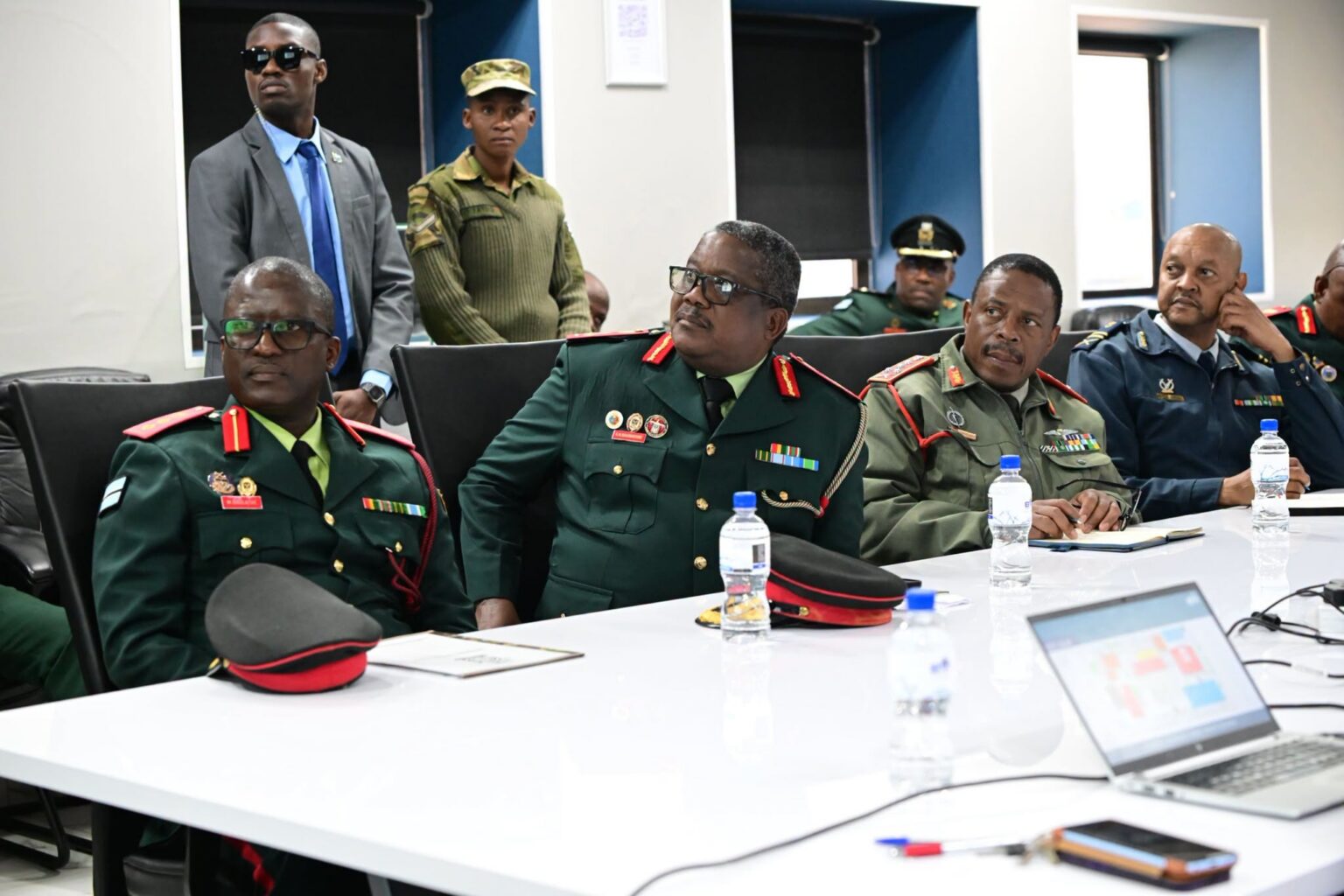
Chief of the South African National Defence Force (SANDF), General Rudzani Maphwanya, toured the Botswana Vaccine Institute (BVI) on 11 August 2026 as part of his two-day official visit to Botswana. The visit highlighted the growing recognition that animal health, food security and economic stability are closely connected to regional security. General Maphwanya’s engagement with the BVI placed Foot and Mouth Disease (FMD) and livestock protection within a wider Southern African development and resilience agenda. The visit also provided an opportunity for the South African delegation to learn more about Botswana’s capacity to produce vaccines and respond to animal health emergencies. It underscored the importance of cooperation between neighbouring countries in protecting livestock, farmers, trade and livelihoods across the region.
Welcoming General Maphwanya and the South African delegation, BVI Acting Chief Executive Officer Dr Keabetswe Moagabo highlighted the longstanding relationship between Botswana and South Africa. He noted that the two countries share an enduring partnership in safeguarding livestock, food security and the livelihoods of communities that depend on agriculture. South Africa has a long history of procuring vaccines from the Botswana Vaccine Institute, making the organisation an important partner in the management of animal health threats. Cooperation between the two countries has also grown around Foot and Mouth Disease, which continues to pose serious challenges to livestock producers and regional agricultural trade. Dr Moagabo stressed that disease outbreaks can disrupt trade, affect farmers’ incomes and ultimately create wider risks to national economic security.
Foot and Mouth Disease remains a significant concern for countries with large livestock industries because outbreaks can have consequences far beyond affected farms. Restrictions on the movement and sale of animals can affect farmers, abattoirs, traders and other businesses throughout the agricultural value chain. Export markets can also be disrupted when countries impose restrictions on livestock and animal products from affected areas. For communities that depend heavily on livestock for income and food security, prolonged outbreaks can create significant financial pressure. The discussions at the BVI therefore demonstrated why controlling animal diseases requires cooperation between veterinary authorities, farmers, researchers, government institutions and regional partners.
General Maphwanya said the visit reflected a broader understanding of national security in which development, livelihoods and national resilience cannot be separated from traditional defence responsibilities. His comments followed a visit to Botswana’s National Emergency Operations Centre, where he observed the country’s response to the Foot and Mouth Disease challenge. He commended Botswana’s whole-of-government approach and stressed that effective disease control requires cooperation across society and national borders. Animal diseases do not recognise political boundaries, meaning that an outbreak in one country can create risks for neighbouring states through livestock movement, trade and other cross-border activities. A coordinated regional response is therefore important for reducing the possibility of outbreaks spreading and for protecting agricultural economies.
The Botswana Vaccine Institute plays a strategic role in this regional response because of its vaccine production, research and diagnostic capabilities. BVI officials outlined the Institute’s position as a trusted Southern African Development Community (SADC) partner and highlighted its World Organisation for Animal Health FMD Reference Laboratory. This role gives the Institute an important responsibility in supporting animal health surveillance, disease diagnosis and vaccine development. The Institute has also been expanding its vaccine production capabilities to strengthen its ability to respond to existing and emerging animal health threats. According to officials, plans are underway to increase Foot and Mouth Disease vaccine production capacity towards 80 million monodoses by 2028/29.
The planned expansion of FMD vaccine production could strengthen Botswana’s ability to support disease control efforts in the region. Increasing production capacity would provide greater flexibility during periods when outbreaks require rapid vaccination and coordinated intervention. It could also strengthen the region’s ability to reduce reliance on distant sources of vaccines during major animal health emergencies. The expansion forms part of a broader shift towards preparedness, research and anticipation rather than relying primarily on emergency responses after an outbreak has already occurred. This approach is particularly relevant in Southern Africa, where livestock production plays an important role in rural livelihoods, food security and national economies.
Members of the SANDF delegation praised the Botswana Vaccine Institute for its efforts to move from responding to animal health emergencies towards anticipating and preparing for them. They recognised the importance of expanding vaccine production, strengthening research and maintaining preparedness before outbreaks occur. This approach can help authorities respond more quickly when disease threats emerge and can improve coordination between countries facing similar risks. The delegation’s assessment also highlighted the value of institutions such as BVI in supporting broader regional resilience. Strong scientific and veterinary capacity can complement traditional security structures by helping countries protect essential economic sectors and reduce the social and economic consequences of major disease outbreaks.
The visit also demonstrated the increasingly interconnected nature of security across Southern Africa. National security is not limited to military capabilities, as threats to food supplies, agricultural production, livelihoods and economic activity can also affect national stability. Livestock disease outbreaks can place pressure on governments, farmers and communities while disrupting domestic and international trade. Cooperation between Botswana and South Africa therefore has implications that extend beyond veterinary services and vaccine procurement. By strengthening their ability to prevent, detect and control animal diseases, the two countries can contribute to greater regional economic resilience and protect communities whose livelihoods depend on livestock.
General Maphwanya’s visit to the Botswana Vaccine Institute formed an important part of his official engagement in Botswana and reinforced the value of bilateral cooperation between the two countries. The discussions brought together issues of defence, animal health, agriculture, trade and national resilience in a way that reflects the complex challenges facing modern states. Botswana’s investment in vaccine production and preparedness, together with South Africa’s longstanding cooperation with the BVI, provides a foundation for continued collaboration against Foot and Mouth Disease and other animal health threats. The planned increase in vaccine production capacity could further strengthen Botswana’s role in regional disease control and emergency preparedness. The visit ultimately reinforced the message that protecting livestock, food security and livelihoods is an essential part of protecting the wider security and economic interests of Southern Africa.