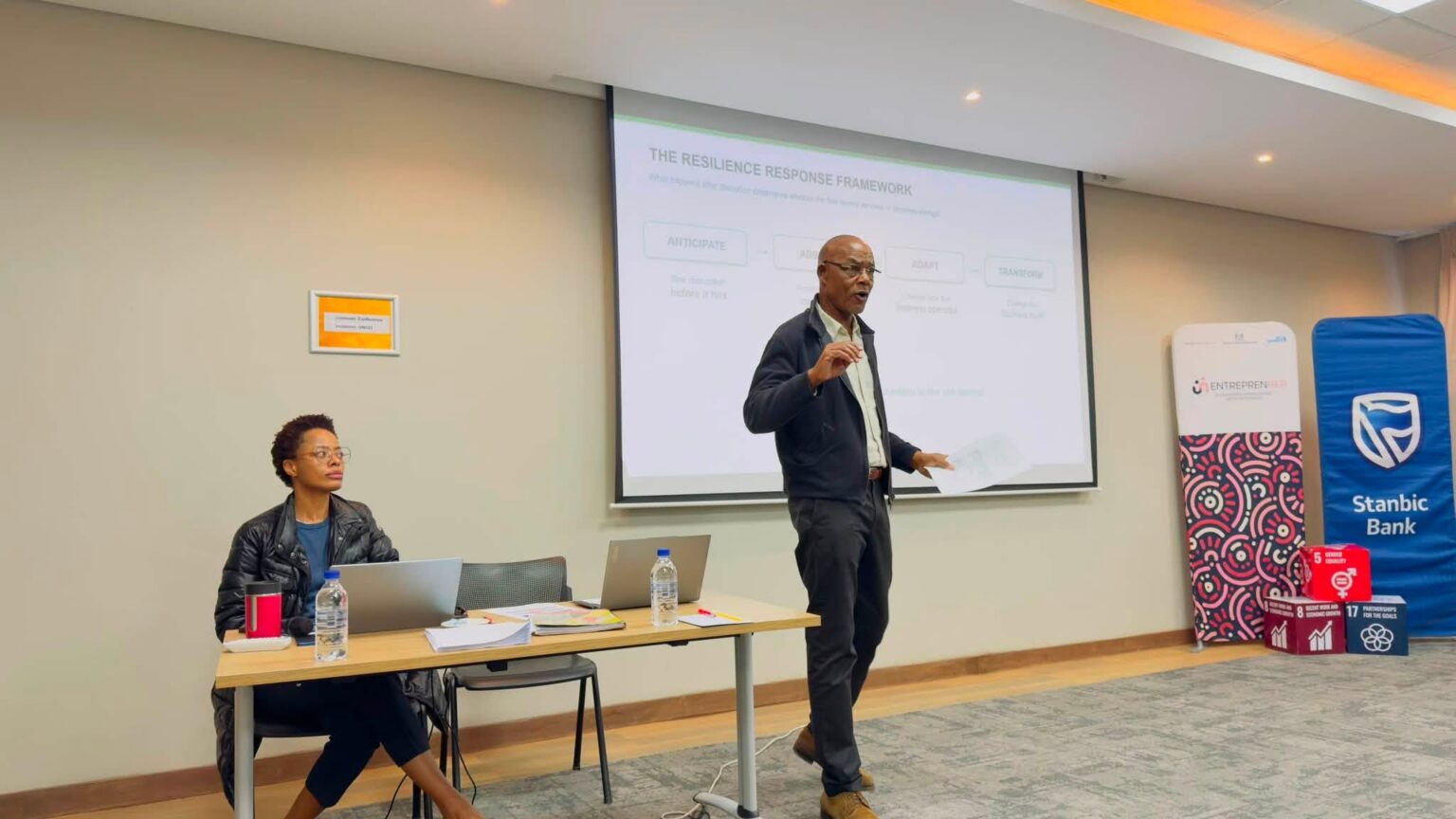
Small businesses play a vital role in creating jobs, supporting families and strengthening local economies, but many entrepreneurs face challenges that can make long-term growth difficult. In Jwaneng, entrepreneurs from the Jwaneng Business Improvement Group recently took part in a three-day MSME mentorship journey designed to help them move beyond day-to-day survival and build stronger, more structured businesses. The programme focused on a central question that many small business owners face: how can an enterprise survive difficult conditions while becoming more resilient, organised and prepared for growth? Led by Stanford Seed entrepreneur Dr Phabian Chaza, the mentorship sessions gave participants practical tools to examine their businesses and identify areas that require improvement. The initiative also highlighted the importance of investing in entrepreneurs as a way of supporting stronger communities and inclusive economic development.
The three-day programme provided entrepreneurs with an opportunity to take a closer look at both their personal approach to entrepreneurship and the internal systems that shape their businesses. Participants explored their entrepreneurial identities and considered how their personal decisions, leadership styles and attitudes toward challenges influence business performance. They were also encouraged to assess operational gaps that could prevent their enterprises from functioning efficiently or responding effectively to changing market conditions. Rather than focusing only on immediate problems, the sessions encouraged business owners to understand the underlying causes of those challenges and develop practical responses. This approach helped shift the conversation from simply coping with difficulties to deliberately building businesses that can withstand pressure and continue moving forward.
Financial discipline formed another important part of the MSME mentorship journey, recognising that sound financial management remains essential for business survival and sustainable expansion. Entrepreneurs examined the importance of understanding their financial position, managing resources carefully and identifying financial constraints that could limit future growth. The sessions encouraged participants to consider how better financial practices can improve decision-making and give business owners greater control over their operations. Insights from Stanbic Bank added valuable perspectives on financial resilience and the role that responsible financial management can play in strengthening small enterprises. For entrepreneurs operating in challenging economic environments, these lessons can provide a foundation for making more informed decisions about costs, cash flow, investment and growth.
The mentorship programme also used practical activities to make the learning experience relevant to the realities faced by small business owners. Through candid discussions, resilience audits, real-life business cases and group exercises, participants were able to examine common business challenges from different perspectives. The resilience audits encouraged entrepreneurs to reflect honestly on the strengths and weaknesses of their businesses rather than relying on assumptions about their performance. Real-life cases also provided opportunities to consider how other businesses respond to operational, financial and market pressures. By working collectively, participants could exchange experiences, identify shared challenges and learn from approaches that could potentially be adapted to their own enterprises.
A key message throughout the programme was the need for entrepreneurs to move away from improvised survival strategies and toward intentional, structured growth. Small businesses often operate under pressure, forcing owners to focus on immediate issues such as securing customers, managing expenses and keeping daily operations running. While these priorities remain important, long-term sustainability requires business owners to develop systems, processes and plans that reduce dependence on constant crisis management. The mentorship sessions encouraged participants to identify practical pathways for improving their businesses and to turn lessons from the programme into specific actions. This focus on action planning helped ensure that the mentorship was not limited to discussions, but could lead to measurable improvements in how participating businesses operate.
The programme also created space for entrepreneurs to reframe business challenges as opportunities for improvement. Difficulties such as operational gaps, financial constraints and limited resources can expose weaknesses, but they can also show business owners where changes are needed. By examining these challenges openly, participants were encouraged to develop a clearer understanding of what their enterprises need to become more resilient. The action-planning sessions gave entrepreneurs an opportunity to make clear commitments towards strengthening their businesses after the mentorship ended. This practical emphasis is important because sustainable business development depends not only on gaining knowledge, but also on applying that knowledge consistently.
The initiative in Jwaneng reflects collaboration between several organisations committed to supporting entrepreneurship and economic participation. De Beers Group, the Ministry of Youth and Gender Affairs, Debswana and UN Women worked together to support the mentorship initiative, while Stanbic Bank contributed financial-resilience insights to the programme. Such partnerships can provide MSMEs with access to knowledge, networks and practical support that individual entrepreneurs may struggle to obtain on their own. Collaboration between the private sector, government, development organisations and financial institutions can also help create a broader support system for small businesses. When these efforts focus on practical needs, they can contribute to a more inclusive environment in which entrepreneurs have better opportunities to strengthen and expand their enterprises.
The focus on MSMEs also carries wider economic significance for Jwaneng and the surrounding communities. Small and medium-sized enterprises can contribute to local employment, create opportunities for emerging entrepreneurs and keep economic activity within communities. However, their ability to deliver these benefits depends on their capacity to remain financially stable, adapt to changing conditions and develop sustainable operating models. Programmes that strengthen business management, financial resilience and entrepreneurial decision-making can therefore have an impact beyond the individual participants. Stronger enterprises can support employees, suppliers, customers and other businesses within the local economic ecosystem.
For the entrepreneurs who participated in the three-day mentorship journey, the programme offered more than a set of business lessons. It provided a structured opportunity to pause, assess their current position and consider what they need to do differently to achieve sustainable growth. The emphasis on resilience, financial discipline, operational improvement and practical action planning gave participants several areas on which to focus as they continue developing their businesses. The collaboration behind the programme also demonstrates the value of bringing together different institutions to address the challenges faced by MSMEs. Continued support of this nature can help entrepreneurs turn knowledge and commitments into stronger business practices over time.
The Jwaneng MSME mentorship programme ultimately reinforces the importance of building businesses that are prepared not only to survive difficult periods, but also to respond to opportunities with greater confidence and structure. By investing in entrepreneurial skills, financial resilience and stronger business systems, stakeholders can help create enterprises that are better positioned for sustainable growth. The participation of De Beers Group, the Ministry of Youth and Gender Affairs, Debswana, UN Women and Stanbic Bank demonstrates how collaboration can strengthen support for local entrepreneurs. For the Jwaneng Business Improvement Group entrepreneurs, the three-day programme provided an important platform to reflect, learn and commit to practical improvements. Investing in resilient MSMEs means investing in entrepreneurs, stronger communities and a more inclusive and sustainable economy.