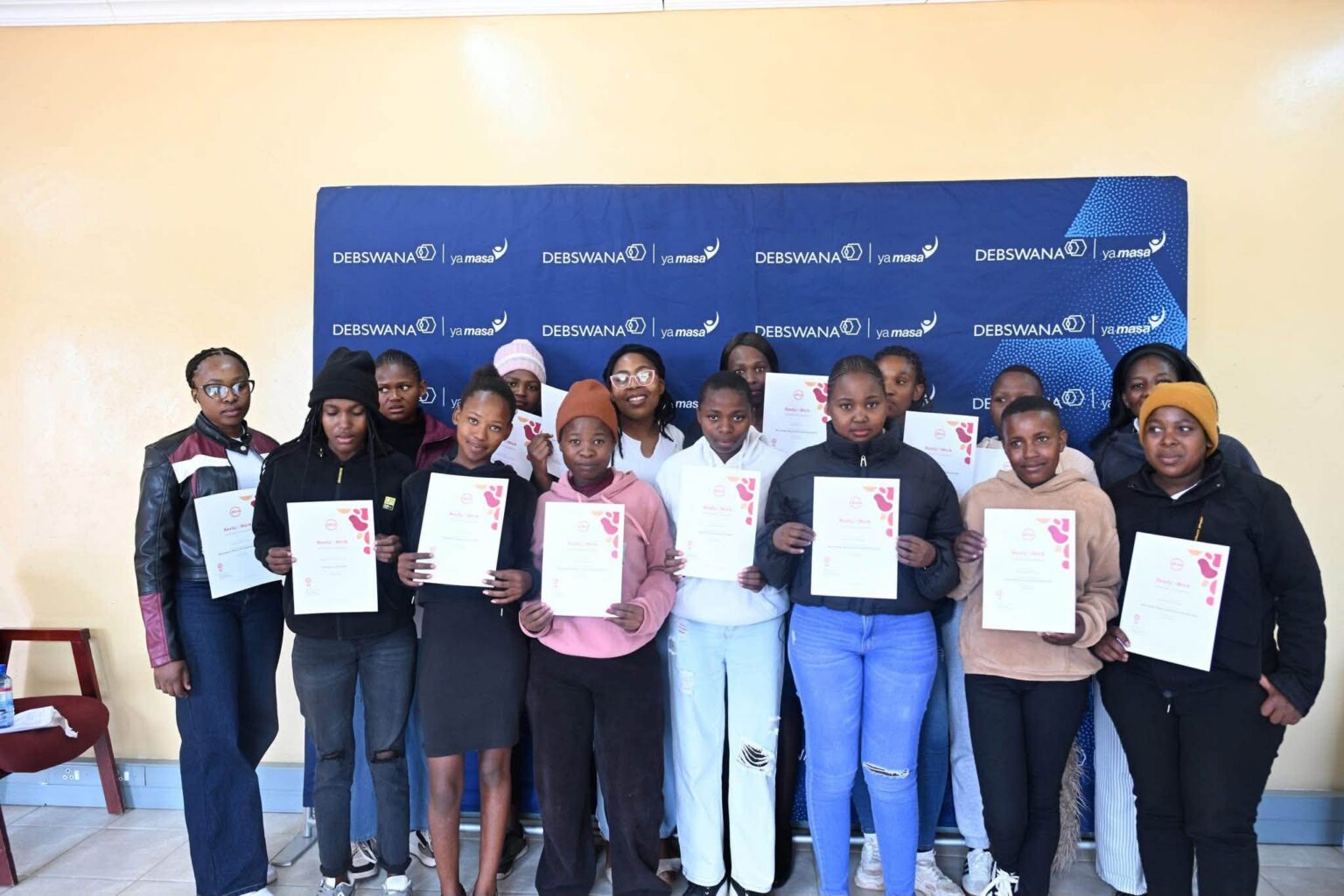
Debswana Jwaneng Mine has joined Stepping Stones International in celebrating a group of young mothers who graduated from a life-skills and empowerment programme in Pitseng. The initiative focused on equipping young women with practical knowledge and skills that can help them manage their responsibilities, strengthen their confidence and improve their economic resilience. Participants received guidance in areas including parenting, health education, financial literacy and broader life skills. The programme recognised that young mothers often face complex responsibilities that require both practical support and opportunities to build greater independence. By investing in their knowledge and capabilities, the initiative aims to help participants create stronger futures for themselves and their children.
The programme provided participants with knowledge that can be applied directly to their everyday lives and family responsibilities. Parenting education can help young mothers make more informed decisions about the wellbeing, development and care of their children. Health education can also improve awareness of issues that affect mothers and children while encouraging responsible approaches to personal and family health. Financial literacy gives participants tools to understand budgeting, saving and responsible management of household resources. Combined with broader life skills, these areas can help young mothers make informed decisions and manage challenges with greater confidence.
Building confidence was another important part of the programme’s focus. Young mothers can face social and economic pressures that make it difficult to plan for their futures while meeting the immediate needs of their families. Providing a supportive environment where participants can learn, share experiences and develop practical skills can help strengthen their sense of capability. The programme encouraged participants to recognise their own potential and consider ways to improve their personal and economic circumstances. Greater confidence can also help young women engage more effectively with opportunities in education, employment, entrepreneurship and community development.
Economic resilience is particularly important for young mothers because financial stability can have a direct effect on family wellbeing. The financial literacy component of the programme gave participants an opportunity to develop knowledge that can support better financial decision-making. Understanding how to manage available resources can help households prepare for expenses, identify priorities and reduce unnecessary financial pressure. For young mothers seeking to improve their economic circumstances, these skills can also provide a foundation for exploring employment or income-generating opportunities. The wider goal is to help participants become better equipped to support themselves and their children over the long term.
The graduation ceremony also demonstrated the importance of collaboration in supporting young women and families within communities. Community leaders, healthcare professionals, social welfare services and programme partners came together to recognise the achievements of the graduates. Their participation showed that empowering young mothers requires support from different sectors rather than relying on a single organisation. Each stakeholder can contribute different forms of knowledge, services and resources that help address the practical challenges faced by young women. Bringing these groups together can also strengthen connections between participants and services that remain important after the programme has ended.
The involvement of healthcare professionals is particularly relevant because health education forms an important part of supporting young mothers and their children. Access to reliable health information can help women make informed decisions about their own wellbeing and the care of their families. Healthcare professionals can also help connect communities with appropriate services and encourage participants to seek assistance when they need it. Combining health education with parenting and life skills provides a broader approach to family wellbeing. It ensures that participants gain knowledge that can support both immediate family needs and longer-term decision-making.
Social welfare services also have an important role to play in strengthening support systems for young mothers. Some participants may require assistance that extends beyond the topics covered during a life-skills programme, including access to social services, family support or other community resources. Connecting young women with relevant services can help them navigate challenges more effectively and reduce barriers that may affect their ability to achieve greater stability. Collaboration between social welfare professionals and community organisations can also improve awareness of available support. This network of assistance can help ensure that graduation becomes part of a longer journey towards empowerment rather than the end of support.
For Debswana Jwaneng Mine, participation in the graduation reflects its broader commitment to investing in communities and supporting initiatives that improve people’s lives. Community investment can have a stronger long-term impact when programmes focus on developing people’s skills and capabilities rather than providing short-term assistance alone. The young mothers who completed the programme now have practical knowledge that they can continue applying within their families and communities. Their development can also have benefits for their children, particularly when parents have stronger knowledge of health, education, financial management and responsible parenting. Supporting young women can therefore contribute to improvements that extend across generations.
Stepping Stones International’s involvement highlights the value of programmes that provide structured support to young people and families. By focusing on practical skills, confidence and empowerment, the initiative gives participants tools that can be used beyond the programme itself. The graduation ceremony provides an opportunity to recognise the commitment of the young mothers who completed the programme and acknowledge the organisations and professionals who contributed to their development. Celebrating these achievements can also encourage other young women to participate in similar initiatives when opportunities become available. The experience demonstrates how targeted programmes can help participants build skills while strengthening community networks.
The graduation in Pitseng represents an important milestone for the young mothers who completed the life-skills and empowerment programme. Their participation provided them with practical knowledge in parenting, health education, financial literacy and life skills, while encouraging them to develop confidence and greater economic resilience. The involvement of community leaders, healthcare professionals, social welfare services and programme partners reinforced the importance of coordinated support for young women. Debswana Jwaneng Mine’s participation further reflects the role that corporate community investment can play in supporting sustainable development at community level. By equipping young mothers with skills and confidence, the programme contributes to stronger families and creates opportunities for participants to build more secure and sustainable futures for themselves and their children.