
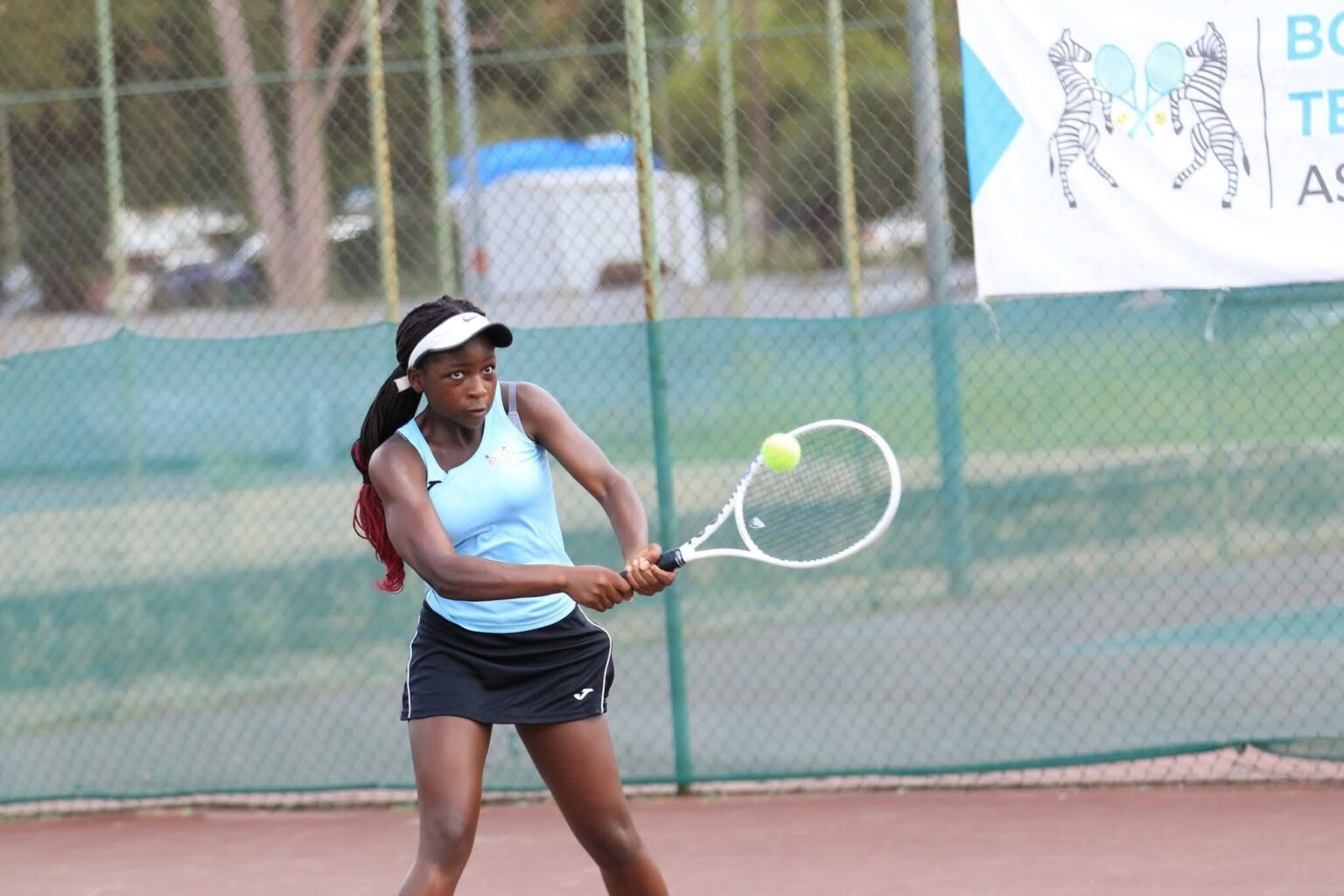
Botswana’s Martin Seetso and Angela Chakanyuka have celebrated a major achievement after being crowned World Tennis J30 doubles champions in an outstanding tournament that showcased emerging talent from across the region. Chakanyuka partnered with France’s Ines Fouque to claim the Girls Doubles title, while Seetso teamed up with South Africa’s Vladimir Ignatov to win the Boys Doubles championship. Both Botswana players delivered strong performances in their respective doubles finals and secured gold medals against determined opposition. Their achievements provide a significant boost for Botswana tennis and highlight the growing ability of the country’s young players to compete successfully on the international junior circuit. The victories also offer an encouraging example for other aspiring Batswana tennis players who are working towards higher levels of competition.
Chakanyuka and Fouque produced a composed performance in the Girls Doubles final against Namibia’s Joanivia Bezuidenhout and Mari van Schalkwyk. The international pairing won the opening set 7-5 before raising their level in the second set to secure a convincing 6-2 victory. The result demonstrated their ability to remain focused during a closely contested opening set and then build momentum as the match progressed. Winning the first set by two games gave Chakanyuka and Fouque an important advantage, which they used effectively in the second set. Their victory earned them the Girls Doubles gold medals and placed Chakanyuka among the tournament’s standout champions.
For Chakanyuka, partnering with a French player also provided an opportunity to gain experience in an international doubles environment. Doubles tennis requires communication, coordination and an understanding of how to complement a partner’s strengths during points. Players must react quickly to changes in rallies while also maintaining awareness of positioning and their partner’s movements on court. Chakanyuka and Fouque managed those demands effectively enough to overcome their Namibian opponents and finish the tournament as champions. Their 7-5, 6-2 victory represents an important achievement for both players and adds another international milestone to Chakanyuka’s developing tennis career.
Seetso also delivered a memorable performance in the Boys Doubles final alongside Ignatov. The pair faced South African opponents Connor Miller and Frederick Johannes Rheeder in a tightly contested match that required three sets to determine the champions. Seetso and Ignatov won the opening set 6-4, but Miller and Rheeder responded by taking the second set 6-4 and forcing a deciding match tiebreak. The final stage became a test of composure, with Seetso and Ignatov eventually prevailing 10-8 to secure the gold medals. Their ability to close out such a close contest highlights the concentration and resilience required to win at junior international level.
The Boys Doubles final was particularly competitive because both teams demonstrated the ability to respond after losing a set. Seetso and Ignatov established an early advantage by taking the first set, but Miller and Rheeder refused to surrender control of the match and levelled the contest in the second. The deciding 10-8 score shows how little separated the two teams when the championship was on the line. In a situation where every point can determine the outcome, Seetso and Ignatov maintained their focus and secured the final points needed for victory. Their success gave Seetso a World Tennis J30 doubles title and provided another important achievement for Botswana tennis.
The singles finals also produced competitive matches and added to an event filled with strong performances. In the Boys Singles final, South Africa’s Jack Thornhill defeated compatriot Connor Miller 6-1, 3-6, 7-5 in a match that changed direction after the opening set. Thornhill established control early, but Miller responded strongly by winning the second set and forcing a deciding third set. The final set went down to 7-5, showing that Thornhill had to maintain his composure to finish the match and claim the singles title. The result gave Thornhill a hard-earned championship after a final that featured momentum shifts and sustained competition.
The Girls Singles final featured an all-Namibian contest between Mari van Schalkwyk and Joanivia Bezuidenhout. Van Schalkwyk secured the title with a 6-2, 6-4 victory, overcoming her fellow Namibian in two sets. The match gave Namibia another notable result at the tournament after the country’s players also reached the Girls Doubles final. Bezuidenhout and van Schalkwyk had already demonstrated their ability to compete at the highest level of the event, making the singles final an important achievement for both players. Van Schalkwyk’s victory completed a successful tournament for her and added a singles gold medal to Namibia’s strong showing.
The results across the singles and doubles competitions reflect the quality of junior tennis talent participating in the tournament. Players from Botswana, Namibia, South Africa and other countries competed in matches that demanded technical skill, physical endurance and mental strength. The doubles finals in particular demonstrated how international partnerships can create opportunities for young athletes to gain new experience and compete alongside players from different tennis programmes. For Botswana, the achievements of Seetso and Chakanyuka provide a clear reason for celebration. Their victories also underline the importance of giving young players access to international tournaments where they can test their development against strong opposition.
The success of Seetso and Chakanyuka represents more than two individual doubles titles for Botswana. Their performances show that Batswana players can compete successfully in international junior tennis and win titles against players representing established tennis nations. Chakanyuka’s partnership with Fouque and Seetso’s partnership with Ignatov also demonstrate the value of international collaboration in junior sport. Such tournaments allow young athletes to build confidence, gain match experience and develop relationships with players from different countries. Continued participation in international competitions can help Botswana’s promising players strengthen their skills and prepare for increasingly demanding levels of competition.
The World Tennis J30 tournament ended with celebrations for the champions and recognition for every player who competed throughout the event. Thornhill and van Schalkwyk captured the singles titles, while Chakanyuka and Fouque won the Girls Doubles championship and Seetso and Ignatov secured the Boys Doubles crown. Each final required the players to manage pressure, adapt to their opponents and maintain their focus when important points mattered most. For Botswana, the standout moments came through Seetso and Chakanyuka, whose doubles victories delivered two gold medals and international recognition. Their achievements offer an important source of pride for their families, coaches and the wider Batswana tennis community.
Martin Seetso and Angela Chakanyuka’s success as World Tennis J30 doubles champions marks a significant moment for Botswana’s junior tennis development. Seetso showed resilience alongside Ignatov to defeat Miller and Rheeder 6-4, 4-6, 10-8, while Chakanyuka and Fouque produced a strong 7-5, 6-2 victory over Bezuidenhout and van Schalkwyk. Their gold medals demonstrate the rewards that can come from commitment, preparation and the ability to perform under pressure on an international stage. As these young champions continue their tennis journeys, their performances can inspire other Batswana players to pursue opportunities beyond domestic competition. The tournament provided plenty of reasons to congratulate every participant, but Seetso and Chakanyuka deserve special recognition for bringing World Tennis J30 doubles gold home to Botswana.