
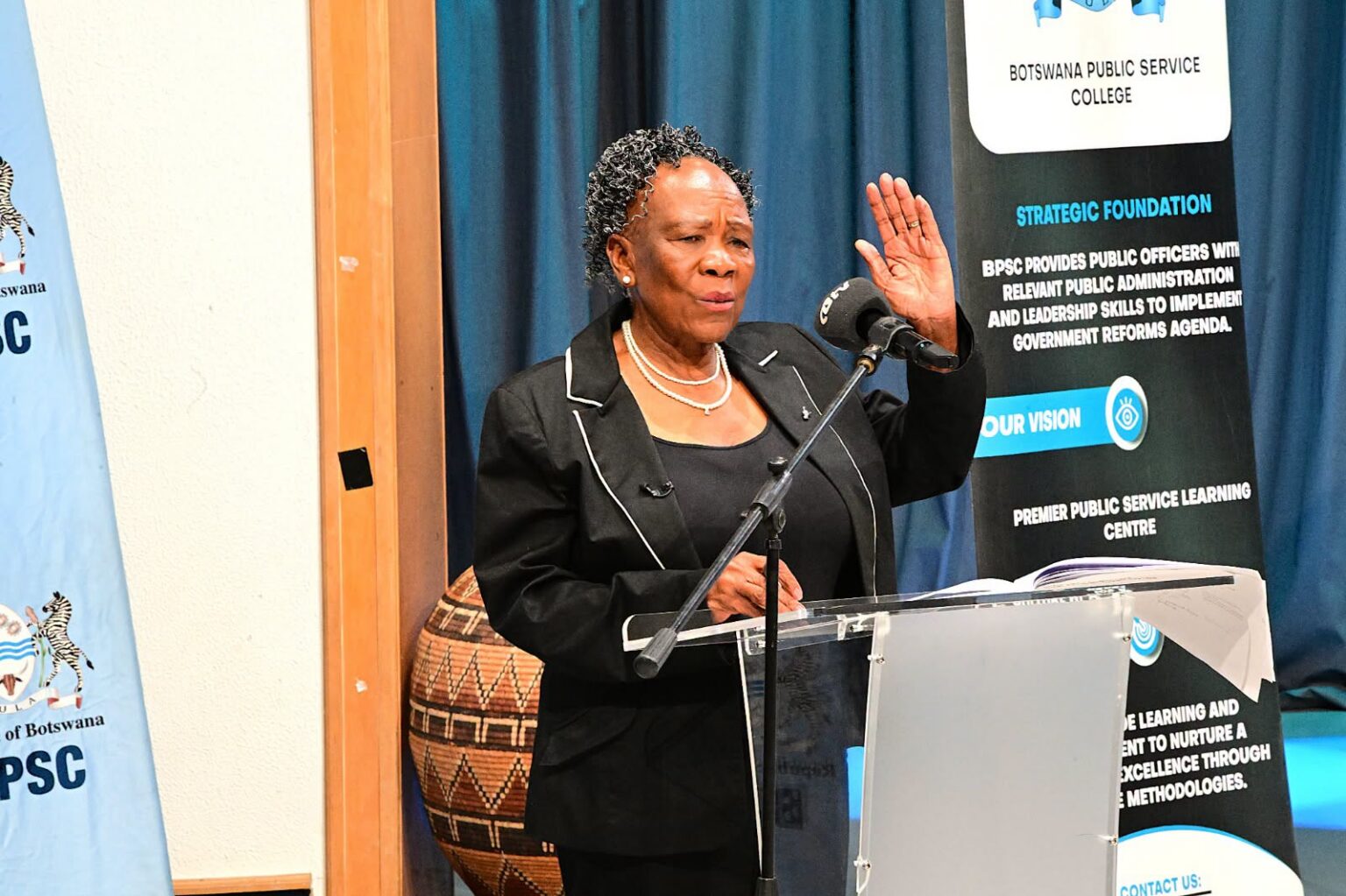
The Botswana Public Service College has officially kicked off Botswana’s 60th anniversary celebrations with its inaugural annual public lecture, marking an important moment to reflect on the contribution of the country’s public service since independence. Held under the theme “The Founding Generations: Botswana’s Public Service at 60,” the lecture placed the country’s public institutions at the centre of discussions about national development and governance. The event recognised the public officers whose discipline, professionalism and commitment helped establish the foundations of Botswana’s political stability and economic progress. It also created an opportunity to examine how the public service has changed over the decades and what it must do to meet the demands of the future. As Botswana marks six decades of independence, the lecture provided a timely reminder that strong institutions and effective public administration remain essential to the country’s continued development.
Executive Director Kitso Kemoeng said the public lecture was designed to celebrate a public service whose contribution has often taken place away from the spotlight. He highlighted the quiet discipline of public officers who helped build and maintain the institutions that supported Botswana’s development after independence. Public servants played an important role in translating government policies and national development plans into programmes and services that could reach communities across the country. Their work helped establish administrative systems that supported political stability while contributing to the development of economic infrastructure. The lecture therefore recognised public service not simply as an administrative function, but as an important component of Botswana’s national development story.
The theme “The Founding Generations: Botswana’s Public Service at 60” also encouraged reflection on the experiences of the officers who served during the country’s formative years. Botswana’s transition from a newly independent state into a stable democracy required public institutions capable of supporting government functions and implementing national priorities. Early public servants worked within limited resources while helping establish systems of administration that could support a growing country. Their experiences provide valuable lessons about professionalism, discipline and commitment to public duty. Reflecting on those lessons can help current and future public servants understand the institutional foundations upon which Botswana’s public administration has been built.
Keynote speaker Festinah Bakwena, a former Permanent Secretary and Ombudsman, offered a personal and nostalgic account of her years in public service. Her reflections highlighted the formative lessons that shaped her career and the importance of discipline and a strong sense of duty in public administration. Her experiences provided an insight into an era when public service placed significant emphasis on professionalism, responsibility and commitment to national development. By sharing her journey, Bakwena helped connect the experiences of earlier generations of public officers with the challenges facing public servants today. Her contribution also demonstrated the value of preserving institutional memory as Botswana prepares to enter the next phase of its national development.
Bakwena traced the evolution of the Botswana Public Service College from its beginnings as a pre-independence trade school to its current role as a national academy for public administration. The transformation reflects the broader development of Botswana’s public service and the increasing need for specialised training in government administration. As the country’s institutions expanded, the demands placed on public officers also became more complex. Training and professional development therefore became important tools for building the skills needed to manage government programmes and respond to changing national priorities. The College’s evolution illustrates how Botswana’s public administration has developed alongside the country itself, moving from modest beginnings towards a more professional and structured system.
Her reflections also challenged the idea that democracy can be measured only through elections and political participation. Bakwena argued that capable institutions and fair administration are equally important to sustaining democratic governance. Public officers have a daily responsibility to implement laws, administer government programmes and provide services to citizens regardless of political changes. Their ability to perform these functions professionally can strengthen public confidence in government institutions and reinforce the principles of good governance. Botswana’s democratic development can therefore be understood not only through its electoral history, but also through the consistent work of public servants who have helped turn national visions into practical development programmes.
The role of public servants in implementing successive national development visions was another important aspect of the lecture. Botswana has relied on long-term planning to guide its economic and social development, and public officers have been responsible for translating these plans into policies, programmes and services. This requires technical expertise, administrative discipline and an understanding of the needs of citizens and communities. Effective implementation can determine whether national development goals remain policy statements or become measurable improvements in people’s lives. The contribution of public servants to this process highlights why professional capacity within government remains critical to national development.
Deputy Permanent Secretary to the President Idah Motsamai brought the discussion into the present by highlighting how Botswana’s public service has evolved from modest beginnings into a professional and increasingly citizen-centred institution. The shift towards citizen-centred public administration reflects growing expectations for government services that are accessible, efficient and responsive. Citizens increasingly expect public institutions to provide services without unnecessary delays while communicating clearly and treating people fairly. This places greater responsibility on public servants to understand the experiences of those they serve and to improve the way government programmes are delivered. The evolution described by Motsamai shows that public service must continue adapting as the expectations of citizens and the demands on government change.
Motsamai also emphasised the need to protect political neutrality, merit and integrity as the public service enters its next chapter. Political neutrality allows public officers to perform their responsibilities professionally and consistently while serving the government of the day within the framework of the law. Merit-based recruitment and promotion can help ensure that public institutions have the skills and expertise required to deliver effective services. Integrity is equally important because public trust depends on officials using public resources responsibly and making decisions in the public interest. Maintaining these principles will be essential as Botswana seeks to strengthen public institutions and ensure that its public service remains credible and effective.
At the same time, the public service faces a rapidly changing operating environment that requires new approaches to administration. Technology is reshaping how governments communicate with citizens, manage information and deliver services. Digital systems can improve efficiency, reduce administrative burdens and make certain government services more accessible, but they also require investment in skills, infrastructure and cybersecurity. Public institutions must therefore embrace technological change while ensuring that citizens who face barriers to digital access are not excluded. The ability to combine technology with sound administration will be increasingly important as Botswana modernises its public service.
The need for greater agility and stronger accountability also featured prominently in the vision for the future of Botswana’s public service. Government institutions must be able to respond quickly to changing economic conditions, emerging social needs and evolving expectations from citizens. At the same time, public officials need to demonstrate that government resources are being used effectively and that programmes are producing measurable results. This becomes particularly important amid declining revenues, which can place greater pressure on government to prioritise spending and improve efficiency. Strong accountability systems can help ensure that limited resources are directed towards programmes that deliver meaningful public value.
The 60th anniversary public lecture therefore served as more than a celebration of Botswana’s public service history. It created a space for current and former public servants to reflect on the values and institutional practices that helped shape the country over the past six decades. It also highlighted the need to preserve important principles while adapting to new realities such as technological change, fiscal pressures and rising public expectations. The experiences of founding generations can provide useful guidance, but the challenges facing the public service today require new skills and approaches. Connecting institutional history with future-focused reform will be important if Botswana is to maintain the strength and credibility of its public institutions.
The Botswana Public Service College’s inaugural annual public lecture has consequently provided a meaningful start to the country’s 60th anniversary celebrations. The event recognised the generations of public servants whose discipline, professionalism and commitment contributed to Botswana’s political stability, institutional development and economic progress. It also made clear that the public service cannot rely solely on past achievements and must continue evolving to meet the needs of citizens and the realities of a changing economy. Protecting political neutrality, merit and integrity while embracing technology, agility and accountability will be central to this next phase. As Botswana reflects on 60 years of national development, the lecture reinforced the importance of a capable, ethical and citizen-centred public service in building on the country’s achievements and delivering meaningful results for future generations.