
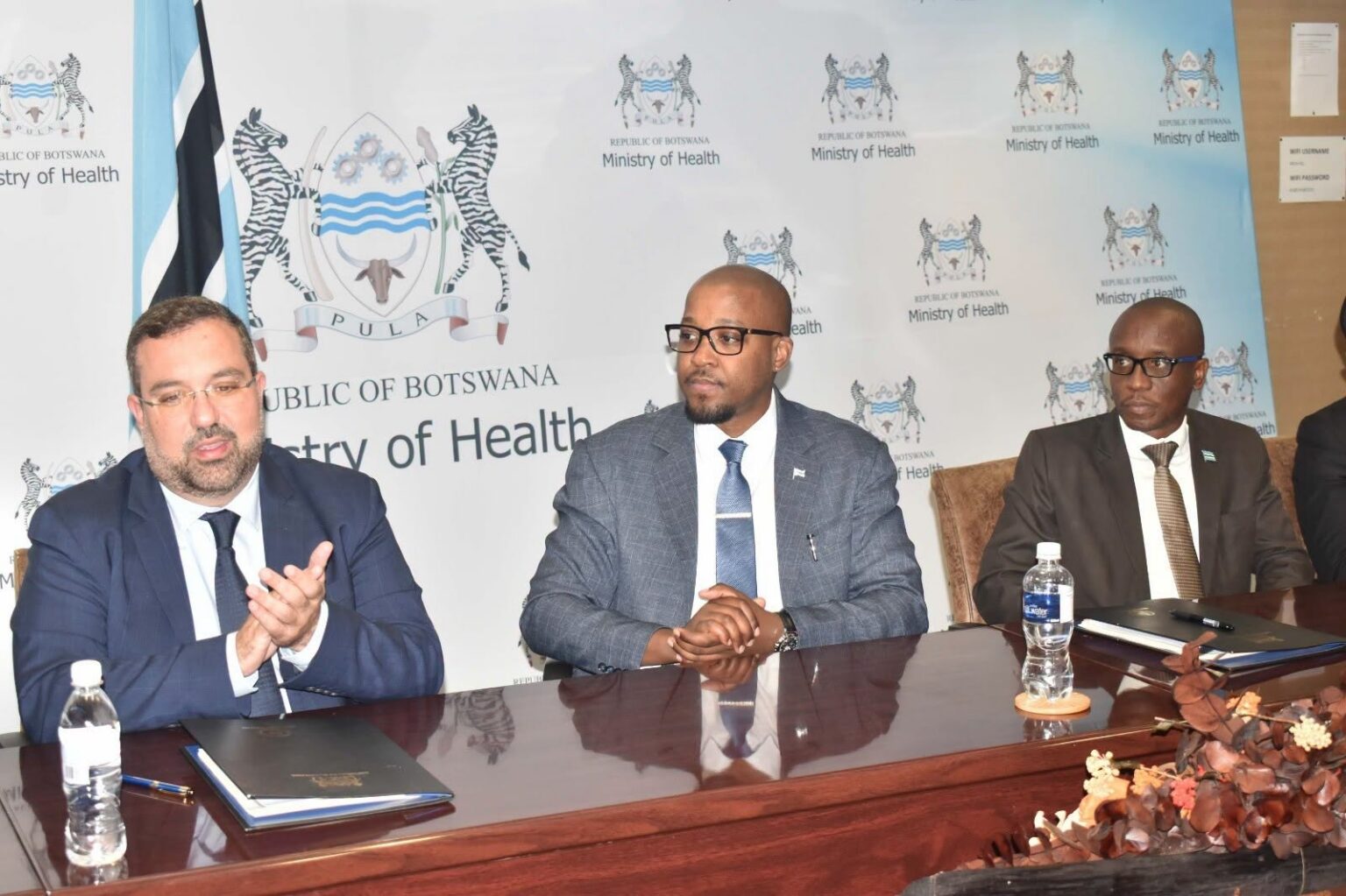
Botswana has reached a significant milestone in its efforts to strengthen the national healthcare system following the signing of a strategic 10-year partnership between the Ministry of Health and Abu Dhabi Health Data Services (ADHDS), based in the United Arab Emirates. The agreement was signed in Gaborone by ADHDS Chief Executive Officer Mr Kareem Shahin and Acting Permanent Secretary in the Ministry of Health Dr Tshepo Machacha. The signing took place in the presence of the Minister of Health, Hon. Dr Stephen Modise, highlighting the importance attached to the partnership by the Botswana Government. The agreement is expected to support long-term improvements in the availability of medicines, medical products and health technologies across the country. It also represents an important step towards building a healthcare system that is more reliable, responsive and sustainable.
At the centre of the agreement is a 10-year partnership focused on the supply of pharmaceuticals and essential medical products to Botswana. A dependable supply of medicines remains critical to the effective delivery of healthcare because shortages can disrupt treatment, place pressure on healthcare workers and affect patients who depend on regular access to essential medication. By establishing a strategic framework for pharmaceutical procurement, the partnership aims to improve the reliability of Botswana’s medical supply chain while making procurement processes more efficient and timely. The initiative could also strengthen the country’s ability to plan for healthcare demand and reduce disruptions that have affected the availability of essential products. A more resilient supply system would give health facilities greater confidence that critical medicines and medical supplies can reach patients when they are needed.
The partnership extends beyond pharmaceutical supplies and creates opportunities for broader cooperation in several areas of healthcare development. Digital health transformation is one of the key areas identified, reflecting the growing importance of technology in improving how health information is managed and how healthcare services are delivered. The agreement also opens avenues for cooperation in genomics and precision medicine, areas that could contribute to more personalised approaches to diagnosis, prevention and treatment in the future. Health-sector investment and local and regional capacity development are also included, creating opportunities for Botswana to strengthen expertise and infrastructure within its healthcare sector. These areas could help the country build greater technical capacity while positioning its health system to benefit from emerging developments in medical science and technology.
The timing of the agreement is particularly important because it comes shortly after Parliament approved Botswana’s National Health Insurance Policy on 19 August 2026. Expanding healthcare access through national health insurance requires more than a sustainable financing framework because patients must also have access to medicines, functioning medical equipment, appropriate technologies and quality health services. The new partnership could therefore provide an important supporting component as Botswana works towards implementing broader healthcare access. A stronger medical supply chain can help ensure that increased demand generated by expanded healthcare coverage does not place unsustainable pressure on existing procurement and distribution systems. The combination of healthcare financing reform and investment in supply systems could provide a stronger foundation for delivering more consistent services to communities across the country.
Medicine shortages have been among the longstanding challenges facing healthcare systems in many countries, and Botswana has recognised the need to improve the reliability of its medical supply arrangements. The new partnership offers an opportunity to address some of these challenges through a longer-term approach to pharmaceutical and medical product procurement. Long-term cooperation can provide greater scope for planning, coordination and supply chain management than short-term arrangements that focus only on immediate shortages. It can also help health authorities identify gaps earlier and develop strategies to maintain the availability of essential products. If implemented effectively, the partnership could contribute to fewer disruptions in the supply of medicines and better continuity of care for patients.
The agreement also addresses the broader issue of health technology, including the need for functional equipment within healthcare facilities. Medical equipment that is unavailable, outdated or not functioning properly can limit the ability of healthcare professionals to diagnose and treat patients effectively. Improving access to appropriate health technologies can therefore have a direct impact on the quality and efficiency of healthcare delivery. Cooperation in digital health, genomics and precision medicine could further support the modernisation of healthcare services as Botswana develops its capacity to use technology and data more effectively. These developments could help create a health system that responds more efficiently to patient needs while supporting healthcare professionals with better tools and information.
Capacity development will also be an important part of the partnership because sustainable healthcare improvements depend on skilled people as well as physical resources. Cooperation involving local and regional capacity development could support the transfer of knowledge, technical expertise and operational experience to Botswana’s health sector. Building local capacity can reduce dependence on external support over time and help ensure that new systems and technologies remain effective after they are introduced. It could also create opportunities for healthcare professionals and other specialists to gain exposure to emerging practices in areas such as digital health, genomics and precision medicine. Strengthening human capacity alongside infrastructure and supply chains would give Botswana a more comprehensive approach to healthcare transformation.
The partnership also has potential implications for investment in Botswana’s health sector. Greater cooperation with an international health services organisation can create opportunities to explore new forms of investment, technology partnerships and institutional collaboration. Such investment could support improvements in infrastructure, health technologies and systems that require substantial resources to establish and maintain. It may also encourage greater participation by local institutions and businesses in healthcare-related activities, supporting economic development alongside improvements in health services. The focus on local and regional capacity development is particularly relevant because stronger domestic capabilities can help ensure that the benefits of health-sector investment are sustained within Botswana.
For patients, the success of this initiative will ultimately be measured by practical improvements in healthcare services. Reliable access to essential medicines can reduce the disruption caused when patients are unable to obtain prescribed treatment from health facilities. Functional equipment can improve the ability of healthcare workers to provide timely diagnosis and treatment, while digital systems can make health services more coordinated and efficient. The implementation of the National Health Insurance Policy also creates an opportunity for more people to access healthcare without financial barriers preventing them from seeking necessary treatment. Together, these developments could contribute to a more patient-centred healthcare system that provides more consistent services across Botswana.
The signing between Botswana’s Ministry of Health and Abu Dhabi Health Data Services marks an important development in the country’s long-term healthcare ambitions. The 10-year agreement brings together pharmaceutical supply, essential medical products, digital health transformation, genomics, precision medicine, investment and capacity development within a single strategic partnership. Its importance is strengthened by the recent approval of the National Health Insurance Policy, which creates a broader framework for expanding access to healthcare. Botswana now has an opportunity to connect healthcare financing reforms with stronger supply chains, functional technologies and improved service delivery. If the agreement is implemented effectively and sustained through strong oversight and coordination, it could play a meaningful role in building a more resilient, accessible and sustainable healthcare system for the people of Botswana.