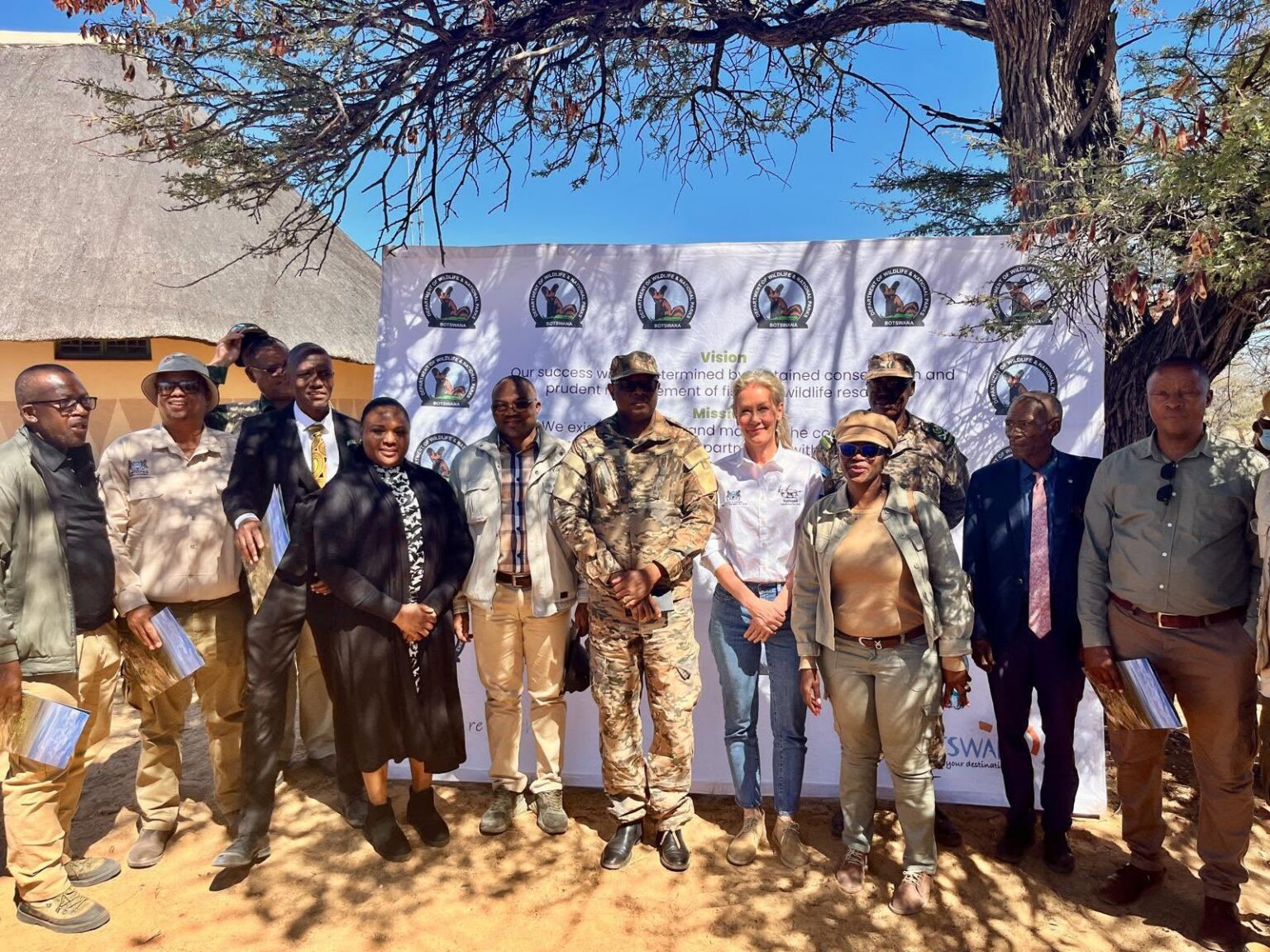
The European Union has reaffirmed its commitment to supporting conservation and sustainable community development in Botswana through a new co-financed project at the Kgalagadi Transfrontier Park. European Union Ambassador to Botswana and SADC, Petra Pereyra, participated in the launch of the project and welcomed the strong engagement of stakeholders involved in the initiative. The project forms part of the NaturAfrica Global Gateway programme, which aims to strengthen conservation while supporting communities connected to protected landscapes. The launch marks an important development for one of Africa’s most recognised conservation areas and comes with a focus on strengthening the park’s operational capacity. It also reflects growing recognition that successful conservation depends on protecting ecosystems while ensuring that surrounding communities can benefit from sustainable development.
The Kgalagadi Transfrontier Park is one of Africa’s most iconic landscapes and provides an important setting for conservation, biodiversity protection and tourism. Its transfrontier character requires cooperation between institutions and stakeholders because effective management must address ecological and operational priorities across a large protected area. The launch of the new European Union co-financed project therefore represents an opportunity to strengthen the systems needed to protect the park over the long term. Ambassador Pereyra highlighted the importance of seeing the first activities already being implemented in the field, describing the strong involvement of stakeholders as encouraging. Early implementation provides an indication that the project is moving from planning into practical action on the ground.
One of the immediate priorities under the project is restoring the operational integrity of the park. This includes strengthening management capacity so that the institutions responsible for the protected area have the skills, systems and resources required to perform their functions effectively. Strong management is essential for coordinating conservation activities, monitoring resources and responding to challenges that may threaten the park’s ecological integrity. The project will also focus on infrastructure, which is necessary for supporting conservation teams and ensuring that key areas of the park remain accessible and properly managed. Improving these foundations can create stronger conditions for effective conservation and more sustainable park operations.
Surveillance is another important part of the project’s immediate priorities. Protected areas require effective monitoring to identify threats, support law enforcement and protect wildlife and natural resources. Strengthening surveillance capabilities can improve the ability of park authorities and partners to respond to emerging challenges across the landscape. Effective surveillance also contributes to the broader objective of maintaining the ecological health and security of the Kgalagadi Transfrontier Park. By investing in management, infrastructure and surveillance together, the project is taking a comprehensive approach to strengthening the park’s operational capacity.
The project also places significant importance on deeper engagement with communities living around or connected to the protected area. Community participation is increasingly recognised as an essential part of long-term conservation because local people are directly affected by decisions concerning natural resources and protected landscapes. Building stronger relationships with communities can help ensure that development initiatives respond to actual local needs rather than being designed without sufficient understanding of local circumstances. The NaturAfrica project aims to lay the groundwork for this deeper engagement after addressing the park’s immediate operational priorities. This approach can help create a stronger relationship between conservation objectives and community development.
Evidence-based planning will be central to the community development component of the initiative. Understanding the needs, opportunities and challenges faced by communities can help ensure that projects are relevant and capable of producing meaningful results. Locally informed approaches can also improve participation because communities are more likely to support initiatives that reflect their circumstances and priorities. Integrating these initiatives into the park’s long-term management framework can further ensure that community development is treated as a core component of conservation planning. This creates an opportunity for conservation and community development to reinforce each other rather than operate as separate activities.
The principle that conservation must benefit communities was strongly emphasised by Ambassador Pereyra. Protected areas can only remain sustainable when the people living around them see tangible value in conservation and have opportunities to participate in the economic and social benefits associated with natural resources. If communities feel excluded from conservation efforts, long-term support for protected areas can become more difficult to maintain. Creating meaningful community benefits can strengthen local ownership and encourage greater cooperation with conservation authorities. The NaturAfrica project’s focus on community engagement therefore addresses an important part of ensuring that conservation efforts remain sustainable over time.
Tourism is another area that could benefit from stronger conservation management and community participation. The Kgalagadi Transfrontier Park’s landscapes and wildlife make it an important attraction, but the long-term sustainability of tourism depends on maintaining the quality and integrity of the natural environment. Improved infrastructure, stronger management and effective surveillance can support a better functioning protected area and create conditions for responsible tourism. Communities can also benefit when tourism generates local economic opportunities and supports businesses linked to accommodation, transport, guiding, crafts and other services. Integrating community development into conservation planning can therefore help ensure that tourism contributes more broadly to local economic development.
The success of the initiative will depend on continued collaboration among the organisations involved. The European Union has recognised the importance of cooperation with Botswana’s Ministry of Environment and Tourism, African Parks and the International Union for Conservation of Nature, among other stakeholders. Each partner brings different expertise and capabilities that can contribute to the project’s objectives. Strong coordination can help prevent duplication, improve the use of resources and ensure that activities remain aligned with long-term conservation goals. The participation of multiple institutions also demonstrates the shared importance of protecting the Kgalagadi landscape while supporting the people connected to it.
The launch of the NaturAfrica Global Gateway project represents an important step towards strengthening conservation and community development in the Kgalagadi Transfrontier Park. The immediate focus on management capacity, infrastructure and surveillance provides a foundation for improving the park’s operational integrity. The planned emphasis on evidence-based and locally relevant community initiatives can then help build stronger links between conservation and the needs of surrounding communities. The involvement of the European Union, Botswana’s Ministry of Environment and Tourism, African Parks and IUCN demonstrates the importance of partnerships in achieving sustainable conservation outcomes. With continued collaboration and effective implementation, the project has the potential to strengthen the Kgalagadi Transfrontier Park while generating lasting benefits for both its natural environment and the communities connected to it.