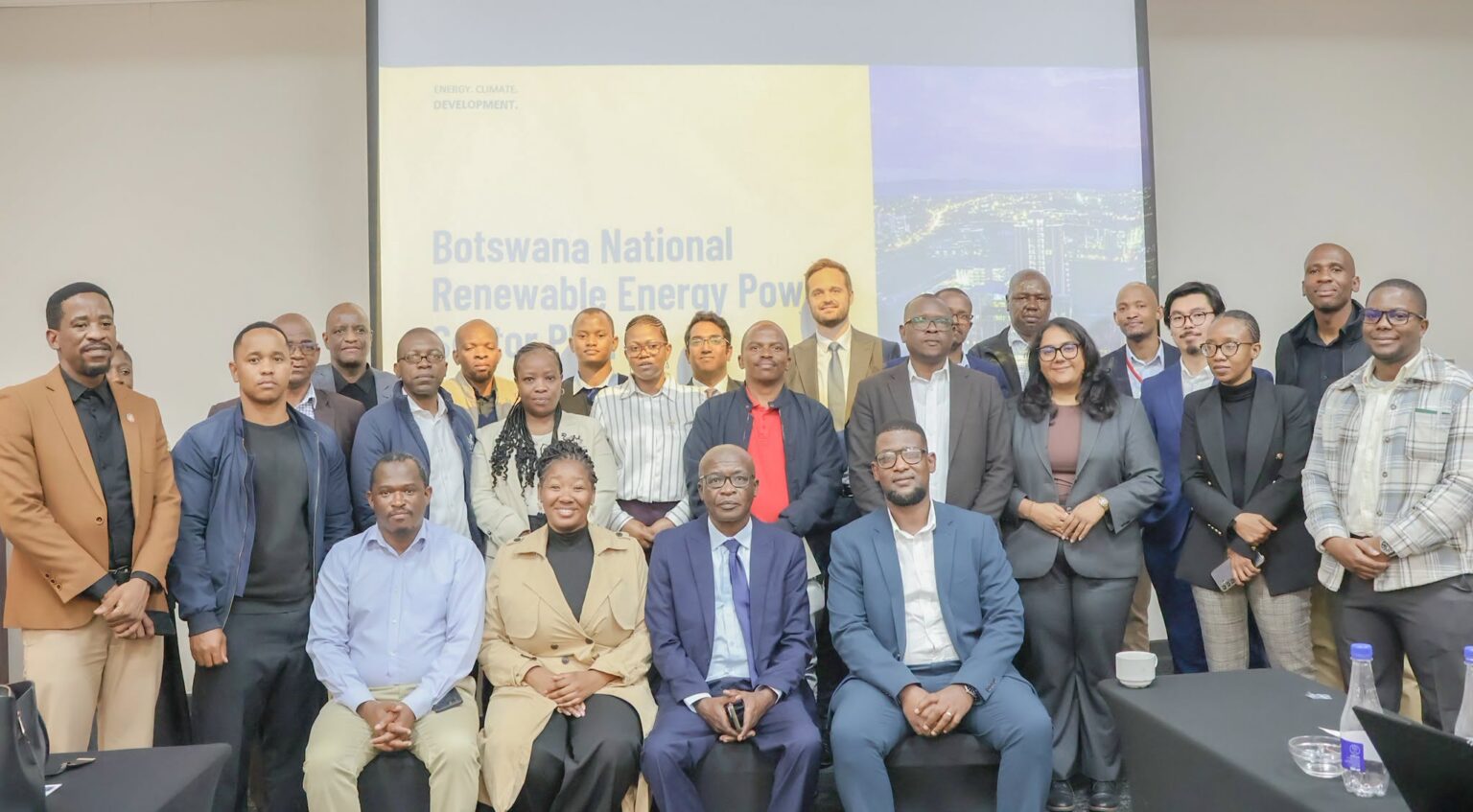
Botswana is taking another step towards transforming its energy sector as the Ministry of Minerals and Energy, with support from Sustainable Energy for All (SEforALL), convened stakeholders for a two-day workshop focused on the National Renewable Energy and Power Sector Plan (REPSP). The workshop provided an important platform to present and clarify the findings of the plan while examining what they mean for Botswana’s future power system. Discussions also focused on renewable energy development, electricity reliability, investment requirements and the practical considerations needed to move from planning to implementation. The initiative comes as Botswana seeks to increase the contribution of renewable energy to its electricity mix while ensuring that the power system remains secure, reliable and affordable. Through the stakeholder engagement, government and its partners are working to establish a clearer pathway for turning Botswana’s renewable energy ambitions into practical projects and long-term investment opportunities.
The National Renewable Energy and Power Sector Plan is designed to serve as a technical roadmap for Botswana’s renewable energy and electricity sector. It seeks to translate the country’s ambition of increasing renewable energy uptake into a credible and financeable pathway that can guide future decisions. The plan examines Botswana’s renewable energy potential and considers the different sources that could contribute to the country’s future energy requirements. It also looks at grid investment needs, which will become increasingly important as more renewable generation is connected to the national power system. In addition, the plan considers the policy and institutional reforms that may be required to create an environment capable of supporting increased renewable energy investment.
The two-day workshop played an important role in ensuring that stakeholders understood the findings of the REPSP and their potential implications for Botswana’s energy future. Participants were given an opportunity to examine the technical information contained in the plan and discuss how it could influence power-system planning and renewable energy development. Stakeholder engagement is particularly important when implementing major energy-sector reforms because decisions about generation, transmission and investment can affect government institutions, businesses, investors and electricity consumers. The discussions also created space for stakeholders to identify potential implementation challenges before specific actions are taken. By bringing relevant stakeholders together, the Ministry of Minerals and Energy and SEforALL created an opportunity to build a shared understanding of the roadmap and the steps required to advance it.
A key focus of the workshop was the relationship between renewable energy development and power-system reliability. Increasing renewable energy capacity can provide Botswana with additional sources of electricity, but the transition also requires careful planning to ensure that supply remains stable as the generation mix changes. Grid infrastructure must be capable of accommodating new generation while maintaining the reliability of electricity transmission and distribution. Power-system planning therefore needs to consider not only the amount of renewable energy that can be developed but also where projects should be located, how they will connect to the grid and what supporting infrastructure will be required. These considerations make the REPSP an important planning tool for aligning renewable energy ambitions with the technical realities of Botswana’s electricity system.
Investment was another central consideration addressed during the stakeholder engagement. Renewable energy projects require significant investment in generation facilities, transmission infrastructure and supporting systems, while investors also need clear policies and predictable regulatory conditions. A credible plan can help provide greater clarity about where investment opportunities may exist and what infrastructure will be needed to support future development. The REPSP’s focus on Botswana’s renewable energy potential can therefore contribute to efforts to identify projects that have the potential to attract financing. However, turning identified opportunities into operational projects will require coordinated action from government, investors, development partners and other stakeholders.
In his welcome remarks, Acting Director of the Department of Energy Mr Baruti Regoeng emphasised that the National Renewable Energy and Power Sector Plan does not operate independently of Botswana’s existing energy planning framework. He explained that the energy sector is already guided by the National Energy Policy, which establishes the country’s broader ambition for a secure, reliable and affordable energy system. He also highlighted the Integrated Resource Plan (IRP), which provides the least-cost generation expansion pathway for the electricity sector. The relationship between these existing frameworks and the REPSP is important because renewable energy development needs to complement the country’s broader electricity planning objectives. By positioning the REPSP within the existing policy and planning environment, Botswana can work towards a more coordinated approach to energy-sector development.
Regoeng also pointed to Botswana’s commitments under the National Energy Compact through the Mission 300 initiative, which was launched last year. These commitments add another dimension to the country’s efforts to improve energy access and attract investment into the electricity sector. Expanding access to reliable electricity remains closely connected to economic development because households, businesses, public institutions and industries depend on dependable power. Renewable energy can contribute to these objectives when its development forms part of an integrated approach that addresses generation capacity, grid infrastructure, affordability and reliability. The National Energy Compact therefore provides an additional framework within which Botswana’s renewable energy and power-sector priorities can be considered.
The involvement of Sustainable Energy for All in supporting the workshop also reflects the importance of partnerships in advancing energy-sector transformation. International organisations and development partners can provide technical expertise, resources and experience that help countries strengthen their energy planning processes. For Botswana, this type of support can complement the work of government institutions while helping to develop a roadmap that considers both national priorities and broader developments in the global energy sector. Collaboration can also help improve the bankability of renewable energy opportunities by providing clearer information about investment requirements and implementation conditions. Strong partnerships will remain important as Botswana moves from technical planning towards the development and financing of specific renewable energy projects.
The stakeholder discussions also provided an opportunity to identify immediate follow-up actions needed to advance the findings of the REPSP. Developing a plan is only one part of the energy transition, as implementation requires clear responsibilities, timelines, institutional coordination and appropriate financing mechanisms. Stakeholders therefore need to determine which recommendations can be acted upon immediately and which require additional technical, regulatory or financial work. Continued engagement can help ensure that different institutions understand their roles and that potential obstacles are addressed early. Agreeing on practical next steps also increases the likelihood that the workshop discussions will translate into measurable progress within Botswana’s energy sector.
The renewable energy roadmap could have significant implications for Botswana’s long-term energy security if its recommendations are effectively implemented. Expanding renewable energy sources can diversify electricity generation and potentially reduce reliance on conventional forms of power generation. At the same time, careful planning is needed to ensure that new renewable capacity is integrated into the electricity grid without compromising reliability. This requires investment not only in generation but also in transmission networks, system planning, regulation and institutional capacity. The REPSP provides a structured basis for considering these interconnected requirements while helping Botswana plan for a power system that can respond to future demand.
The workshop ultimately reinforced the need for Botswana to move from renewable energy ambition towards coordinated implementation. The National Renewable Energy and Power Sector Plan provides a technical foundation for assessing renewable energy potential, determining grid investment requirements and identifying policy and institutional changes that can support the transition. Its alignment with the National Energy Policy, Integrated Resource Plan and National Energy Compact can help ensure that renewable energy development forms part of a broader and coordinated national energy strategy. Continued stakeholder cooperation, investment and effective implementation will be essential to turning the plan into real projects and improved energy outcomes. As Botswana works towards a more secure, reliable and affordable electricity system, the REPSP could become an important instrument in shaping the country’s renewable energy future and creating a clearer pathway for sustainable investment and development.