
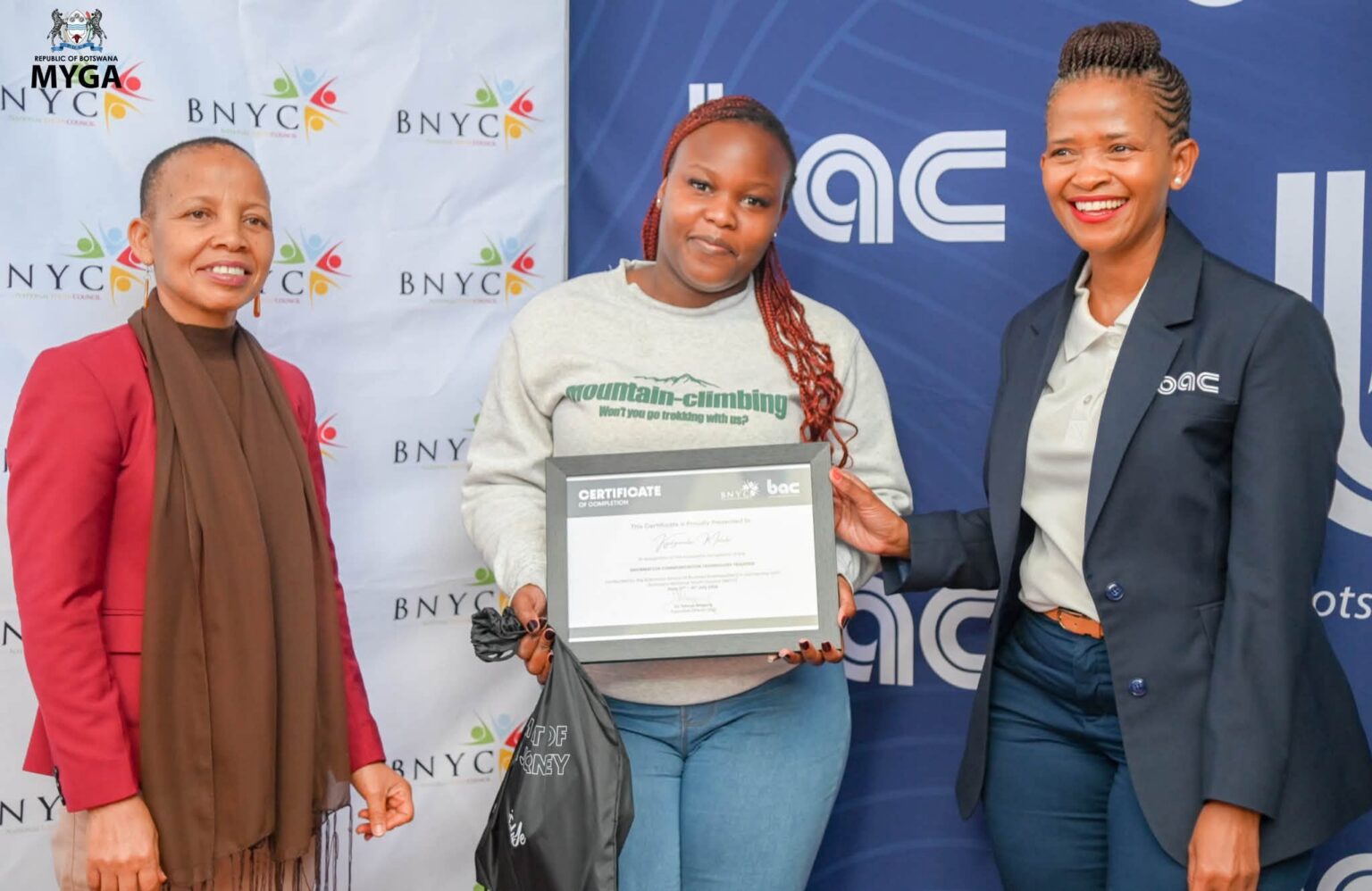
Botswana School of Business Sciences (BAC), in partnership with the Botswana National Youth Council (BNYC), has celebrated the achievements of young people who completed an ICT certification programme designed to strengthen their digital skills and prepare them for opportunities in an increasingly technology-driven economy. The ICT Certification Ceremony was held under the theme “Empowering Youth through Digital Skills and ICT,” highlighting the importance of equipping young people with practical computer knowledge. The programme focused on providing participants with essential digital skills that can support their education, employment prospects and personal development. At a time when digital literacy has become increasingly important across many sectors, initiatives that give young people access to relevant technology and training can play an important role in improving their readiness for the workplace. The partnership between BAC and BNYC also demonstrates how institutions can work together to create practical learning opportunities for Botswana’s youth.
The ceremony provided an opportunity to recognise the commitment and progress of the young graduates who took part in the training programme. Welcoming guests, Ms Ntletleng Lesejane expressed appreciation to BAC and BNYC for their contribution towards making the initiative possible. She specifically acknowledged the donation of computers and other resources that helped create the necessary conditions for participants to gain practical digital experience. Lesejane also commended the young people who showed interest in the programme and remained committed to completing their training. She said the organisations were looking forward to reaching more young people and building on the progress already achieved through the initiative.
The programme reflects the growing need for young people to develop computer skills that can support them in both professional and everyday environments. Basic digital knowledge can help individuals communicate more effectively, access information, prepare documents, manage data and navigate online platforms with greater confidence. These skills can also provide a foundation for further learning in areas such as digital marketing, information technology, online entrepreneurship and other technology-related fields. For young graduates entering an increasingly competitive employment environment, practical ICT skills can strengthen their ability to respond to the changing demands of employers. The certification programme therefore offered more than classroom learning, as it provided participants with knowledge that they can continue developing and applying beyond the training period.
BNYC Principal Programmes Officer Ms Thato Mathiba explained that the training programme was created as part of efforts to appreciate and empower young people by providing opportunities for them to acquire valuable skills. She said BNYC engaged different stakeholders while looking for partnerships that could help expand opportunities for youth, with BAC responding positively to the initiative. Mathiba noted that the programme was intended to equip young graduates with fundamental computer skills while helping them understand the role digital knowledge can play in creating a brighter future. She encouraged the graduates to make meaningful use of what they had learned and to continue developing their abilities within the digital space. Her remarks reinforced the importance of continued learning, particularly as technology changes and new digital tools become part of everyday work.
The collaboration also highlights the value of partnerships between educational institutions, youth organisations and other stakeholders in addressing skills development needs. BAC Deputy Executive Director for Corporate Services, Ms Pascaline Sefawe, said the institution was proud to work with BNYC in empowering young people through digital skills. She pointed out that technology continues to evolve rapidly and has become an essential part of everyday life, while also playing an important role in shaping the future. Sefawe reaffirmed BAC’s commitment to creating additional opportunities for young people in Botswana and expressed optimism about strengthening partnerships with government and local stakeholders. Such collaboration can help connect training resources with the needs of young people while creating opportunities for institutions to contribute directly to national skills development.
The role of access to technology was also evident in the success of the programme, particularly through the provision of computers and other resources. Training in digital skills becomes more effective when learners have opportunities to practise what they are taught and become comfortable using digital tools. Access to computers can help young people build confidence in tasks that may otherwise seem difficult or unfamiliar. It can also reduce barriers for participants who may have limited access to digital equipment outside formal training environments. By combining resources, instruction and structured learning, the BAC and BNYC initiative created an environment where participants could gain practical experience while working towards formal recognition of their newly acquired skills.
The certification ceremony concluded with the presentation of certificates to the young graduates, marking an important milestone in their personal and professional development. Receiving a certificate gave participants formal recognition for completing the programme and demonstrated their commitment to learning new skills. Speaking on behalf of her classmates, graduate Ms Magdeline Ramonyelenyele expressed appreciation to BAC, BNYC and the trainers for supporting them throughout the programme. She said the graduates were grateful for the opportunity to learn new skills and receive certificates that represented an important step towards their future. Her comments captured the significance of the programme for participants who can now build on their training as they pursue further education, employment and other opportunities.
For Botswana’s young people, digital skills can contribute to greater participation in a changing economy where many jobs and services increasingly depend on technology. Young graduates who understand how to use computers and digital platforms can be better positioned to explore employment opportunities, undertake further training and engage with online resources. Digital knowledge can also support entrepreneurship by helping aspiring business owners manage information, communicate with customers, promote their services and access online markets. However, certification should be viewed as a starting point rather than the end of skills development, as technology continues to change and new competencies become increasingly valuable. Continued learning will allow participants to strengthen the foundation they gained through the programme and adapt to future opportunities.
The BAC and BNYC partnership also sends an important message about the role of collective action in youth development. Government-linked organisations, educational institutions and community stakeholders can each contribute different resources, expertise and networks that help turn skills development programmes into meaningful opportunities. When these contributions are combined, young people can gain access to training that may otherwise be difficult to obtain. The success of this ICT certification programme provides an example of how targeted partnerships can support practical youth empowerment while promoting digital inclusion. Expanding similar programmes could help reach more young people and provide them with relevant skills for education, employment and entrepreneurship.
The ICT Certification Ceremony ultimately celebrated more than the completion of a training programme. It recognised the effort of young graduates who invested their time in developing skills that can support their future goals. The partnership between Botswana School of Business Sciences and the Botswana National Youth Council demonstrates the potential of collaborative initiatives to expand access to digital education and strengthen youth development. As Botswana continues to navigate a technology-driven economy, programmes that provide young people with practical ICT knowledge can make an important contribution to building a skilled and adaptable workforce. The graduates now have an opportunity to apply their knowledge, continue learning and use their digital skills to pursue new possibilities, making the ceremony an important step in the wider effort to empower Botswana’s youth through education and technology.