
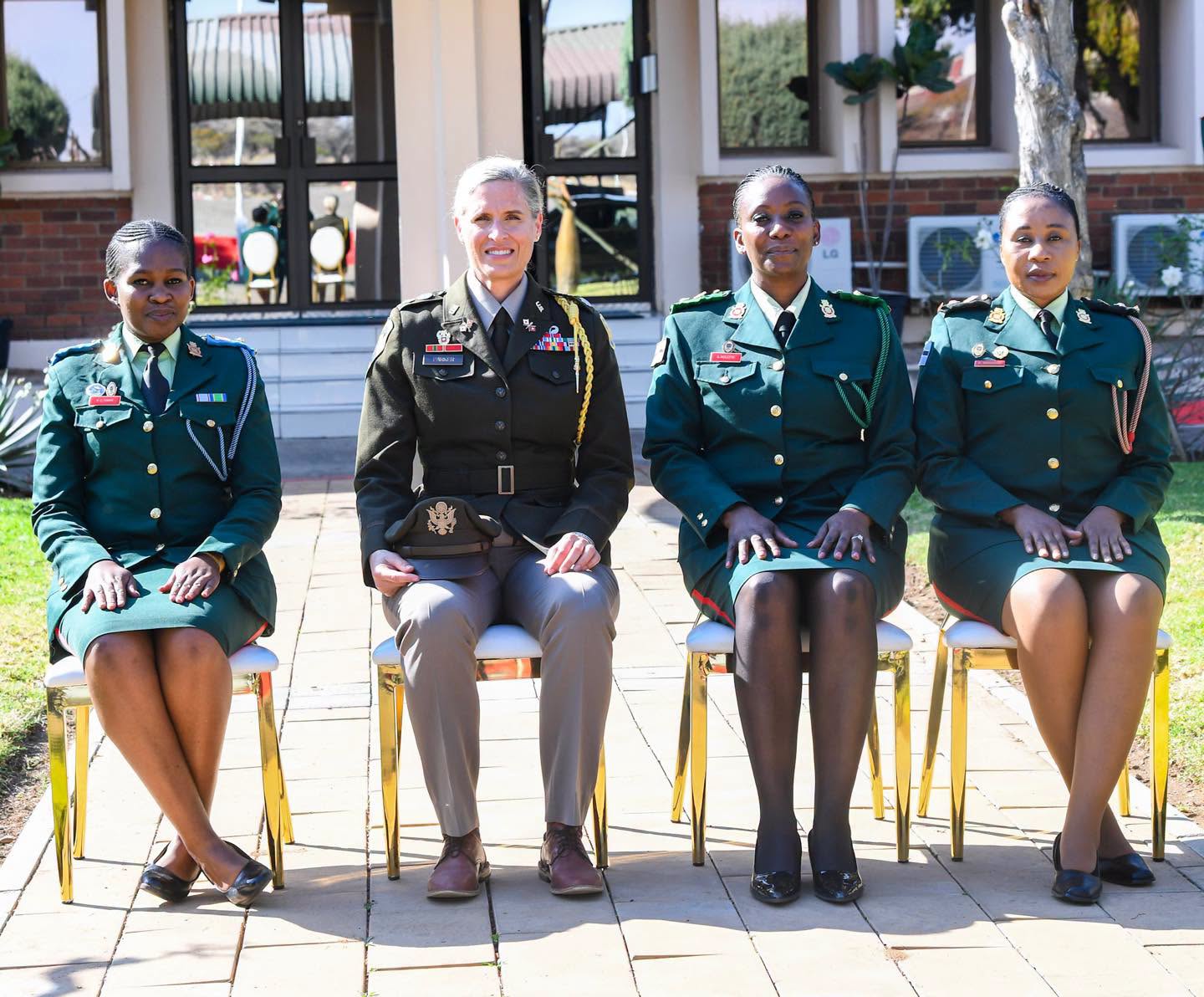
Women’s Month in Botswana has gained a powerful new landmark in military history following the accreditation of Lieutenant Colonel Amanda Parker as the new United States Defense Attaché to Botswana. The high-profile ceremony took place at the SSKB Botswana Defence Force Headquarters, where BDF Commander General Mpho Churchill Mophuting officially accredited Parker to her new diplomatic role. Her appointment marks a significant moment for both Botswana and the United States, particularly because she becomes the first woman to serve as U.S. Defense Attaché in Botswana. The occasion also highlighted the growing presence of women in senior military leadership positions. With women increasingly taking on responsibilities traditionally dominated by men, the ceremony provided a visible example of changing attitudes towards leadership and representation within the defence sector.
The significance of the event was strengthened by the presence of three newly promoted Botswana Defence Force Lieutenant Colonels who also made history as the first women to reach that rank within the BDF. Lieutenant Colonel Gabotepele Molefhi, Lieutenant Colonel Precious Mokgosi and Lieutenant Colonel Gaone Candy Tlhage witnessed Parker’s accreditation alongside senior military officials. Their presence created a remarkable moment in which four senior women in military leadership stood together during an important bilateral defence engagement. The achievement reflects the progress women have made within military institutions and highlights the increasing opportunities available for women to advance through the ranks. It also provides a visible reminder that military leadership is becoming more representative of the societies that defence forces serve.
The timing of Parker’s accreditation added further significance to the occasion as Botswana celebrates Women’s Month. The presence of Parker, Molefhi, Mokgosi and Tlhage in the same room offered a strong representation of women’s growing participation in national and international security leadership. Their positions demonstrate that professional military careers can provide opportunities for women to assume responsibilities at the highest levels of command, diplomacy and strategic engagement. The development is particularly important because senior military positions carry significant responsibility for national security, international cooperation and institutional decision-making. The milestone therefore extends beyond the achievements of four individuals and reflects a broader shift in the representation of women within the defence and security environment.
Lieutenant Colonel Parker arrived in Botswana only two days before the accreditation ceremony, making her formal introduction to the BDF an important early moment in her new assignment. General Mophuting welcomed her and used the occasion to underline the longstanding strategic partnership between Botswana and the United States. He highlighted the shared democratic values that underpin the relationship between the two countries, as well as their mutual commitment to the rule of law. He also emphasised the importance of respect for human rights as a foundation of the bilateral relationship. These principles provide a broader context for the defence cooperation between Botswana and the United States and reinforce the importance of maintaining strong institutional ties between the two countries.
The appointment of a new U.S. Defense Attaché is significant because the role involves more than ceremonial representation. A defence attaché serves as an important link between military institutions and helps strengthen communication, cooperation and understanding between countries. Parker’s position will place her at the intersection of Botswana and United States security interests, giving her an important role in supporting bilateral military relations. Her work is expected to involve engagement with Botswana’s defence leadership and other relevant stakeholders as the two countries continue to build on their existing partnership. Her appointment therefore carries both professional responsibility and diplomatic significance, particularly as she becomes the first woman to hold the position in Botswana.
For Botswana, the milestone involving its newly promoted female Lieutenant Colonels is equally significant. The promotion of Molefhi, Mokgosi and Tlhage represents an important development within the BDF and provides greater visibility for women pursuing senior military careers. Their achievements can contribute to broader conversations about leadership, professional development and equal opportunity within defence institutions. Reaching senior military ranks requires extensive training, experience, discipline and leadership capability, making their promotions an important professional achievement. Their presence at Parker’s accreditation ceremony also connected Botswana’s own progress in military leadership with the wider international advancement of women in defence and security roles.
The event also demonstrates how international military diplomacy can intersect with national efforts to promote women’s leadership. Parker’s appointment gives Botswana an opportunity to engage with a senior female military representative while its own defence force celebrates the advancement of women within its ranks. This creates a meaningful connection between gender representation and international cooperation. Women serving in senior defence positions can contribute to strategic discussions while also becoming visible examples for younger women considering careers in military and security institutions. Greater representation can help challenge outdated assumptions about who can occupy senior positions and encourage institutions to recognise leadership based on professional ability and experience.
General Mophuting’s remarks about the Botswana-U.S. relationship also placed the ceremony within a wider strategic context. Botswana and the United States have developed longstanding defence and security ties based on cooperation and shared interests. Maintaining these relationships requires regular communication between military leadership, diplomatic representatives and defence institutions. The U.S. Defense Attaché position provides an important channel through which this engagement can take place at the military level. Parker’s arrival therefore comes at a time when her responsibilities will include helping sustain the institutional relationship while representing the United States within Botswana’s defence environment.
Parker responded to the warm welcome by expressing gratitude for the reception and enthusiasm about beginning her tenure in Botswana. Her comments reflected the importance of building positive professional relationships at the start of a diplomatic assignment. As Defense Attaché, she will have an opportunity to strengthen engagement between the two countries while supporting mutual understanding of their respective defence priorities. Her position also gives her the distinction of becoming the first woman to serve as U.S. Defense Attaché in Botswana. That achievement adds a significant gender representation dimension to what is already an important bilateral military appointment.
The ceremony has consequently become a notable feature of Botswana’s Women’s Month celebrations, bringing together national military advancement and international defence diplomacy. The achievements of Lieutenant Colonels Molefhi, Mokgosi and Tlhage demonstrate the progress of women within the BDF, while Parker’s appointment highlights the expanding role of women in international military representation. Together, these developments provide a powerful example of how leadership positions once largely associated with men are becoming more accessible to women. The milestone also highlights the importance of recognising women who take on demanding roles in defence, security and diplomacy. As Botswana continues to celebrate Women’s Month, the historic gathering at the BDF Headquarters stands as a significant reminder of the changing face of military leadership and the growing contribution of women to national and international security.