
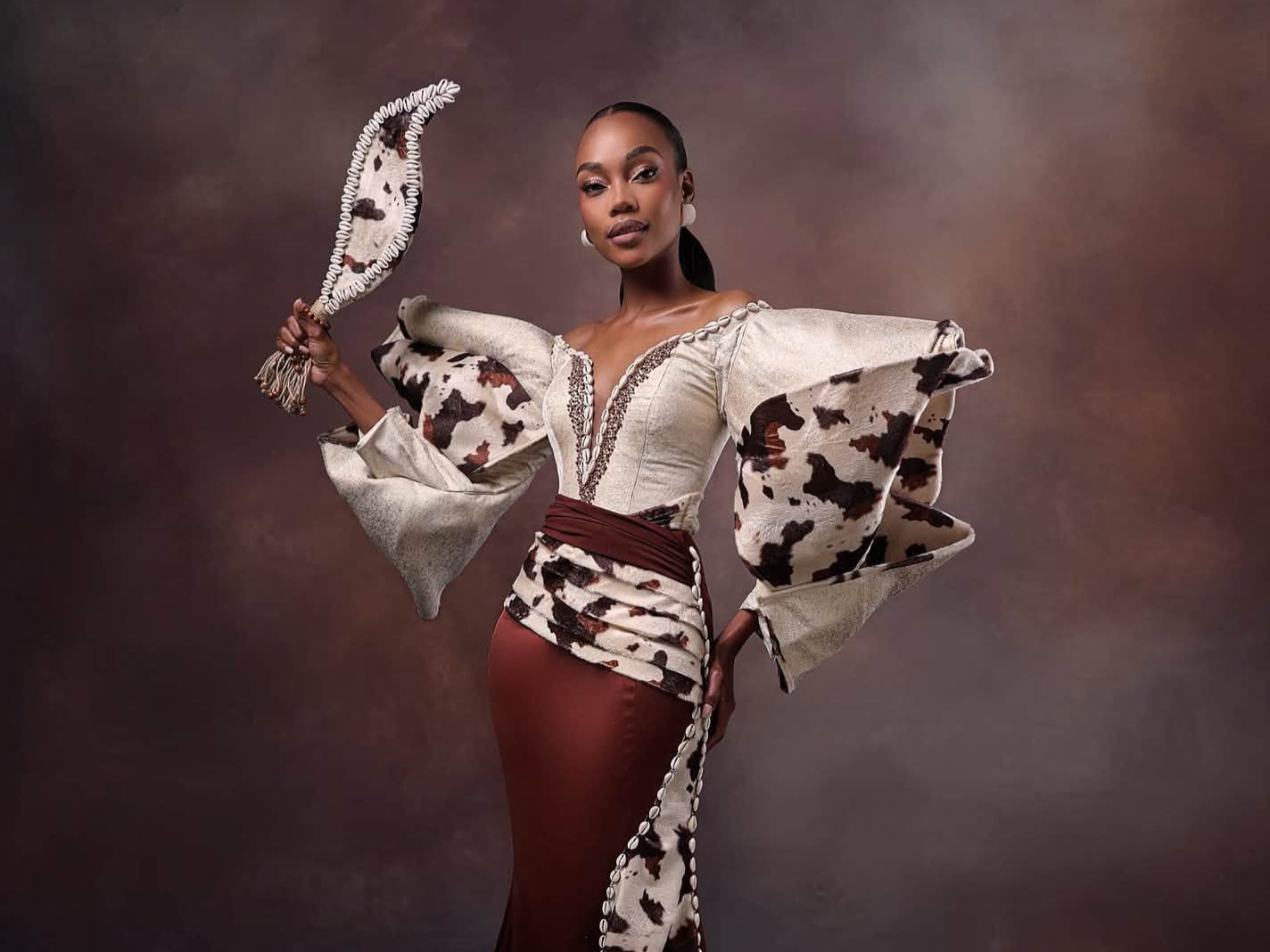
Botswana’s rich cultural heritage took centre stage yesterday when Ruth Thomas represented the country at the 73rd Miss World Dances of the World, bringing a powerful story of tradition, leadership and national pride to an international audience. Her performance went beyond dance, using costume, symbolism and movement to communicate important elements of Botswana’s identity. The striking outfit drew inspiration from Kgosi Mosadi Seboko, Botswana’s first female chief and a prominent symbol of female leadership, strength and empowerment. Through carefully chosen colours, beadwork and cultural imagery, Thomas carried a message that connected Botswana’s past with its present. Her appearance provided an opportunity for the country to showcase its heritage on one of the world’s most visible cultural and beauty platforms.
The inspiration drawn from Kgosi Mosadi Seboko gave Thomas’ costume a strong connection to Botswana’s history and the growing recognition of women in leadership. As Botswana’s first female chief, Seboko represents an important chapter in the country’s traditional leadership landscape. Her inclusion in the design highlights the strength and resilience of women while recognising the role that female leaders continue to play in their communities. The choice also gave the performance a deeper meaning because it connected contemporary representation with a respected figure from Botswana’s traditional institution. Thomas therefore stepped onto the stage not only as a contestant but also as a representative of a cultural story centred on leadership, heritage and women’s empowerment.
At the heart of the costume was the image and symbolism of the cow, an animal that has held deep economic and cultural importance in Botswana for generations. The Setswana expression “Kgomo ke khumo”, meaning that cattle are wealth, captures the significance of livestock within the country’s traditional and economic life. Cattle have historically represented prosperity, supported households and communities and played a role in trade and social life. They have also contributed to the development of communities, with livestock wealth helping families meet important needs and support initiatives such as education. Including the cow in Thomas’ costume therefore placed one of Botswana’s most recognised symbols of wealth and livelihood at the centre of an international cultural presentation.
The rich brown tones used in the costume also carried a connection to Botswana’s natural environment, particularly the vast Kalahari landscape. The colours helped create a visual representation of the country’s distinctive terrain while giving the outfit a warm and earthy character. Botswana’s landscapes form an important part of its national identity, from the Kalahari to its diverse wildlife areas and rural communities. By incorporating these tones into the design, the costume connected Thomas’ performance to the land that has shaped the lives and traditions of generations of Batswana. The result was a presentation in which colour itself became part of the storytelling, helping communicate a sense of place to audiences watching from around the world.
Another important feature of the costume was the intricate beadwork, which reflected sorghum, one of Botswana’s traditional crops. Sorghum has long been associated with food production and sustenance and remains an important part of the agricultural heritage of many communities. Its inclusion added another layer to the costume by highlighting the relationship between culture, farming and community survival. Agriculture has played an important role in sustaining families and preserving traditional knowledge, making the symbolism relevant to Botswana’s broader cultural history. Through the beadwork, Thomas’ presentation acknowledged not only Botswana’s traditions but also the agricultural practices and resources that have supported communities over generations.
The combination of cattle, sorghum, the Kalahari and traditional leadership created a costume filled with meaning rather than simply visual appeal. Each element represented a different aspect of Botswana’s national story and contributed to a broader narrative about identity and heritage. The design showed how fashion and performance can be used to communicate history in ways that audiences can immediately see and appreciate. For an international event such as the Miss World Dances of the World, this approach gives cultural representation a deeper purpose. Thomas’ appearance demonstrated that a national costume can serve as a form of storytelling, allowing a country to introduce its traditions and values to people who may be encountering them for the first time.
The work behind the presentation also highlighted the contribution of local creative talent. The costume was designed by Funky Resy, whose work helped translate the cultural concepts into a stage-ready visual presentation. Creating a costume for an international cultural showcase requires careful consideration of symbolism, craftsmanship and visual impact. The design had to communicate Botswana’s identity clearly while also allowing the performer to move and present herself effectively on stage. The collaboration between the designer and Thomas demonstrates how fashion, cultural research and performance can come together to create a strong representation of national heritage.
Thomas’ participation also provided an opportunity to celebrate Botswana’s cultural identity in a setting where countries from different backgrounds come together. Events such as the Dances of the World allow contestants to introduce audiences to traditional influences through music, movement and clothing. For Botswana, these platforms provide an avenue to highlight cultural practices and stories that may otherwise remain unfamiliar to international audiences. Thomas’ presentation placed local symbols within a global setting while retaining their connection to Botswana’s history and traditions. Her performance therefore served as both a personal opportunity and a wider cultural representation of the country.
The message of the presentation was particularly significant because it showed that cultural heritage can remain relevant in contemporary spaces. Botswana’s traditions continue to influence modern creative expression through fashion, dance, music, photography and other forms of art. Presenting these traditions to younger and international audiences can help encourage greater appreciation for cultural knowledge while ensuring that important symbols are not forgotten. Thomas’ costume demonstrated how traditional references can be reinterpreted through modern design without losing their original significance. This balance between heritage and contemporary creativity is increasingly important as Botswana continues to develop its cultural and creative industries.
Ruth Thomas’ appearance at the 73rd Miss World Dances of the World ultimately gave Botswana an opportunity to tell its story through movement, design and symbolism. Her costume honoured Kgosi Mosadi Seboko, celebrated the cultural importance of cattle, recognised the agricultural heritage represented by sorghum and drew inspiration from the Kalahari landscape. Every element contributed to a presentation that placed Botswana’s history and identity at the heart of an international event. With the creative contribution of Funky Resy, the performance demonstrated how local talent can use fashion and performance to preserve and promote national heritage. Botswana did not simply take the stage yesterday, it used the opportunity to present its story, celebrate its people and remind the world of the cultural richness carried within its traditions.