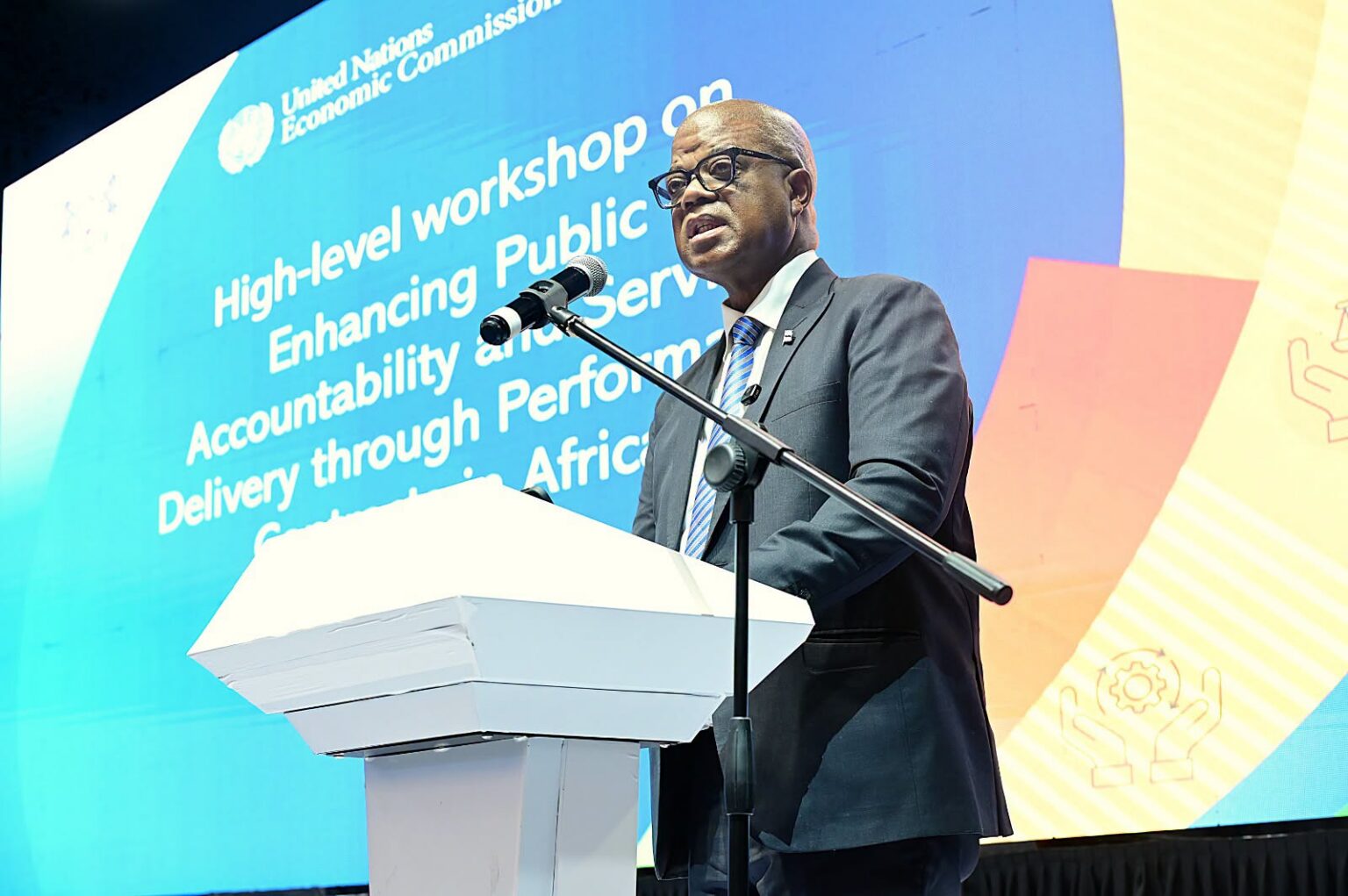
The Government of Botswana, in partnership with the United Nations Economic Commission for Africa (UNECA), has launched a three-day High-Level Workshop focused on enhancing public accountability and service delivery through performance contracts. The workshop brings together senior government officials, heads of public service institutions, experts and development partners from across Africa to examine practical approaches to improving the performance of public institutions. Discussions are centred on strengthening accountability, measuring results and ensuring that government institutions deliver services that respond effectively to citizens’ needs. The initiative also provides an opportunity to deepen the Botswana-ECA partnership on institutional reform and public sector development. As Botswana continues to advance its national development priorities, the workshop places effective, accountable and results-driven institutions at the centre of the country’s long-term progress.
Coordinator of Public Sector Reforms Thabo Masalila said the workshop builds on commitments made between Botswana and ECA to strengthen public institutions and improve service delivery. He explained that the discussions will consider approaches that have produced positive results elsewhere while ensuring that these methods are adapted to Botswana’s specific circumstances. This focus on local adaptation is important because public sector reforms need to respond to the institutional structures, national priorities and needs of the people they are intended to serve. Successful reforms in one country may require adjustments before they can produce similar results in another setting. The workshop therefore creates space for participants to share experiences, examine practical lessons and identify approaches that can strengthen Botswana’s public service.
A central theme of the workshop is the need to move beyond measuring government activities and place greater emphasis on the results experienced by citizens. Minister of State President, Defence and Security, Moeti Mohwasa, called for a shift from accountability for activities to accountability for outcomes. He stressed that government institutions should not only report on what they have done, but should demonstrate what their work has delivered for communities and individuals. This approach places citizens at the centre of public sector performance because the success of government programmes should ultimately be reflected in the quality, accessibility and reliability of services people receive. Stronger performance measurement can also help government identify weaknesses, improve decision-making and direct resources towards programmes that produce meaningful results.
Mohwasa also connected the need for stronger public institutions with Botswana’s broader national development ambitions as the country approaches 60 years of independence. Over the decades, Botswana has developed institutions that have played an important role in its national development, but continued progress requires public sector systems that can respond to changing economic and social demands. Performance contracts can provide a structured way to clarify responsibilities, establish measurable targets and assess whether institutions are meeting agreed objectives. When properly implemented, such systems can strengthen accountability among public officials while creating clearer links between institutional performance and national development priorities. The workshop provides an opportunity to examine how these mechanisms can be strengthened and used more effectively within Botswana’s public service.
ECA Executive Secretary Claver Gatete, Professor Said Adejumobi, also highlighted the importance of capable and accountable institutions to Africa’s development. He argued that development cannot take root without a state that is capable, efficient and accountable. This perspective reflects the wider challenge facing many African countries, where governments must improve institutional capacity while ensuring that public resources translate into quality services and measurable improvements. Effective institutions can support better policy implementation, strengthen public confidence and create conditions for sustainable economic and social development. The discussions at the workshop therefore have relevance beyond individual performance contracts, as they address the broader question of how African countries can build public institutions capable of delivering on development commitments.
UN Resident Coordinator Wenyan Yang reinforced the importance of focusing on implementation rather than relying solely on plans and policy documents. She noted that plans by themselves do not deliver services, because people and institutions are responsible for turning those plans into results. Her remarks underline the gap that can sometimes exist between development strategies and the experiences of citizens who depend on public services. Governments can develop detailed policies and ambitious programmes, but their impact depends on whether institutions have the capacity, resources and accountability mechanisms needed to implement them effectively. Strengthening public sector performance can therefore help convert national development plans into practical improvements in areas that directly affect people’s daily lives.
The involvement of senior officials, public service leaders, experts and development partners gives the workshop a broad platform for examining public sector reform from different perspectives. Participants can compare experiences from different African countries, identify common institutional challenges and consider solutions that can be adapted to individual national contexts. The exchange of knowledge can also help countries avoid repeating mistakes while building on approaches that have demonstrated positive results. Collaboration between national governments and organisations such as UNECA can provide technical expertise and encourage the development of reform strategies based on evidence and practical experience. Such partnerships can be particularly valuable when countries are seeking to improve institutional effectiveness while maintaining accountability to their citizens.
The focus on performance contracts also raises the importance of setting clear expectations within public institutions. Effective performance systems require measurable objectives, realistic targets, regular monitoring and transparent evaluation. They should also provide institutions and officials with the support needed to achieve agreed goals rather than functioning only as mechanisms for assessing performance after the fact. When targets are clearly connected to national priorities, performance management can help public servants understand how their responsibilities contribute to wider development objectives. This can create a stronger culture of responsibility and results across government institutions.
For Botswana, the workshop represents an important opportunity to strengthen the country’s ongoing public sector reform agenda. The emphasis on adapting successful approaches to the national context means that reforms can be designed around Botswana’s institutional realities rather than simply copying models from other countries. It also reinforces the importance of collaboration between government, international organisations and development partners in addressing complex public administration challenges. As the country approaches its 60th anniversary of independence, maintaining strong institutions will remain important for supporting future development and ensuring that public services continue to meet the expectations of citizens. The discussions taking place through the Botswana-ECA partnership could therefore contribute to practical reforms that improve both institutional performance and public confidence.
The expected outcome of the three-day workshop is a set of practical recommendations that countries can adapt to strengthen responsive and accountable public institutions. These recommendations could help governments improve performance management, strengthen monitoring systems and place greater emphasis on measurable service delivery outcomes. The broader message from the workshop is that accountability should be connected to the real experiences of citizens rather than limited to administrative reporting. Strong institutions require capable people, effective systems and clear accountability, but they also require a consistent focus on delivering meaningful results. As Botswana and its African partners continue to pursue institutional reform, the workshop provides a valuable platform for turning lessons, expertise and commitments into practical measures that can improve public sector performance and ultimately deliver better services to citizens.