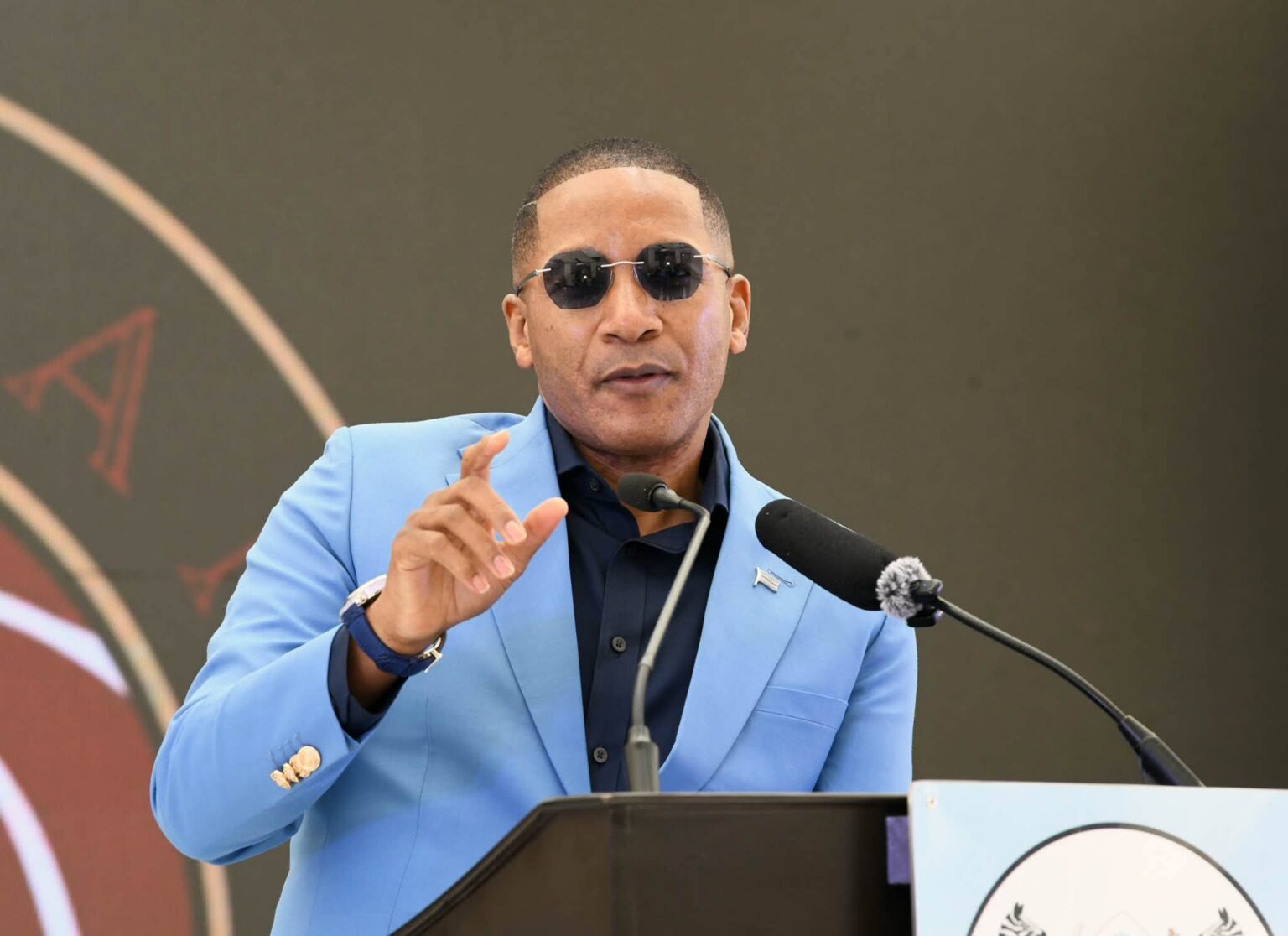
President Duma Boko has challenged Batswana to look beyond scepticism and consider what the African Hero partnership could mean for Botswana’s future. Rather than viewing the initiative only through the number of schools and clinics it promises to deliver, the President wants citizens to consider its wider economic potential. He highlighted employment, infrastructure development, skills transfer, healthcare, local manufacturing and industrialisation as some of the opportunities that could emerge from the partnership. Addressing concerns surrounding the initiative, President Boko urged citizens to approach African Hero with an open mind and focus on the potential benefits it could bring to communities and the wider economy. His message points to an ambition that extends far beyond the construction of 100 schools and clinics, with the partnership potentially becoming the foundation for a new domestic infrastructure industry.
“Look at African Hero with innocent eyes. See opportunity. See change. See infrastructure. See jobs. See healthcare. See partnership. See industrialisation. See skills transfer. See a new Botswana,” President Boko said. His remarks reflect an effort to shift the national conversation from immediate scepticism to the longer-term possibilities associated with the project. For Botswana, infrastructure delivery remains closely linked to access to education, healthcare and other essential public services, particularly as communities continue to require modern and functional facilities. The President argued that the country cannot afford lengthy delays when new technologies and innovative partnerships can offer faster ways of delivering important infrastructure. This approach places speed, innovation and economic participation at the centre of the government’s thinking around the African Hero initiative.
The partnership is therefore being presented as more than a conventional infrastructure programme. While the construction of 100 schools and clinics represents a significant objective in itself, the bigger ambition is to establish a model that can transform how Botswana plans, produces and delivers infrastructure. Faster construction could help government respond more efficiently to communities that need schools, clinics and other public facilities. At the same time, local participation could create opportunities for Batswana to acquire technical, construction, manufacturing and project management skills. If these capabilities develop within Botswana, the country could gradually reduce its dependence on importing certain infrastructure-related expertise and products while creating new opportunities for local businesses.
The emphasis on local manufacturing is particularly important because it could give the African Hero partnership a much broader economic impact. Instead of infrastructure projects ending when a building is completed, local production could create an ongoing supply chain involving manufacturers, contractors, engineers, technicians, transport companies and other service providers. This could support the development of businesses that produce components and materials needed for schools, clinics and other infrastructure projects. Private capital could also play a larger role if investors see opportunities to participate in an emerging domestic infrastructure market. Over time, the combination of local manufacturing, skills development and private investment could help create an industry capable of supporting jobs beyond the initial projects.
Skills transfer could become another major part of this proposed transformation. Large infrastructure programmes can provide opportunities for workers and young professionals to gain practical experience in areas such as engineering, construction technology, manufacturing, project management and maintenance. If knowledge is deliberately transferred to Batswana rather than remaining concentrated among external partners, the country could build a stronger pool of skilled professionals who can participate in future infrastructure projects. These skills could also support entrepreneurship, allowing individuals and local companies to establish businesses that serve the growing infrastructure sector. The long-term value of the partnership would therefore depend not only on the buildings delivered but also on the knowledge, technical capacity and businesses that remain in Botswana after construction is completed.
The President’s focus on healthcare and education also highlights the direct social impact that faster infrastructure delivery could have. Schools provide the physical environment in which children learn, while clinics are essential for communities seeking accessible healthcare services. Delays in delivering these facilities can place additional pressure on existing infrastructure and affect the quality and accessibility of public services. New construction technologies and alternative delivery methods could potentially shorten project timelines if they are implemented effectively and meet the necessary quality and safety standards. For communities, the most immediate benefit could be gaining access to functional schools and healthcare facilities sooner, while the wider economy could benefit from the activity generated around their construction.
The project also carries a potential industrialisation agenda that could reshape how Botswana approaches infrastructure development. The country has an opportunity to use major infrastructure demand as a catalyst for developing local production capacity. If companies can manufacture infrastructure components domestically at competitive prices and to required standards, those businesses could eventually serve markets beyond Botswana. This is where the President’s vision of exporting Botswana-made infrastructure solutions across Africa becomes significant. A successful domestic model could potentially position Botswana not only as a consumer of infrastructure solutions but also as a producer and exporter of technologies, products and expertise.
The journey towards that ambition, however, will require careful implementation and strong accountability. Turning an infrastructure partnership into a sustainable domestic industry requires more than announcing projects or setting construction targets. It requires transparent planning, clear responsibilities, measurable outcomes, skills development programmes, quality control and meaningful opportunities for local businesses. The involvement of private capital must also produce sustainable economic value while ensuring that infrastructure meets the needs of the communities it is intended to serve. If these elements come together, African Hero could provide a practical platform for demonstrating how infrastructure investment can contribute simultaneously to public services, employment, industrial development and economic diversification.
The origins of the initiative are also significant to the President’s broader vision. What started with one school in Block 7 is being positioned as the foundation for something much larger. That first project can serve as a practical demonstration of the technology, construction approach and partnership model before the concept expands to additional schools and clinics. The lessons learned from the initial project could help identify areas that require improvement while providing local workers and companies with valuable experience. If the model proves effective and can be scaled responsibly, the initial school could become the starting point for a domestic industry rather than simply another completed infrastructure project.
President Boko’s challenge to Batswana is ultimately about examining the partnership through a wider economic lens. The question is not only how many schools and clinics African Hero can deliver, but whether the programme can help Botswana build lasting capabilities that create value long after individual projects are completed. Jobs, skills, local manufacturing, healthcare, education, infrastructure and industrialisation are interconnected elements of the vision being presented. For that vision to become reality, the partnership will need to translate its promises into measurable benefits for Batswana and local businesses. If it succeeds, what began with one school in Block 7 could help lay the groundwork for a new infrastructure industry in Botswana, with the potential to develop local expertise and eventually take Botswana-made solutions into markets across Africa.