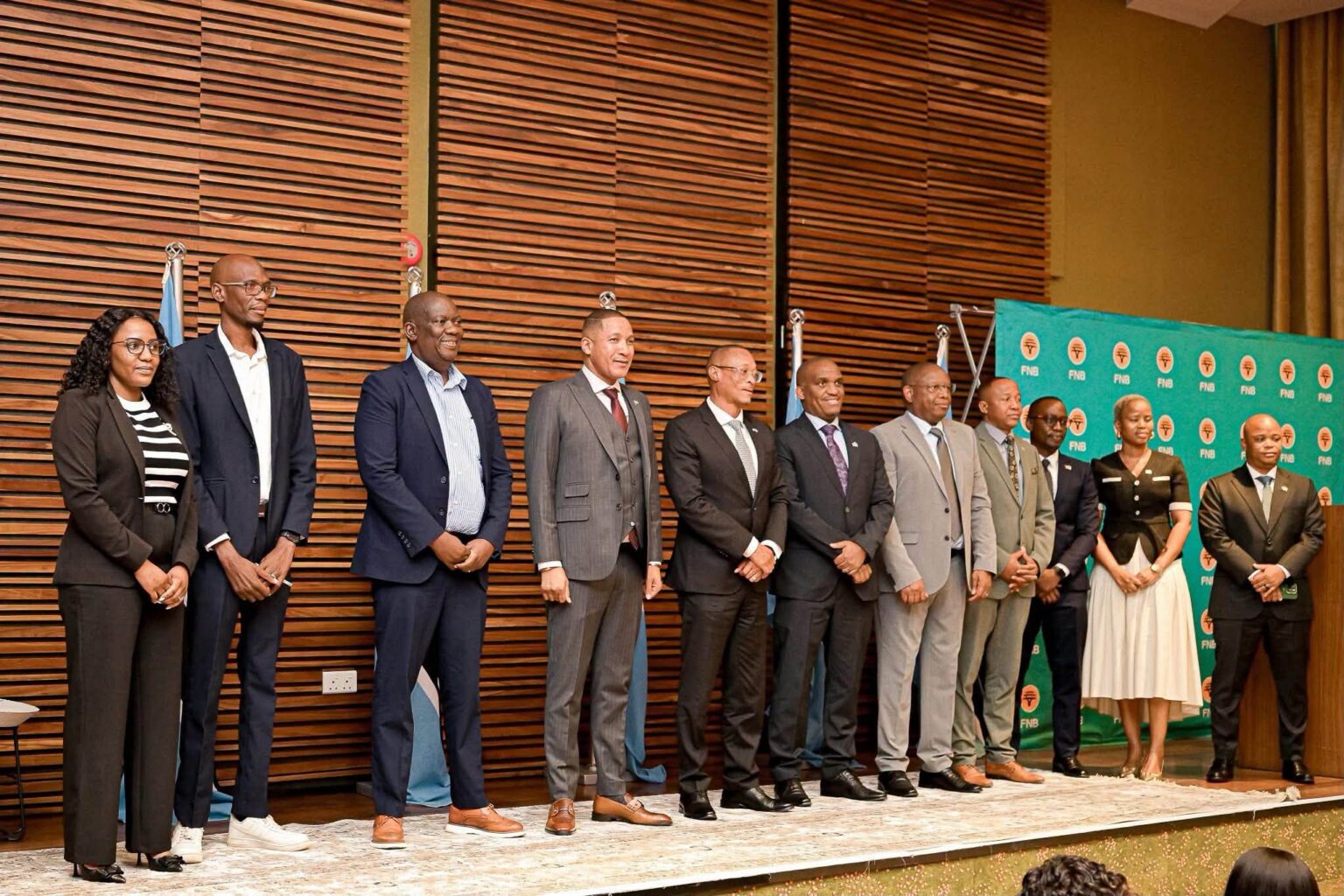
President Duma Gideon Boko has called on journalists in Botswana to play a more meaningful role in the country’s economic transformation by developing a stronger understanding of economic and business matters. Speaking at a media training workshop hosted by First National Bank Botswana in Gaborone in collaboration with the Office of the President, Advocate Boko highlighted the influence that journalism can have on how citizens understand economic developments. He said the media has an important responsibility to help the public make sense of economic decisions and developments that affect their daily lives. This responsibility becomes increasingly important as Botswana seeks to attract investment, expand trade and diversify its economy. The President’s message placed greater emphasis on the need for accurate, credible and well-researched economic reporting that can inform citizens while supporting broader national development.
President Boko said journalists should recognise that economic reporting involves more than communicating figures, policy announcements or statements from officials. Economic decisions can affect employment, household finances, business opportunities, investment and the cost of living, making clear reporting essential for the public. Journalists therefore need to understand the meaning behind economic data and explain how particular developments could affect different groups within society. This requires reporters to ask questions, examine available evidence and seek information from relevant experts and institutions. Stronger economic journalism can help citizens understand complex issues without relying solely on official announcements or simplified interpretations.
The President also stressed the importance of accurate and credible reporting as Botswana works to attract investment and expand its participation in regional and international trade. Investors and businesses rely on reliable information when assessing markets, policies, opportunities and potential risks. Reporting that lacks context or contains inaccurate information can create confusion and undermine confidence in institutions and the economy. Responsible journalism, on the other hand, can contribute to public confidence by presenting developments fairly and explaining the factors behind economic decisions. The media can therefore form an important part of the broader environment needed to support investment and economic growth.
Botswana’s efforts to diversify its economy make the need for informed business and economic reporting even more significant. For years, the country has relied heavily on sectors such as diamonds, creating a need to develop additional sources of economic activity and strengthen opportunities in other industries. Diversification involves complex decisions around investment, trade, entrepreneurship, infrastructure, skills and access to finance. Journalists who understand these issues can help the public assess both the opportunities and challenges associated with economic transformation. They can also give businesses and policymakers greater visibility by reporting on developments that contribute to a more diverse economy.
President Boko urged journalists to go beyond simply reporting figures and announcements by interrogating information, verifying facts and providing appropriate context. This approach requires reporters to examine where information comes from, what the figures actually indicate and how they compare with previous developments. Economic statistics can easily be misunderstood when presented without explanations about their scope, timeframe or wider implications. Providing context allows audiences to understand whether a reported change represents a significant development or forms part of a longer-term trend. Thorough reporting can also help identify inconsistencies and encourage institutions to provide clearer information to the public.
The President’s call also highlighted the relationship between journalism and accountability. An independent media can scrutinise decisions made by government institutions, businesses and other organisations while giving the public access to information that enables informed debate. Journalists who understand economic and business issues are better positioned to examine policies, question claims and identify areas that require further explanation. This does not mean abandoning fairness or accuracy, but rather ensuring that important information receives proper examination before it reaches the public. Effective scrutiny can strengthen accountability and encourage institutions to communicate more openly about decisions that affect the economy.
The FNB Media Training on Ethics, Economic, Investment, Trade and Business Reporting brought together journalists and media practitioners to strengthen their knowledge in these areas. The training recognises that economic and business reporting often requires specialised knowledge that differs from general news reporting. Journalists need to understand financial terminology, economic indicators, investment concepts, trade developments and business practices to report these subjects accurately. Training opportunities can help media practitioners improve their ability to interpret information and ask more informed questions. They can also contribute to higher reporting standards by reinforcing the importance of ethics, verification and independence.
The emphasis on ethics is equally important because economic and business stories can influence public perceptions of companies, markets and government policies. Journalists have to balance the need to report important information with the responsibility to ensure that claims are properly verified and presented fairly. Errors in financial or economic reporting can have consequences for businesses, investors and members of the public who rely on news reports to make decisions. Ethical journalism therefore requires careful sourcing, fact-checking and a clear distinction between verified information and claims that remain unconfirmed. Maintaining these standards can strengthen trust between the media and the communities they serve.
The workshop also reinforced the importance of an informed and independent media in shaping public understanding of Botswana’s economic direction. Citizens need access to information that explains not only what decisions have been made but also why they have been made and what their potential effects may be. Businesses and investors similarly benefit from a media environment where economic developments are reported accurately and placed within the appropriate context. President Boko’s call encourages journalists to approach economic reporting as an important public service rather than simply another category of news. A stronger understanding of economics, investment, trade and business can allow the media to contribute more effectively to national conversations about Botswana’s economic future.
President Duma Gideon Boko’s message ultimately places greater responsibility on journalists to strengthen their economic knowledge and raise the standard of business reporting in Botswana. As the country pursues investment, trade expansion and economic diversification, citizens will need clear and reliable information to understand the opportunities and challenges that come with these changes. Journalists can support that process by questioning information, verifying facts, explaining complex issues and maintaining strong ethical standards. An independent and well-informed media can also contribute to accountability while helping build confidence among citizens, businesses and potential investors. Strengthening economic journalism will therefore remain an important part of ensuring that Botswana’s economic transformation is understood, scrutinised and meaningfully discussed by the public.