
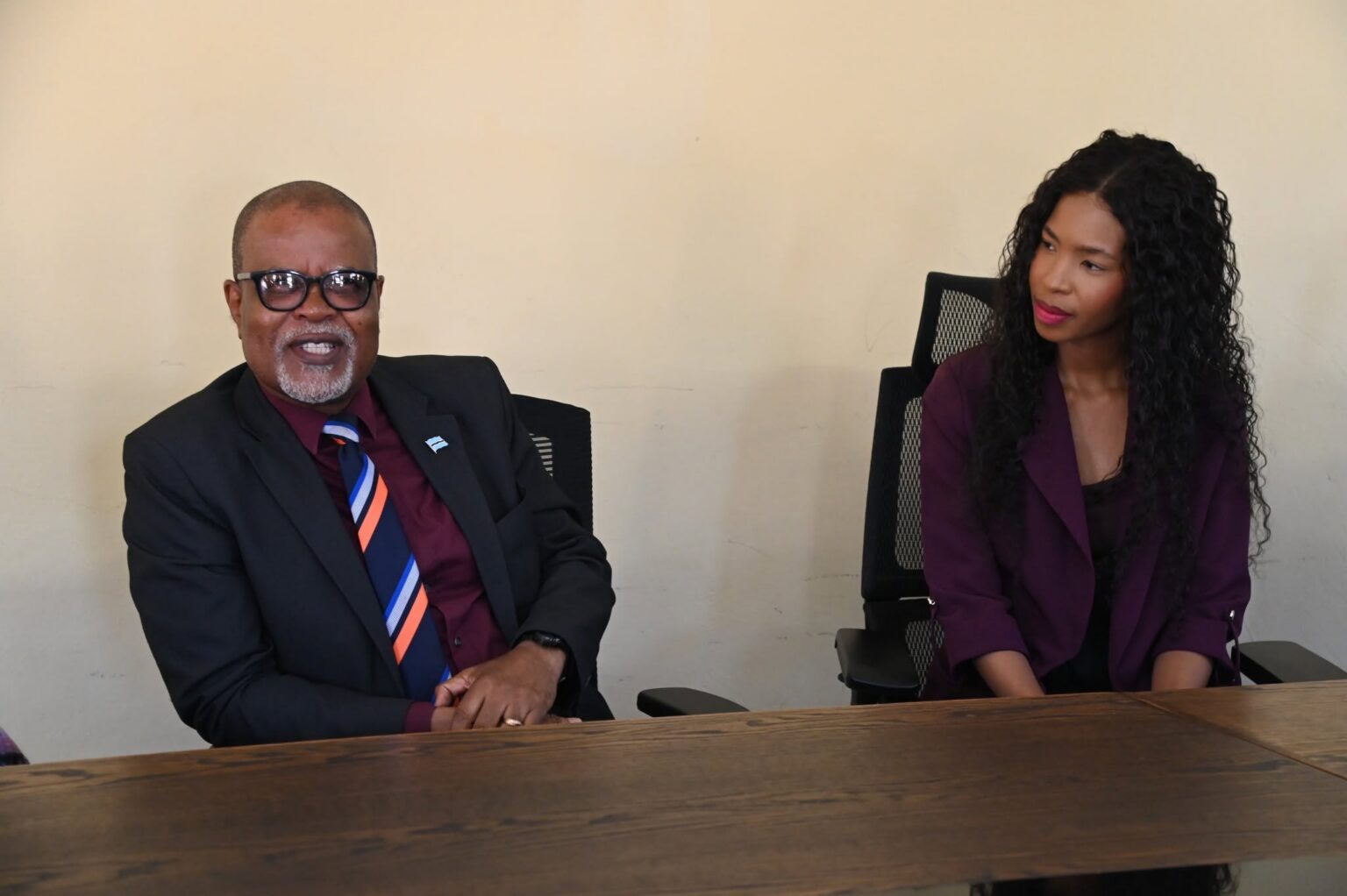
Minister of Youth and Gender Affairs Hon. Lesego Chombo visited the Mahalapye main Kgotla as part of the Mahalapye GenU Fair, where she held a meet and greet session with village leadership. The engagement provided an opportunity for the Minister to connect directly with traditional leaders and discuss issues affecting the local community. The visit formed part of efforts to strengthen cooperation between government and community structures in addressing social challenges. Traditional leadership remains an important part of community engagement in Botswana because dikgosi have a close understanding of the issues affecting residents in their areas. The meeting also highlighted the importance of working together to ensure that government programmes reach communities and respond to challenges identified at grassroots level.
During the engagement, Hon. Chombo met with Member of the Ntlo ya Dikgosi Kgosi Tshipe Tshipe, who shared his experience in traditional leadership and public service. Kgosi Tshipe Tshipe revealed that he has served as a member of the Ntlo ya Dikgosi for 25 years, reflecting extensive experience in matters affecting communities and traditional governance. His long service provides valuable insight into the role of traditional institutions in supporting social development and maintaining community cohesion. The engagement with the Minister created an opportunity to recognise the contribution of traditional leadership while also discussing the continued need for collaboration. Such engagements can help strengthen communication between national government structures and traditional authorities on issues that directly affect families and communities.
The meeting came at a time when communities across Botswana continue to face social challenges that require coordinated responses from government and local leadership. Substance abuse remains a concern because it can affect young people’s education, employment prospects, family relationships and general wellbeing. Gender-based violence is another serious issue that requires prevention, education and effective support for victims and affected families. Addressing these challenges requires more than government intervention alone, as traditional leaders, parents, community organisations and other stakeholders all have important roles to play. The Mahalapye engagement therefore provided an opportunity to emphasise the value of collective action in preventing social problems before they become more difficult to address.
Hon. Chombo reaffirmed that the Ministry of Youth and Gender Affairs will continue working closely with traditional leadership and community structures to combat social ills such as substance abuse and gender-based violence. Her position highlights the importance of taking government initiatives closer to communities and involving leaders who understand local circumstances. Traditional leaders can help create awareness, encourage residents to seek assistance and support initiatives aimed at protecting vulnerable members of society. Community structures can also help identify emerging challenges and connect residents with relevant government services and support programmes. Strong cooperation between these structures can therefore contribute to more effective prevention and response efforts.
The Minister’s visit also demonstrated the broader purpose of the Mahalapye GenU Fair, which provides a platform for engagement around issues affecting young people and communities. Youth development requires attention to several areas, including access to opportunities, education, skills development, safety and social support. Young people who face substance abuse, violence or unstable family environments may encounter additional barriers to reaching their potential. Government programmes can have a stronger impact when they are supported by community leaders who can help communicate information and encourage participation. The involvement of traditional leadership can therefore strengthen the connection between national youth initiatives and the realities experienced by residents in local communities.
The role of the Kgotla remains important in facilitating dialogue between communities and leadership in Botswana. Meetings at the Kgotla provide residents and leaders with spaces where concerns can be raised and important issues can be discussed openly. Engagements such as the one held in Mahalapye can help ensure that government officials hear directly from traditional leaders and understand the challenges communities are facing. They can also create opportunities for leaders to share their experiences and suggest approaches that may work within their communities. Continued dialogue can help build trust and strengthen cooperation when dealing with sensitive issues such as gender-based violence and substance abuse.
The participation of Kgosi Tshipe Tshipe also brought a long-standing perspective to the engagement, given his 25 years of service as a member of the Ntlo ya Dikgosi. His experience reflects the institutional knowledge held within Botswana’s traditional leadership structures. Long-serving traditional leaders can provide valuable perspectives on how social issues have changed over time and which community-based approaches have been effective. Their involvement can also help government programmes gain stronger community acceptance and reach residents who may not engage directly with formal government institutions. The interaction between Hon. Chombo and Kgosi Tshipe Tshipe therefore reinforced the importance of maintaining strong relationships between the Ministry and traditional leadership.
The Mahalapye engagement ultimately highlighted the importance of partnership in addressing some of the country’s most pressing social challenges. Hon. Lesego Chombo’s commitment to working with traditional leaders and community structures shows that combating substance abuse and gender-based violence requires sustained action at both national and local levels. The involvement of leaders at the Mahalapye main Kgotla can help strengthen awareness, encourage community participation and support efforts to protect vulnerable people. As the Mahalapye GenU Fair continues to bring stakeholders together, such engagements can contribute to stronger community networks and more responsive youth and gender programmes. Continued cooperation between the Ministry of Youth and Gender Affairs, traditional leadership and communities will remain important in building safer and more supportive communities across Botswana.