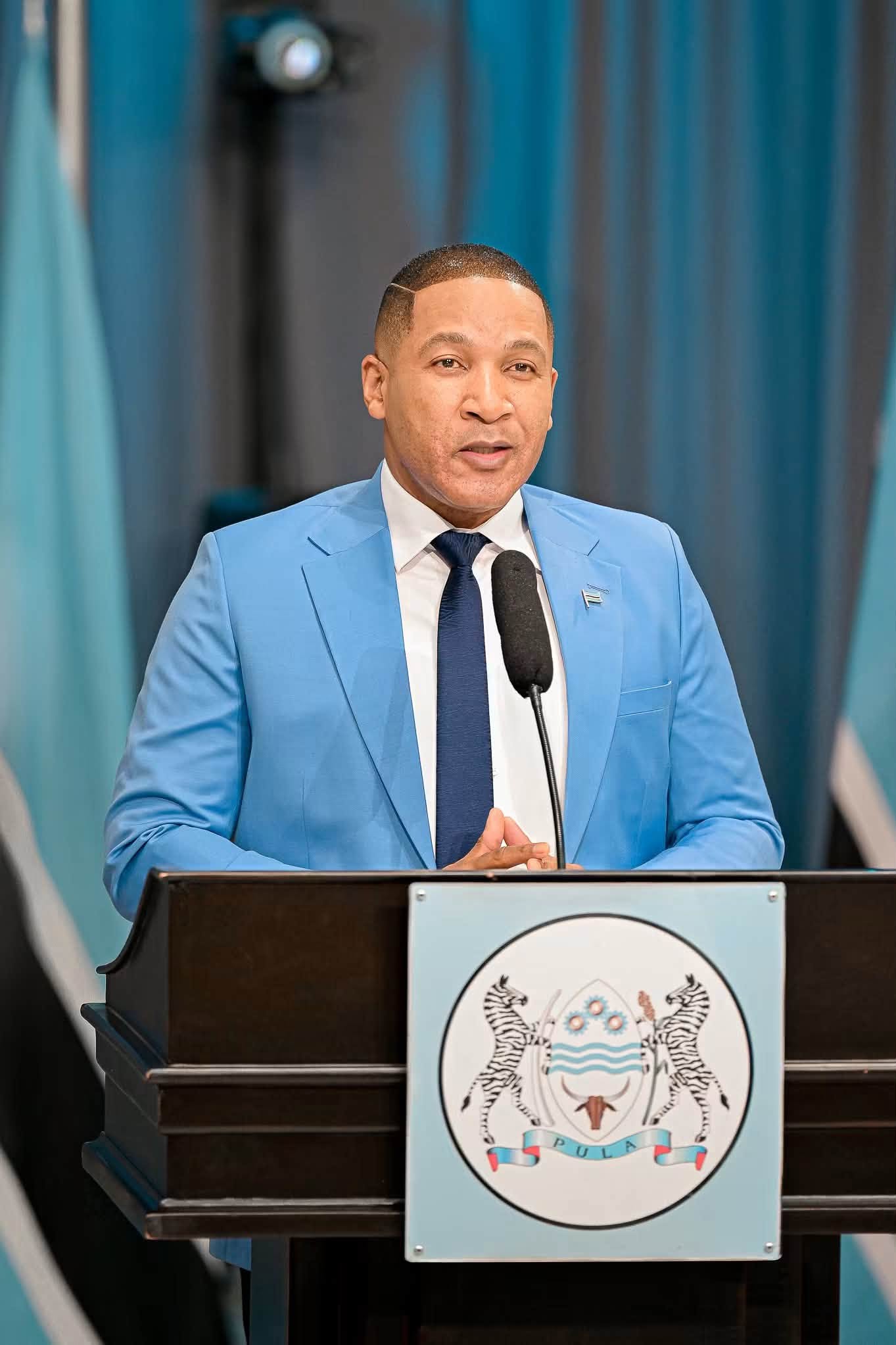
Botswana is prioritising long-term investment partnerships that can transform its economy through industrialisation, technology transfer and the expansion of high-value services, President Advocate Duma Boko has said. The government is seeking to attract investors who can contribute more than immediate commercial gains by helping develop local industries, create sustainable economic opportunities and strengthen the country’s productive capacity. Speaking to the media following his State Visit to China, President Boko outlined Botswana’s commitment to building partnerships that support lasting economic growth. His remarks highlight the importance of attracting investment that delivers practical benefits to the country while positioning Botswana to compete more effectively in the global economy. The strategy reflects a broader ambition to move beyond traditional sources of economic activity and develop new industries that can support employment, innovation and long-term prosperity.
President Boko said Botswana was looking beyond short-term commercial interests and focusing on partnerships that could strengthen domestic industries. Such an approach places greater emphasis on the long-term value of investment rather than the amount of capital entering the country alone. Investments that introduce new technologies, develop local skills and expand manufacturing capacity can help businesses become more competitive. They can also create opportunities for local suppliers, entrepreneurs and workers to participate in emerging industries. For Botswana, attracting the right investors will therefore be important in ensuring that international partnerships contribute to sustainable economic development and generate benefits that extend beyond individual projects.
The President emphasised that Botswana must demonstrate its readiness to do business if it wants to attract serious investors. He explained that investors assess whether a country has the right conditions, people and location to support successful business operations. “For China to do business with a country, it considers three assessment criteria: whether you are in the right place, whether you are the right people, and whether you are in the right location,” he said. His comments underline the importance of investor confidence, institutional readiness and a suitable business environment in attracting international capital. For Botswana, this means creating conditions in which investors can identify viable opportunities, understand the operating environment and establish partnerships with confidence.
Building a suitable investment environment also requires attention to the factors that influence business decisions. Investors generally consider infrastructure, access to markets, workforce capabilities, regulatory requirements and the reliability of public institutions when evaluating potential destinations. Botswana’s ability to attract long-term investment will depend partly on how effectively it addresses these considerations and communicates its economic priorities to prospective partners. A clear investment strategy can help businesses understand where opportunities exist and how their expertise can contribute to national development goals. Strong cooperation between government, the private sector and international partners will also be important in turning investment commitments into projects that deliver measurable economic benefits.
China’s experience in industrial development and technological advancement presents opportunities for Botswana to strengthen its own economic capabilities. President Boko specifically highlighted the potential for the country to learn from Chinese developments in electric vehicles and battery technology. These industries have become important areas of technological innovation, with applications spanning transportation, energy storage and manufacturing. By exploring partnerships that facilitate technology transfer, Botswana could gain access to expertise that supports the development of new industrial activities. However, the long-term benefits would depend on the nature of the partnerships, the skills available locally and the extent to which knowledge and production capabilities become established within the country.
Electric vehicle technology and battery production could offer Botswana opportunities to explore new areas of industrial development. Effective partnerships could help introduce technical expertise, encourage specialised training and create opportunities for local businesses to participate in emerging supply chains. Battery technology is also relevant to energy storage, which can support the wider use of renewable energy and improve the management of electricity supply. Developing capabilities in these areas would require careful planning, suitable infrastructure and investment in technical skills. While such opportunities could contribute to economic diversification, their success would depend on commercial viability, access to markets and the ability to build competitive local operations.
Technology transfer is particularly important because investment can generate benefits that continue after an individual project has been completed. When international companies share technical knowledge, train local employees and work with domestic suppliers, they can help strengthen the capabilities of the wider economy. These benefits may support the growth of small and medium-sized enterprises, improve productivity and create opportunities for skilled employment. Botswana’s approach to investment will therefore need to consider not only the capital that investors bring but also the knowledge, expertise and industrial capacity they can develop locally. Partnerships that combine financial investment with skills development and local participation could play an important role in supporting the country’s long-term economic transformation.
President Boko also addressed the challenge of financing infrastructure without placing additional pressure on Botswana’s sovereign debt. He said the government was exploring investment arrangements that would allow projects to proceed without relying on sovereign guarantees. “We do not want to work on guarantees and many investors are willing to work with us because they believe in us,” he said. His remarks indicate a preference for financing structures that attract private investment while limiting the government’s direct financial exposure. This approach could be important for infrastructure projects that require substantial upfront capital but generate returns over an extended period.
Long-term concessions were among the arrangements identified by the President as a potential way to attract investment without relying on sovereign guarantees. Under a concession arrangement, an investor may receive the right to finance, develop, operate or maintain an asset or service for an agreed period. The investor can then seek to recover the initial investment through revenue generated by the project, subject to the terms of the agreement. President Boko cited arrangements extending over 30 years as an example of how investors could recover their investment over time. Such arrangements may help government pursue infrastructure development while reducing the need for direct public borrowing, although the financial and contractual details of each project remain important.
The use of concessions and other private investment structures requires careful assessment to ensure that projects deliver value for the country. Governments need to consider the affordability of services, the allocation of financial risks, the responsibilities of investors and the protections available to the public. Long concession periods can provide investors with greater certainty about recovering their costs, but they also require transparent agreements and effective oversight. Projects must have realistic revenue expectations and clear performance requirements to remain commercially sustainable. For Botswana, the challenge will be to structure partnerships that attract investors while protecting the public interest and ensuring that infrastructure supports broader economic development.
Infrastructure investment can also support the industrialisation objectives outlined by President Boko. Reliable transport networks, energy supplies, digital connectivity and other essential services can reduce operating costs and make it easier for businesses to establish and expand their operations. These improvements can help manufacturers move goods more efficiently, enable technology-based companies to operate effectively and strengthen links between domestic producers and international markets. Infrastructure that supports industrial activity can also encourage additional investment by improving the overall business environment. Coordinating infrastructure development with the country’s industrial priorities will therefore be essential to ensuring that projects contribute directly to economic growth.
The expansion of high-value services represents another important part of Botswana’s investment ambitions. These services can include activities that depend on specialised knowledge, technology and professional expertise, creating opportunities beyond traditional commodity-based economic activity. Developing such industries requires investment in education, digital infrastructure, workforce training and an environment that supports innovation. International partnerships could help Botswana gain access to new markets, introduce advanced business practices and develop the skills needed for more specialised economic activities. By combining industrial development with high-value services, the country could broaden its economic base and create more diverse sources of income and employment.
Botswana’s efforts to attract long-term investment will ultimately depend on its ability to turn diplomatic engagement into practical commercial outcomes. A State Visit can create opportunities for discussions between governments, companies and other institutions, but the lasting impact depends on whether those discussions lead to viable projects and effective implementation. Investors need clear information about opportunities, predictable operating conditions and confidence that agreements will be honoured. Local businesses and workers must also be positioned to benefit from the projects that emerge. Establishing these conditions can help Botswana build partnerships that contribute to domestic production, technology transfer and stronger economic capacity.
President Boko’s remarks following his State Visit to China underline Botswana’s ambition to pursue investment that supports lasting economic transformation. The focus on industrialisation, electric vehicle and battery technology, high-value services and infrastructure financing reflects an effort to attract capital that can strengthen the country’s productive capabilities. His emphasis on investment without sovereign guarantees also highlights the government’s interest in exploring financing arrangements that limit direct pressure on public debt. Achieving these objectives will require sound project planning, transparent agreements, local skills development and a business environment that encourages long-term participation. If Botswana can translate these priorities into commercially viable projects with clear domestic benefits, strategic investment partnerships could become an important part of its efforts to diversify the economy, expand employment opportunities and build sustainable prosperity.