
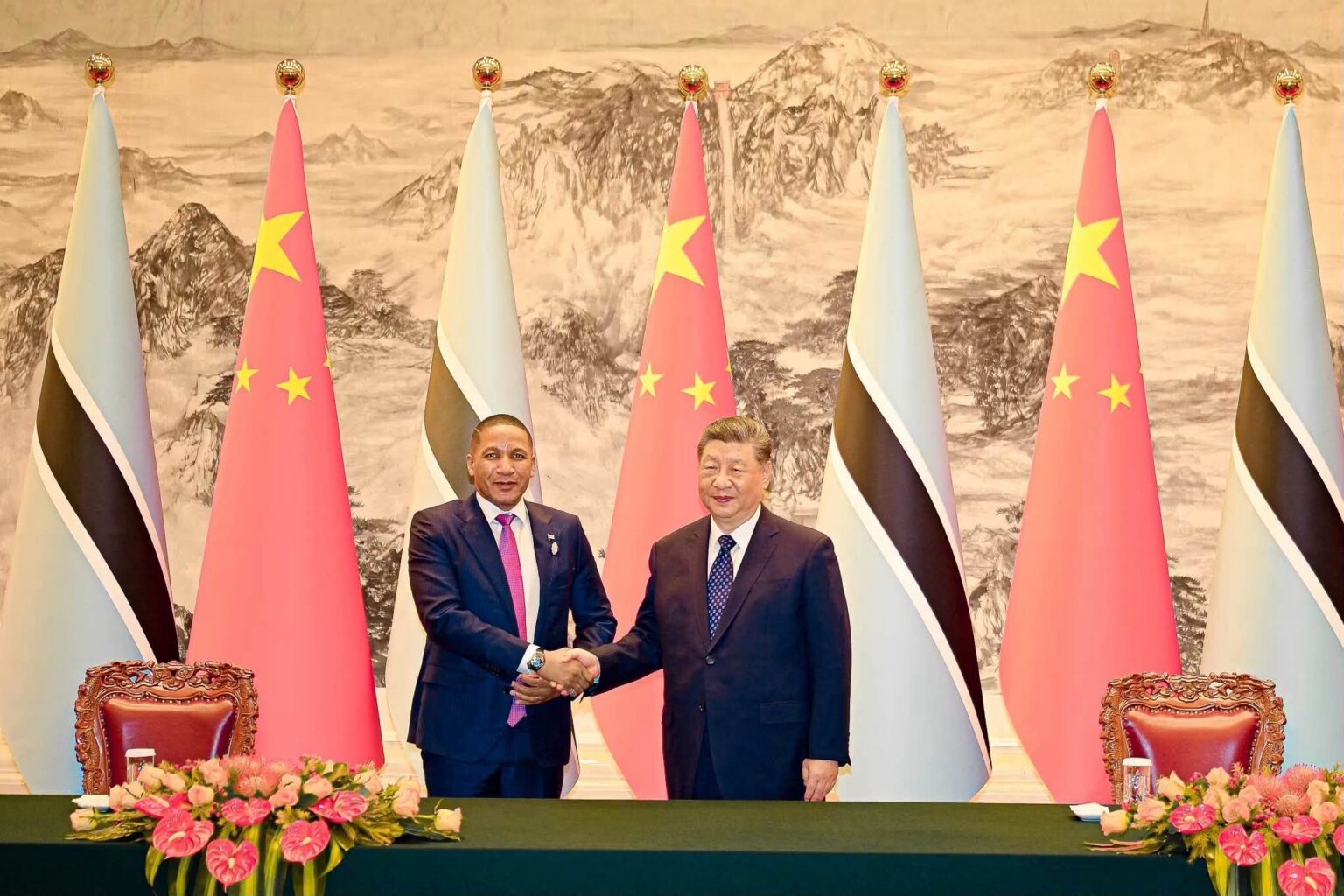
Botswana is set to receive Chinese grants worth a combined P440 million to support healthcare and education, marking a significant step in strengthening cooperation between the two countries. President Advocate Duma Boko announced the funding following his State Visit to China, highlighting the importance of international partnerships in addressing national development priorities. The grants comprise P40 million for medical assistance and P400 million for education, two sectors that play a central role in improving living standards and expanding economic opportunities. The medical support is expected to help address shortages of essential equipment and consumables, while the education grant will support efforts to strengthen Botswana’s education system. The announcements reflect growing cooperation between Botswana and China as the two countries explore practical ways to improve public services, develop local skills and support long-term economic growth.
The P40 million medical grant is intended to help Botswana strengthen healthcare service delivery by providing equipment and consumables needed by medical facilities. Access to appropriate medical supplies and functioning equipment is essential for hospitals and clinics to provide timely and effective treatment. Shortages can place additional pressure on healthcare workers, delay procedures and make it harder for patients to receive the care they need. The Chinese assistance is expected to contribute to efforts to address some of these challenges and improve the availability of essential medical resources. The impact of the grant will depend on how the supplies are distributed, the needs of individual facilities and the government’s ability to maintain and use the equipment effectively.
The medical assistance also forms part of wider cooperation between Botswana and China in specialised healthcare services. President Boko said Botswana had received 46 Chinese medical experts in June 2026, strengthening collaboration aimed at improving access to medical treatment. Their deployment adds to efforts to address specific healthcare needs through the sharing of professional expertise and clinical experience. International medical cooperation can help healthcare systems improve their capacity to deliver specialised procedures, particularly where local services face shortages of personnel or technical resources. For Botswana, such partnerships can provide immediate support while creating opportunities to strengthen healthcare delivery over the longer term.
One area highlighted in the cooperation is cataract treatment, which can help restore vision for people whose eyesight has been affected by the condition. Cataracts cause clouding of the eye’s lens and can interfere with daily activities, independence and quality of life. Cataract surgery is an established treatment that can significantly improve vision for suitable patients. The involvement of Chinese medical experts is intended to support treatment efforts in Botswana and improve access to specialised eye care. The lasting value of this cooperation will depend on patient access, the availability of supporting medical equipment and the capacity of local health services to continue providing treatment.
The P400 million education grant represents the larger share of the announced Chinese assistance and is expected to support efforts to strengthen Botswana’s education system. Education is closely linked to economic development because it equips learners with the knowledge and skills needed to participate in the workforce and adapt to changing industries. Investment in education can also help reduce gaps in learning opportunities and improve the country’s ability to prepare young people for future employment. President Boko emphasised the importance of integrating technology into education so that learners acquire relevant skills in an increasingly digital world. The grant therefore comes at a time when Botswana is seeking to align education with changing economic needs and the demands of a more technology-driven global economy.
Integrating technology into education involves more than introducing computers or digital devices into classrooms. Schools also need reliable electricity, internet access, suitable learning materials and teachers who can use technology effectively. Digital tools can help learners access educational resources, develop problem-solving skills and become familiar with technologies used in modern workplaces. However, the benefits depend on whether schools have the infrastructure and training needed to make these tools part of everyday teaching. Botswana’s ability to turn the education grant into meaningful improvements will depend on how funding is allocated, which priorities receive support and how progress is measured.
The emphasis on technology also connects education policy with Botswana’s broader economic development ambitions. As the country explores opportunities in industrialisation, electric mobility and other technology-related sectors, employers may increasingly require workers with technical, digital and specialised skills. An education system that prepares learners for these fields can help create a stronger foundation for investment and economic diversification. Technical training and practical learning can also support local businesses by improving access to workers with relevant qualifications. By strengthening links between education and industry, Botswana could improve its ability to develop domestic expertise and participate in new areas of economic activity.
The grants were announced as Botswana and China continue to deepen their bilateral relationship, which has been elevated to a Comprehensive Strategic Cooperative Partnership. This relationship provides a framework for cooperation across areas of shared interest, including healthcare, education, infrastructure and economic development. For Botswana, working with international partners can help mobilise resources, access technical expertise and explore development opportunities that might otherwise take longer to establish. China, meanwhile, has experience in large-scale infrastructure development, manufacturing and technological advancement that Botswana can examine for possible application to its own circumstances. The success of the partnership will depend on the practical outcomes of cooperation and the extent to which projects respond to Botswana’s development priorities.
Beyond healthcare and education, the two countries explored opportunities in infrastructure development and transport. These sectors are important to economic activity because they influence how people travel, how goods reach markets and how efficiently businesses operate. Well-planned infrastructure can support investment, improve connectivity and help local industries compete in regional and international markets. Cooperation in transport could also create opportunities to examine new technologies and approaches to improving mobility. Any projects that emerge will need to reflect Botswana’s infrastructure requirements, financial capacity and long-term development plans.
Electric mobility was another area of interest during the engagement between Botswana and China. Chinese companies have developed considerable expertise in electric vehicles and related technologies, including battery systems and components used in electric transport. Botswana could explore how this experience might support future transport development, technology transfer and new business opportunities. However, expanding electric mobility requires consideration of vehicle costs, charging infrastructure, electricity supply and maintenance capabilities. Careful planning would be needed to determine which applications are commercially practical and how local businesses and workers could participate in the sector.
The diamond industry also featured among the areas in which the two countries explored further opportunities. Diamonds have an established role in Botswana’s economy, making the development of the sector important to the country’s wider economic prospects. Cooperation could provide opportunities to examine areas such as processing, technology and the development of higher-value activities, although the specific outcomes of the discussions have not been detailed. Strengthening domestic capabilities in diamond-related industries could help Botswana capture more value from its natural resources. Any such progress would depend on the commercial terms of future agreements, market conditions and the ability to develop competitive local operations.
China’s industrial and technological experience was another important consideration during President Boko’s State Visit. Examining how another country has developed its manufacturing base, infrastructure and technology capabilities can help inform domestic planning, provided that lessons are adapted to local conditions. Botswana’s economic structure, population, resources and infrastructure needs differ from China’s, so successful approaches cannot simply be copied without careful assessment. The most useful partnerships are those that combine external expertise with local knowledge, skills development and realistic investment plans. This approach could help Botswana identify practical opportunities to diversify its economy and reduce its dependence on a narrow range of economic activities.
The P440 million in announced grants could provide valuable support to two sectors that directly affect the wellbeing and future prospects of Botswana’s population. The P40 million medical grant is intended to help address healthcare supply needs, while the P400 million education grant is expected to contribute to improvements in the country’s education system. The deployment of Chinese medical experts, including support for cataract treatment, adds another dimension to cooperation between the two countries. At the same time, discussions covering infrastructure, transport, electric mobility and diamonds show that the relationship extends beyond the immediate grants. The lasting value of the partnership will depend on effective implementation, transparent use of resources and measurable improvements in public services and economic opportunities. If these priorities translate into practical results, cooperation with China could support Botswana’s efforts to strengthen healthcare, improve education, develop local skills and build a more diversified economy.