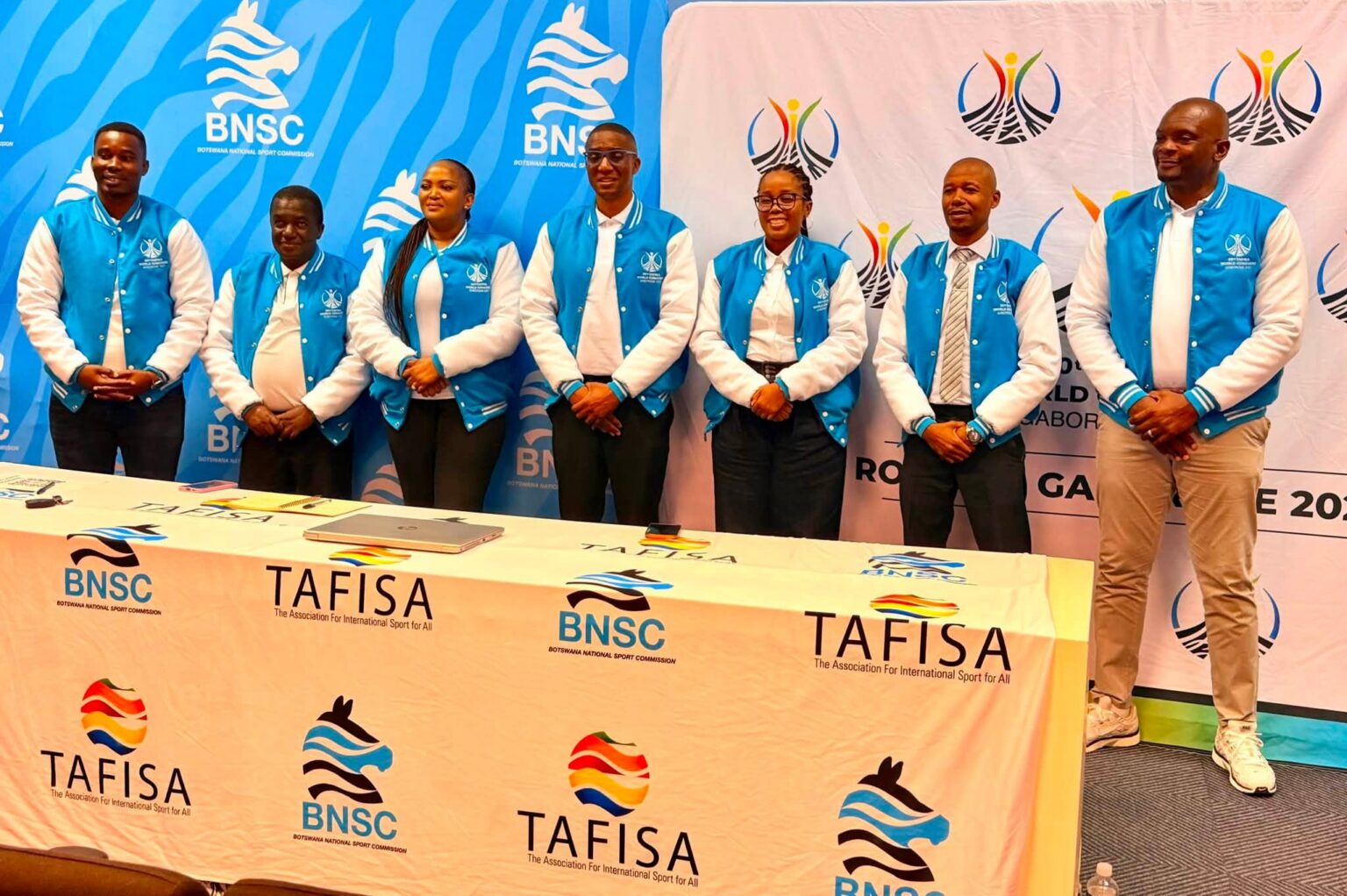
Botswana is stepping up preparations to host the 30th TAFISA World Congress in Gaborone from 18 to 20 October 2027, marking a major opportunity for the country to place Sport for All at the centre of national development. A media briefing held today provided an update on the country’s readiness to welcome an international gathering of sport leaders, policymakers, researchers and development partners. The Congress will bring global attention to Botswana and create opportunities to connect sport with tourism, business, health, education, inclusion and community development. Organisers are also looking beyond the three-day event, with an ambition to create a lasting legacy that benefits institutions, businesses and communities. As preparations continue, TAFISA 2027 is emerging as an important platform for Botswana to showcase its capabilities while demonstrating the wider value of sport to society and the economy.
Speaking at the media briefing, Chairman of the TAFISA Local Organising Committee, Molefhi Kannemeyer Obenne, described the Congress as a significant milestone for Botswana. The event will be the first of its kind to be hosted in the country and only the second time the TAFISA World Congress will take place on African soil, following Cape Town in 2001. This gives Botswana a unique opportunity to position itself within the global Sport for All movement while demonstrating its ability to host a major international gathering. Obenne said the ambition is to ensure that the Congress becomes more than a traditional conference by creating opportunities, strengthening institutions and stimulating business activity. The focus on a lasting legacy means that the event is being viewed as an opportunity to generate benefits that continue after international delegates have returned home.
The expected attendance of approximately 500 international participants will give Gaborone a valuable platform for global engagement. Participants are expected to include sport leaders, policymakers, researchers and development partners from different parts of the world. Their presence can create opportunities for knowledge exchange, professional networking and discussions about how sport can address wider social and economic challenges. Botswana can also use the gathering to strengthen relationships with international organisations and potential development partners. Bringing these stakeholders together in Gaborone can help create conversations that extend beyond sport and contribute to new partnerships in areas such as tourism, education, health and community development.
The concept of Sport for All is broader than competitive sport and focuses on making physical activity and sport accessible to people across communities and different stages of life. It connects sport with health, education, inclusion, wellbeing and community development, making it relevant to a wide range of national priorities. For Botswana, this broader approach provides an opportunity to examine how sport can contribute to healthier communities while supporting social participation and inclusion. Sport can create spaces where people of different backgrounds interact, develop skills and participate in activities that support physical and mental wellbeing. The TAFISA World Congress can therefore provide a platform for Botswana to promote a more inclusive understanding of sport and its role in everyday life.
The Congress also presents an important opportunity for Botswana to connect sport with tourism and economic development. International events can attract visitors who spend money on accommodation, food, transportation, entertainment and tourism activities. These economic benefits can extend beyond the venues where the event takes place and reach businesses across the wider tourism and hospitality value chain. International delegates may also take part in excursions before or after the Congress, creating opportunities to experience Botswana’s destinations and attractions. By linking the event to a broader tourism strategy, organisers can increase the economic impact of hosting TAFISA 2027.
From a tourism perspective, Botswana Tourism Organisation Marketing Manager for Events and Promotions and Local Organising Committee member Carol Kgafela highlighted the value of showcasing the country to an international audience. She noted that the Congress provides an opportunity to demonstrate Botswana’s hospitality, organisational capacity and diverse tourism offering. International visitors attending a major event can experience aspects of the country that they may not have previously associated with Botswana. This can help broaden perceptions of the destination and encourage future travel for leisure, business and other international events. The Congress therefore provides Botswana with an opportunity to use sports tourism as a way of promoting the country to new audiences.
The potential tourism benefits extend across multiple parts of the local economy. Accommodation establishments can benefit from increased demand during the Congress, while restaurants, transport providers and tour operators can gain additional business from delegates and accompanying visitors. Attractions can also benefit if international participants choose to extend their stays and explore Botswana beyond Gaborone. Longer visitor stays can increase tourism spending and create opportunities for businesses to introduce international visitors to a broader range of experiences. These benefits demonstrate why major sporting and business events can form an important part of a destination’s tourism development strategy.
Kgafela also emphasised the opportunity for TAFISA 2027 to strengthen Botswana’s position as a destination for international sporting and business events. The country is traditionally known internationally for its safari and wildlife experiences, but its tourism offering extends beyond this well-established proposition. Hosting a major international congress can demonstrate that Botswana has the venues, hospitality services, infrastructure and organisational capacity required to accommodate global events. A successful Congress could encourage other organisations to consider Botswana when selecting locations for conferences, sporting gatherings and business events. Developing the events tourism sector can help diversify the country’s tourism economy and create additional sources of visitor demand.
The economic impact of TAFISA 2027 will depend heavily on cooperation between different sectors. Government institutions, private businesses, sporting organisations, tourism stakeholders, hospitality operators, communities and the media all have roles to play in ensuring that the Congress delivers meaningful value. Businesses can explore opportunities to provide services, sponsor activities and engage with international participants. Sporting organisations and communities can contribute to programmes that demonstrate how Sport for All works at a local level. The media can also help build awareness of the event while telling the broader story of Botswana’s preparations and the opportunities created by hosting the Congress.
The focus on institutional strengthening is another important element of Botswana’s preparations. Hosting an international event of this scale requires coordination between different organisations and a high level of planning. Local institutions can gain experience in international event management, stakeholder engagement, communications and logistics. These capabilities can remain valuable after the Congress and support Botswana’s ability to host future international events. The knowledge gained during the preparation and delivery of TAFISA 2027 can therefore contribute to a stronger national events industry and improve the country’s readiness for similar opportunities in the future.
The Congress can also provide a platform for Botswana to highlight local initiatives that use sport to support communities. Programmes focused on youth development, health, education, inclusion and physical activity can demonstrate how Sport for All principles can be applied beyond elite competition. Giving international participants an opportunity to see these initiatives can help showcase local innovation while creating opportunities for knowledge exchange. Botswana can also learn from international examples presented during the Congress and explore approaches that could strengthen its own sport and community development programmes. This two-way exchange can make the event more meaningful than a gathering focused solely on presentations and meetings.
The preparations also create an opportunity for local businesses and entrepreneurs to become part of the wider event economy. International visitors require a range of services, including accommodation, transport, food, entertainment, tourism experiences and professional support. Local suppliers can benefit from meeting these needs while gaining exposure to international standards and potential business contacts. Small and medium-sized enterprises can particularly benefit if procurement and partnership opportunities are structured to encourage local participation. Ensuring that businesses across different sectors can participate will help spread the economic benefits of the Congress beyond the main organising institutions.
For Botswana, the significance of TAFISA 2027 extends beyond the three days that international delegates will spend in Gaborone. The event provides an opportunity to strengthen the country’s international profile, build institutional capacity and demonstrate how sport can contribute to national priorities. It can also help position Gaborone as a destination capable of hosting major international gatherings while supporting the development of sports tourism. The success of the Congress will depend on careful planning, effective coordination and strong participation from stakeholders across the country. A shared commitment to creating long-term value can ensure that the event leaves benefits that continue well beyond October 2027.
Botswana’s preparations to host the 30th TAFISA World Congress represent an important national opportunity to welcome the world while showcasing the country’s capabilities. With approximately 500 international participants expected, the Congress can create meaningful opportunities for networking, knowledge exchange, tourism and business development. Its focus on Sport for All also provides a platform to demonstrate how sport can contribute to health, education, inclusion, community wellbeing and economic growth. Strong collaboration between government, the private sector, sporting organisations, tourism and hospitality stakeholders, communities and the media will be essential to maximising the event’s impact. If Botswana successfully turns the Congress into a lasting development opportunity, TAFISA 2027 can strengthen the country’s reputation as an international events destination while leaving a meaningful legacy for sport, tourism, business and communities.