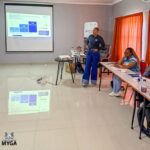

The Ministry of Environment and Tourism in Botswana, working with the United Nations Development Programme (UNDP) Botswana and the NDC Partnership Support Unit, has brought together key stakeholders to validate the country’s proposed climate commitments. The engagement involved government institutions, development partners, civil society organisations and private sector stakeholders, creating a platform for broad input into Botswana’s climate priorities. The process is aimed at ensuring that the country’s climate commitments reflect national development needs while also responding to the growing challenges posed by climate change. Bringing these different groups into the discussion can help strengthen coordination and ensure that climate policies are supported by the institutions and resources required for implementation. The engagement also highlights Botswana’s efforts to connect climate action with sustainable economic development, environmental protection and long-term national resilience.
A central focus of the discussions was the need to ensure that Botswana’s climate priorities are firmly grounded in the country’s economic and environmental realities. Stakeholder participation provides an opportunity to identify practical challenges, assess existing capacities and determine where additional support will be required. It also allows government institutions and development partners to align their programmes instead of working on separate initiatives that may duplicate efforts. Strong coordination will be particularly important as Botswana seeks to translate climate commitments into projects and programmes that can deliver measurable results. The validation process therefore represents an important step in strengthening the country’s approach to implementing its Nationally Determined Contributions and broader climate objectives.
One of the major priorities identified through the engagement is the scaling up of renewable energy, with Botswana targeting a 50% renewable energy mix. Expanding renewable energy can help diversify the country’s energy system while supporting efforts to reduce emissions and improve long-term energy security. Greater investment in renewable energy could also create opportunities for new businesses, skills development and employment within the clean energy sector. Achieving the target will require investment in infrastructure, technology, technical expertise and effective policy frameworks. Access to appropriate climate finance will therefore remain important if Botswana is to move from renewable energy targets to large-scale implementation.
Water security and drought management were also identified as key priorities for Botswana’s climate response. The country faces significant challenges associated with water availability and drought, making effective management of water resources essential for communities, agriculture and economic activity. Improving water infrastructure and strengthening drought preparedness can help communities and businesses cope with periods of water stress. Better systems can also support more efficient use of available resources and reduce the economic and social impacts of prolonged dry conditions. Integrating water security into national climate planning therefore provides an opportunity to strengthen Botswana’s resilience to changing weather patterns and future climate-related risks.
Climate-smart agriculture represents another important area of focus because climate change can directly affect food production, rural livelihoods and household incomes. Botswana’s agricultural sector needs approaches that allow farmers to manage changing rainfall patterns, drought conditions and other environmental pressures while maintaining productivity. Climate-smart agriculture can involve improved farming techniques, efficient water use, better soil management, appropriate technologies and practices designed to increase resilience. Supporting farmers with knowledge, finance and suitable technologies will be important for ensuring that these approaches can be adopted on a meaningful scale. Strengthening climate resilience in agriculture can also contribute to food security and reduce the vulnerability of rural communities to climate-related shocks.
The stakeholder engagement extended beyond the validation workshop, with discussions involving governments and NDC Partnership members in Botswana. These discussions provided an opportunity to examine how development partners can coordinate technical assistance, capacity building and climate finance more effectively around Botswana’s national priorities. Better coordination can help ensure that external support addresses clearly identified needs rather than being spread across disconnected programmes. It can also make it easier for government institutions to access the expertise and resources required to prepare and implement climate projects. A more coordinated approach could therefore improve the country’s ability to turn climate commitments into programmes with clear objectives, funding structures and implementation plans.
Climate finance remains a critical issue in the effort to implement Botswana’s adaptation and mitigation priorities. Many climate-related projects require substantial investment, particularly those involving renewable energy infrastructure, water systems, agricultural technology and other large-scale resilience measures. Access to finance can determine whether projects remain at the planning stage or progress towards implementation. Botswana’s engagement with the NDC Partnership and other development partners can help identify potential financing opportunities while strengthening the country’s capacity to develop investment-ready climate programmes. Increasing access to climate finance could therefore support both environmental objectives and broader economic development.
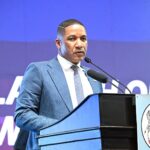
During a meeting with the NDC Partnership Support Unit, Vice President and Minister of Finance Ndaba Gaolathe, together with Minister of Environment and Tourism Honourable Wynter Boipuso Mmolotsi, welcomed the support being provided through the partnership. They emphasised the importance of greater access to climate finance and capacity building in delivering Botswana’s adaptation and mitigation priorities. The discussions also highlighted the need for a more programmatic approach that connects climate action with sustainable economic growth and national resilience. This approach can help ensure that climate investments contribute to multiple development outcomes rather than addressing environmental concerns in isolation. Strong cooperation between the Ministry of Finance, the Ministry of Environment and Tourism and development partners will be important in aligning climate ambitions with available resources and national planning.
A programmatic approach to climate action could also help Botswana improve the consistency and scale of its interventions. Rather than treating individual climate projects as isolated initiatives, programmes can connect related investments under broader national priorities. Renewable energy, water management, climate-smart agriculture and other areas can be developed through coordinated strategies that support shared economic and environmental objectives. This can make it easier to measure progress, identify funding gaps and determine where technical assistance is needed. It can also strengthen accountability by creating clearer links between national climate commitments, public spending and development outcomes.
The collaboration between Botswana, UNDP Botswana and the NDC Partnership Support Unit demonstrates the value of partnerships in addressing climate change. Government provides national leadership and policy direction, while development partners can contribute technical expertise, capacity building and access to international climate finance networks. Civil society and private sector participation adds further perspectives and can help ensure that proposed interventions consider the needs of communities and businesses. Effective climate action requires these different stakeholders to work towards shared priorities with clear responsibilities and measurable outcomes. Botswana’s latest engagement provides a platform for strengthening that cooperation while building greater momentum around the country’s climate commitments.
Botswana’s focus on renewable energy, water security and climate-smart agriculture shows how climate action can be linked directly to economic resilience and sustainable development. The proposed 50% renewable energy mix, improved drought and water management systems and expanded climate-smart agricultural practices all address areas that are important to the country’s long-term development. However, achieving these goals will require sustained investment, technical capacity, strong coordination and effective implementation. The continued engagement between government, UNDP Botswana, the NDC Partnership, development partners, civil society and the private sector can help create the support needed to move from climate commitments to practical results. By strengthening access to climate finance and building the capacity required to implement national priorities, Botswana can advance climate resilience while supporting sustainable economic growth and protecting communities from the growing impacts of climate change.