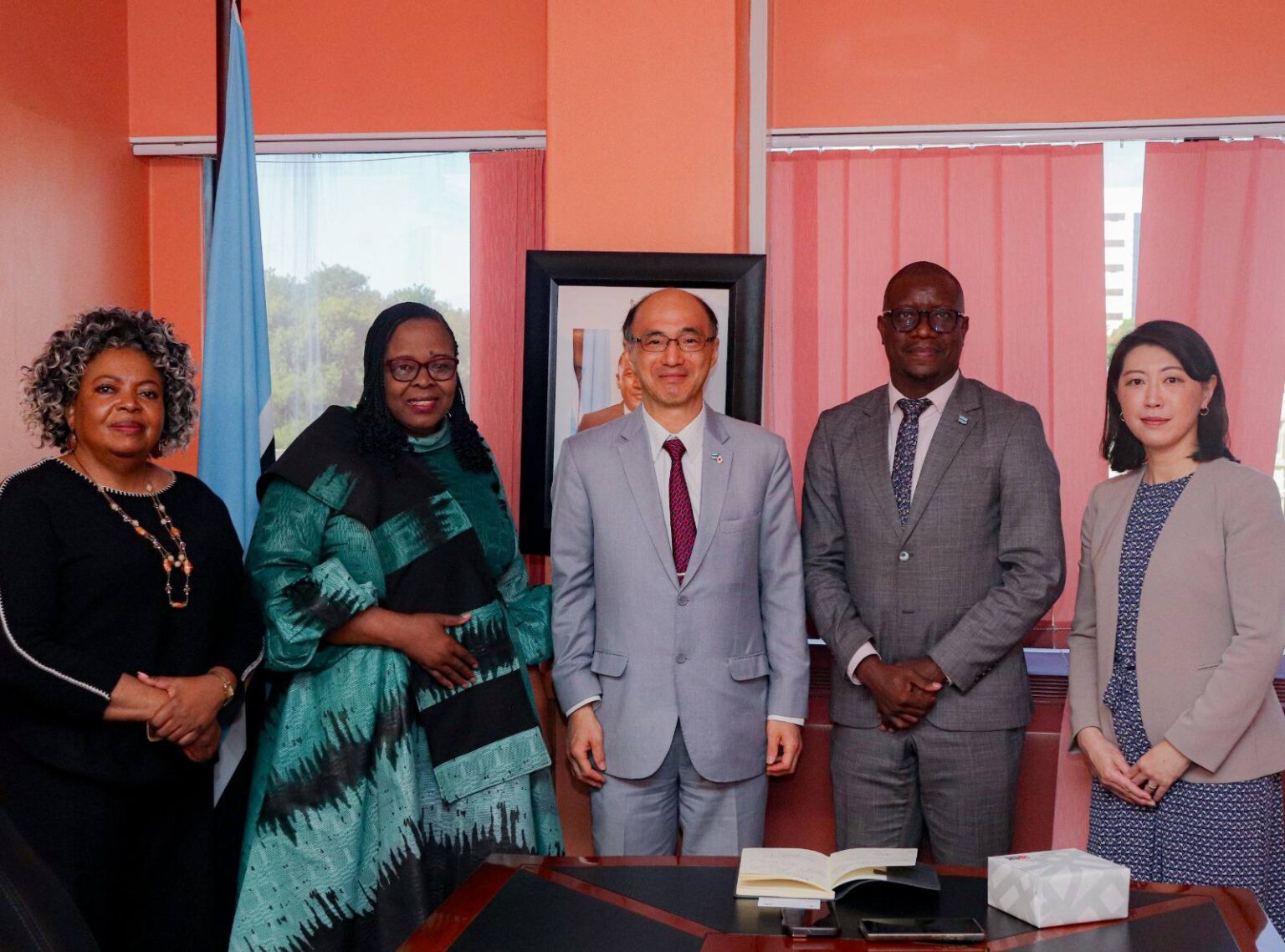
The recent meeting between Nono Kgafela-Mokoka and Shindo Yusuke marks a focused step toward improving education systems in Botswana. This engagement highlights a growing commitment to practical cooperation that delivers measurable results in schools. The discussion placed strong emphasis on school management and the standards that guide daily teaching and administration. These areas directly affect learner performance, teacher effectiveness, and overall system accountability. The involvement of Japan International Cooperation Agency signals a structured approach backed by technical expertise and long-term support. This type of partnership aligns with Botswana’s goal to build a resilient and high-performing education sector. The meeting also reflects a broader strategy to use international cooperation to strengthen local capacity and drive sustainable progress.
A central part of the discussion focused on national school management systems and how they can be improved to meet modern demands. Effective school management ensures that resources are used efficiently and that teaching standards remain consistent across regions. When leadership at the school level is strong, outcomes improve in both academic performance and student well-being. The Ministry aims to refine policies that guide school operations, including performance monitoring, leadership training, and accountability measures. Through collaboration with JICA, Botswana can access tested models and adapt them to local needs. This approach reduces trial and error and accelerates implementation. It also ensures that reforms are grounded in evidence rather than assumptions.
Standards in education formed another key point in the engagement. Clear and measurable standards help define what quality education looks like at every level. They guide teachers, inform parents, and create a benchmark for evaluating progress. The Ministry is working to strengthen these standards so that they remain relevant in a fast-changing world. This includes aligning curricula with current skills demands and ensuring that assessments measure real competencies. Japan’s experience in maintaining high education standards offers valuable insights that can support these efforts. By integrating global best practices with local priorities, Botswana can create a system that is both competitive and contextually relevant.
Human resource development emerged as a critical pillar of the partnership. Minister Kgafela-Mokoka acknowledged the ongoing support from the Government of Japan in training and capacity building for education professionals. Skilled teachers and administrators form the backbone of any successful education system. Investment in their growth leads to better classroom delivery and stronger institutional leadership. Programs supported by JICA have already contributed to building this capacity, and continued collaboration will expand these gains. Training initiatives often include leadership development, technical skills enhancement, and exposure to international best practices. These efforts ensure that education professionals remain adaptable and equipped to handle new challenges.
The partnership also reflects a shared understanding that education reform requires consistency and long-term commitment. Short-term interventions often fail to produce lasting impact without sustained support and monitoring. By working closely with Japan and JICA, Botswana positions itself to maintain momentum in its reform agenda. This includes setting clear targets, tracking progress, and adjusting strategies based on results. Collaboration at this level also opens doors for knowledge exchange beyond immediate projects. It creates a platform for continuous learning and improvement within the education system. The relationship goes beyond funding and enters the space of shared responsibility for outcomes.
This engagement sends a strong signal about Botswana’s priorities in education. It shows a willingness to invest in systems that deliver quality outcomes rather than quick fixes. The focus on management, standards, and human resource development covers the core elements needed for sustainable improvement. It also demonstrates the value of international partnerships that respect local context while offering global expertise. As these initiatives take shape, the impact will be seen in better-managed schools, more confident teachers, and improved learner results. The meeting between Minister Kgafela-Mokoka and Ambassador Shindo Yusuke reinforces a clear direction. Botswana is building an education system that is structured, accountable, and prepared for future demands through strategic collaboration and focused leadership.