
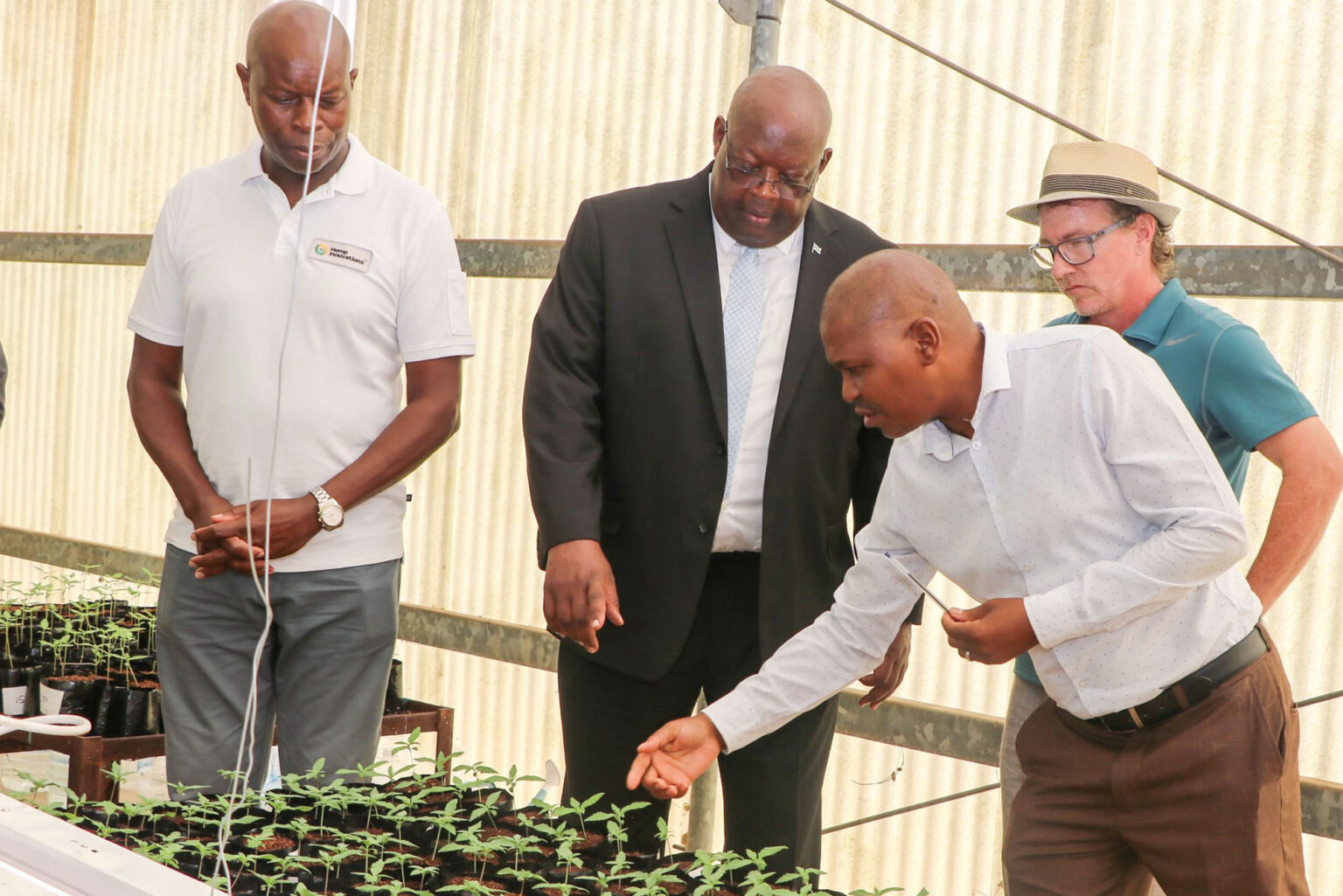
Botswana is taking firm steps to build a competitive hemp and medicinal cannabis industry, and recent developments show clear momentum. The Botswana Investment and Trade Centre has moved beyond policy support and into active engagement on the ground. CEO Keletsositse Olebile’s visit to the hemp innovation pilot project at the National Agricultural Research and Development Institute reflects a focused effort to track progress and align stakeholders. This visit highlights a practical approach to economic diversification, where leadership engages directly with implementation. It also signals confidence in the sector’s potential to create jobs, attract investment, and expand export capacity.
The pilot project at NARDI serves as a testing ground for Botswana’s entry into a regulated hemp market. Government has already moved quickly to establish legislative and monitoring frameworks that meet international export standards. This step is critical because global markets demand strict compliance, especially in medicinal cannabis production. Two companies supported by BITC have already secured licences and started pilot trials in collaboration with NARDI and the Botswana University of Agriculture and Natural Resources. These early trials provide real data on crop performance, regulatory compliance, and market readiness. They also reduce uncertainty for future investors who need proof before committing capital.
Beyond the pilot phase, Botswana is preparing for scale. BITC and the Ministry of Lands and Agriculture have secured land in Dibete for commercial production. Work has already started on site preparation, including de-bushing and infrastructure planning. This parallel approach, where pilot trials run alongside land development, reduces delays between testing and full production. It shows a clear intent to move quickly from research to revenue generation. Investors benefit from this structure because it shortens the time needed to achieve returns.
Hemp Innovations Botswana outlined its strategy during the engagement and provided key insights into production timelines. The crop has a growth cycle of about three months, which allows for multiple harvests each year. This short cycle improves cash flow and makes the sector attractive for both local and international investors. The company also emphasized readiness for export markets, which aligns with Botswana’s regulatory framework. Export readiness is essential because domestic demand alone cannot sustain large-scale production. By focusing on global markets, Botswana positions itself as a competitive supplier in a growing industry.
The value chain linked to hemp production extends far beyond farming. It includes processing, packaging, quality control, and logistics, each creating opportunities for local businesses. This structure supports job creation at different skill levels, from agricultural labor to technical processing roles. It also opens space for small and medium enterprises to enter the market. Citizen participation becomes a key driver of growth, ensuring that economic benefits spread across communities. This aligns with national goals to reduce dependence on traditional sectors and build a more resilient economy.
Keletsositse Olebile acknowledged the progress made and reinforced BITC’s role in supporting investors through each phase of development. His remarks point to a hands-on investment promotion strategy that goes beyond marketing and into execution support. Growing investor interest suggests that Botswana’s approach is gaining credibility. Future announcements are expected once regulatory clearances are finalized, which will likely attract additional players into the sector. This steady pipeline of development keeps momentum strong and signals long-term commitment.
Botswana’s hemp industry is moving from concept to structured implementation with clear milestones. Strong policy support, active institutional involvement, and investor participation are all aligned. The combination of pilot trials, land preparation, and export readiness creates a solid foundation for growth. If execution continues at this pace, the country can establish itself as a serious player in the global medicinal cannabis market. The focus now shifts to scaling operations, maintaining compliance, and ensuring that local communities benefit. This approach positions the sector as a practical tool for economic diversification and sustainable development.