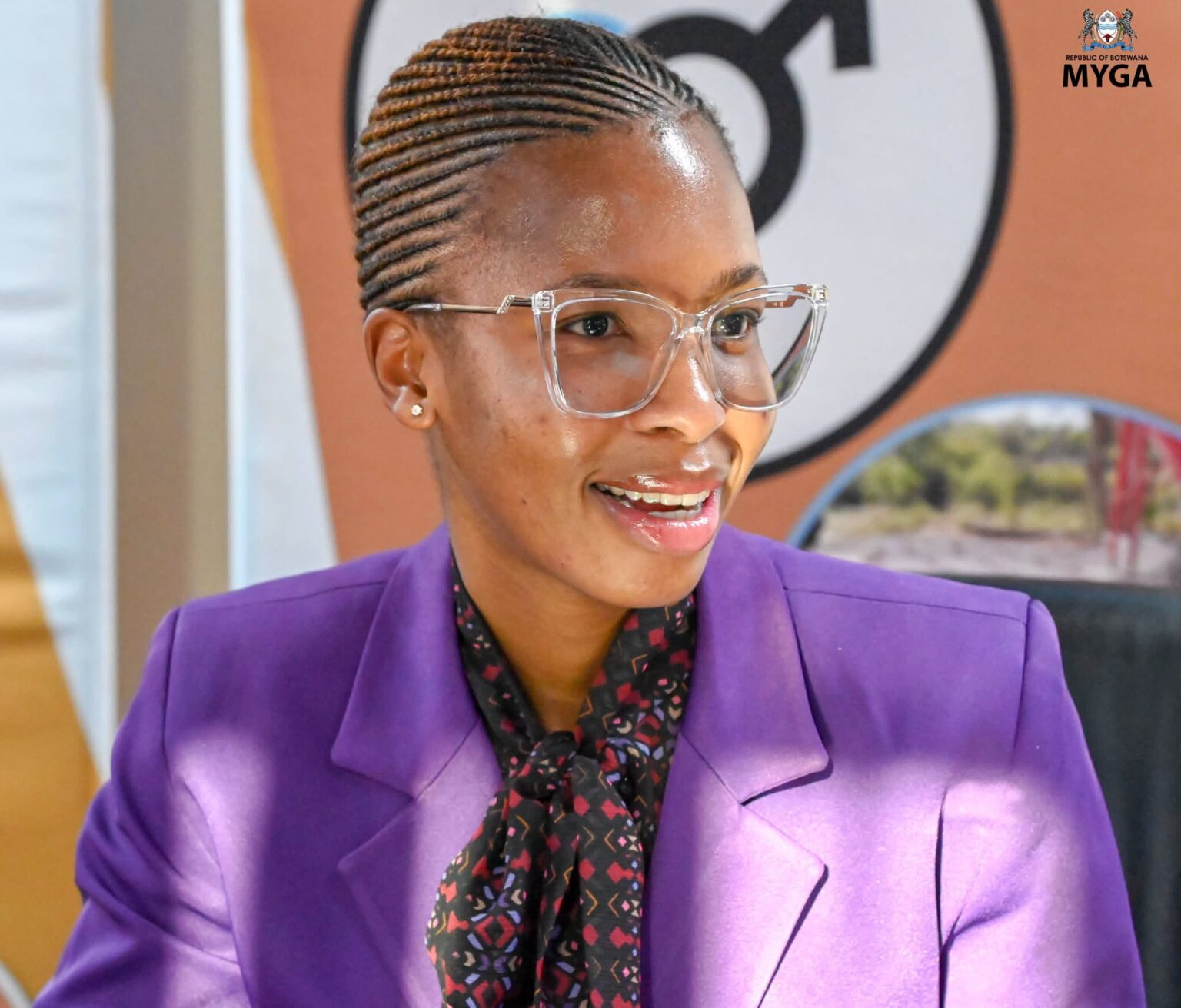
Officials from different Ministries convened on 26 August 2026 for the second Technical Inter-Ministerial Committee on Gender-Based Violence (IMC-GBV), signalling renewed efforts to strengthen Botswana’s coordinated response to gender-based violence. The meeting brought together key government stakeholders responsible for addressing GBV from different angles, reflecting the understanding that the issue cannot be tackled by one Ministry alone. The initiative is being led by the Ministry of Youth and Gender Affairs (MYGA), under the leadership of Minister Lesego Chombo, who serves as Chairperson of the Committee. The meeting focused on strengthening coordination, improving implementation and ensuring that government commitments translate into practical interventions. The renewed approach also places greater emphasis on shared responsibility, policy development, funding and support for communities affected by GBV.
Minister Chombo explained that gender issues have historically been viewed largely as the responsibility of the Gender Department, resulting in limited involvement from other government stakeholders. She said this approach has made it necessary to strengthen the role of different Ministries in addressing gender-related challenges within their respective areas of responsibility. To address this gap, the Ministry sought Cabinet’s endorsement for the Inter-Ministerial Committee on GBV to become an executive function. Cabinet granted the endorsement in July, after which the Committee’s Terms of Reference were adopted. This development provides a stronger institutional framework for government to coordinate its response to GBV and ensure that responsibilities are clearly distributed across Ministries.
The Inter-Ministerial Committee brings together Ministries whose mandates have a direct or indirect role in preventing and responding to gender-based violence. The first technical meeting was held last year and included the Minister of Youth and Gender Affairs as Chairperson, alongside representatives from the Ministry for State President, Ministry of Finance, Ministry of Local Government and Traditional Affairs, Ministry of Child Welfare and Basic Education, Ministry of Higher Education, Ministry of Justice and Correctional Services and Ministry of Health. Each Ministry has a specific responsibility for addressing GBV within its mandate. This structure recognises that GBV affects several areas of society, including health, education, justice, social development, local government and economic empowerment. A coordinated government response can therefore help reduce duplication, strengthen accountability and improve the delivery of services to survivors and communities.
Minister Chombo emphasised that the Committee’s diverse membership is critical to developing a comprehensive response to GBV. The involvement of multiple Ministries means that prevention, legislation, healthcare, education, justice and social support can be considered as interconnected parts of the same national response. An action plan introduced last year was subsequently endorsed by Cabinet, which also directed the development of a costed plan. The decision to develop a costed plan recognises one of the practical challenges facing government departments, as many Ministries did not have dedicated budgets for GBV interventions. Identifying the resources required for implementation can help government move beyond policy commitments and establish realistic programmes with clear financial requirements.
Implementation emerged as one of the central priorities in the discussions, with Minister Chombo stressing that plans and commitments must result in practical action. Government strategies can only make a meaningful difference when they are supported by resources, responsible institutions, measurable targets and consistent monitoring. A coordinated approach can also help Ministries identify gaps and determine where additional technical or financial support is needed. The Committee therefore has an important role in ensuring that commitments are followed by concrete steps rather than remaining at the planning stage. Strong implementation could improve the ability of government to prevent GBV, support survivors and address the social and institutional factors that contribute to violence.
Policy and legislative reform also form an important part of MYGA’s responsibilities in addressing GBV. As the policy holder, the Ministry is mandated to develop laws that respond to gender-based violence and related challenges. Minister Chombo said the Ministry has drafted the GBV Bill, which seeks to address key issues surrounding GBV. She highlighted the importance of making the Bill public, allowing the State to fulfil its obligations while strengthening legal protection and safety for the nation. Public access to proposed legislation can also create an opportunity for stakeholders and communities to understand the proposed measures and contribute to the legislative process.
At the same time, MYGA is reviewing the National Policy on Gender and Development to ensure that it becomes more inclusive and responsive to the needs of both women and men. Minister Chombo said the review presents an opportunity to strengthen programmes that address issues affecting men. This includes efforts to revitalise the Men Sector, which was transferred to MYGA but has not yet become fully operational. Addressing men’s needs forms part of a broader approach to gender development, particularly because social, economic and mental health challenges can influence family and community wellbeing. A more inclusive gender policy can therefore help government design interventions that recognise the different experiences and needs of women and men.
The Minister also highlighted the importance of economic empowerment in advancing the gender development agenda. MYGA continues to implement programmes aimed at empowering women through entrepreneurship and other economic opportunities. Ten percent of the alcohol levy is allocated towards women’s empowerment initiatives, while the National Development Plan 12 provides for the establishment of market centres to support women. These initiatives can help women strengthen their participation in economic activity by providing opportunities to develop businesses, access markets and increase their financial independence. Economic empowerment is also relevant to the wider GBV response because financial insecurity can create additional vulnerabilities for individuals who face abusive or controlling relationships.
Minister Chombo further stressed that discussions around GBV should not portray men only as perpetrators. She said men’s mental health and other challenges must also receive attention as part of a broader and more effective response. This approach recognises the importance of prevention and early intervention alongside measures that hold perpetrators accountable. Addressing issues affecting men does not diminish the experiences of survivors or the need for protection and justice. Instead, it can complement existing GBV programmes by supporting healthier communities and encouraging interventions that address harmful behaviours and the underlying challenges associated with violence.
MYGA is also progressing with the implementation of the National Strategy Towards Ending GBV. The Ministry’s role includes coordinating and guiding stakeholders on what needs to be implemented and how interventions should be carried out. It also provides technical support to help stakeholders understand their responsibilities and strengthen implementation within their respective mandates. The Inter-Ministerial Committee can provide an important platform for tracking progress, identifying challenges and improving coordination between government departments. Effective implementation of the national strategy will depend on sustained cooperation, adequate resources and accountability across the institutions involved.
Another planned intervention is the training of Ministers on how their respective mandates contribute to gender development. Minister Chombo explained that this is important because Ministers are responsible for developing policies within their respective areas of responsibility. Understanding the gender implications of those policies can help ensure that gender equality and GBV prevention become part of government planning rather than remaining isolated within a single department. Training can also help Ministers identify opportunities within their portfolios to support prevention, economic empowerment, access to services and equal participation. This could strengthen the integration of gender considerations across government and make the national response more consistent.
The second Technical Inter-Ministerial Committee on GBV therefore represents an important step towards strengthening Botswana’s response to gender-based violence through greater government-wide coordination. The Committee’s work brings together policy, legislation, budgeting, health, education, justice, local government and economic empowerment, creating a broader framework for tackling a complex national challenge. The adoption of the Terms of Reference, the Cabinet-endorsed action plan and the development of a costed implementation plan provide mechanisms for turning government commitments into measurable programmes. The drafting of the GBV Bill and review of the National Policy on Gender and Development further demonstrate the focus on strengthening the policy environment. As the process moves forward, the success of these efforts will ultimately depend on effective implementation, adequate resources, accountability and sustained cooperation between Ministries and other stakeholders.