Rhee Hetanang turned the 2026 Comrades Marathon into a deeply personal story of endurance shaped by grief, loyalty and resilience. What should have been a standard ultramarathon challenge became a defining life moment driven by loss and remembrance. The 85.777 kilometre race between Durban and Pietermaritzburg tested physical limits, but for Hetanang it also tested emotional strength in the most difficult season of his life. The race became a reflection of how personal hardship can reshape purpose. It also showed how endurance sport can carry meaning far beyond competition.
Running had always played a central role in Hetanang’s life, not as a pursuit of records but as a source of mental stability and emotional clarity. He consistently viewed running as more than exercise, describing it as a way to reset his mind during demanding periods of work and responsibility. Over time, endurance running became his preferred outlet compared to sports he had previously played such as tennis, volleyball and soccer. It gave him structure, discipline and space to process pressure. That foundation would later become critical when his personal life changed dramatically in 2026.
The year began under intense emotional strain with the illness of his mentor, Festus Mogae, who spent an extended period in hospital. Hetanang’s attention shifted almost entirely toward supporting him, both professionally and emotionally. As a result, his Comrades Marathon training plan, which usually spans six months of preparation, became severely disrupted. By April, as Mogae’s condition worsened, Hetanang’s focus moved further away from sport. When the former president passed away in May, Hetanang believed his participation in the 2026 race had effectively ended.
The period following the burial was marked by grief and uncertainty, but also by gradual emotional recovery supported by friends and close colleagues. Their encouragement helped him begin processing the loss while slowly reconnecting with daily routines. As part of that healing process, he entered the Sanlam Cape Town Marathon, an experience that reignited his connection to running. Although he was not fully prepared, the race reminded him of the mental clarity and emotional release that running had always provided. It became a turning point that reopened the possibility of returning to Comrades.
By early June, Hetanang faced a difficult decision about whether to proceed with the Comrades Marathon. He acknowledged that his physical preparation was far below what is normally required for such a demanding race. However, he also recognised that some challenges cannot be solved through training alone. They require emotional courage and personal conviction. He ultimately decided to travel to Durban and take on the 85.777 kilometre journey, accepting both the physical risk and emotional weight of the decision.
His motivation was deeply rooted in tribute. He chose to run in honour of Mogae, believing that his mentor would have encouraged perseverance even in the face of difficulty. That sense of responsibility gave meaning to every step of the race. Standing at the start line on 14 June 2026, Hetanang was fully aware of the difficulty ahead. He also understood that this race was no longer about performance but about remembrance and resilience.
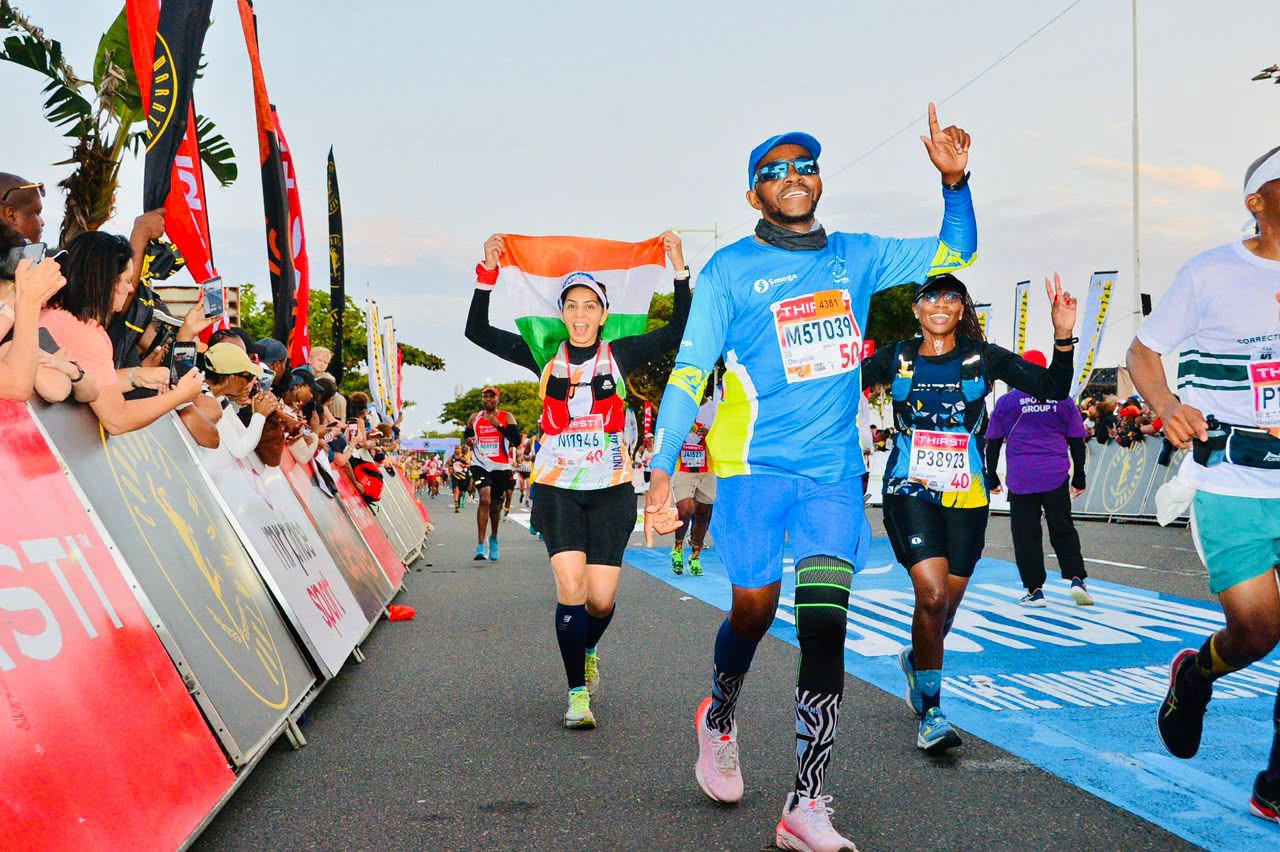
The Comrades Marathon pushed him through exhaustion, discomfort and emotional reflection over many hours on the road. Every kilometre required focus and determination as he balanced physical strain with the memory of the person he was honouring. Despite the challenge, he continued forward with steady commitment. After eleven hours and thirty-six minutes, he reached the finish line in Pietermaritzburg. The moment marked the completion of a journey that was as emotional as it was physical.
Crossing the finish line represented far more than completing an ultramarathon. For Hetanang, it symbolised the ability to continue moving forward even after profound loss. It reflected a personal transformation shaped by grief, endurance and purpose. The medal he received carried meaning beyond sport, representing resilience during one of the most difficult periods of his life. It also reinforced the role running played in helping him regain balance and direction.
For Rhee Hetanang, the 2026 Comrades Marathon became a defining chapter that blended memory, discipline and emotional recovery. It was not a pursuit of personal best performance but a tribute to a mentor whose influence shaped his journey. The experience showed how endurance running can become a powerful expression of loyalty and healing. It also demonstrated that even in moments of deep grief, purpose can still be found through movement and determination.