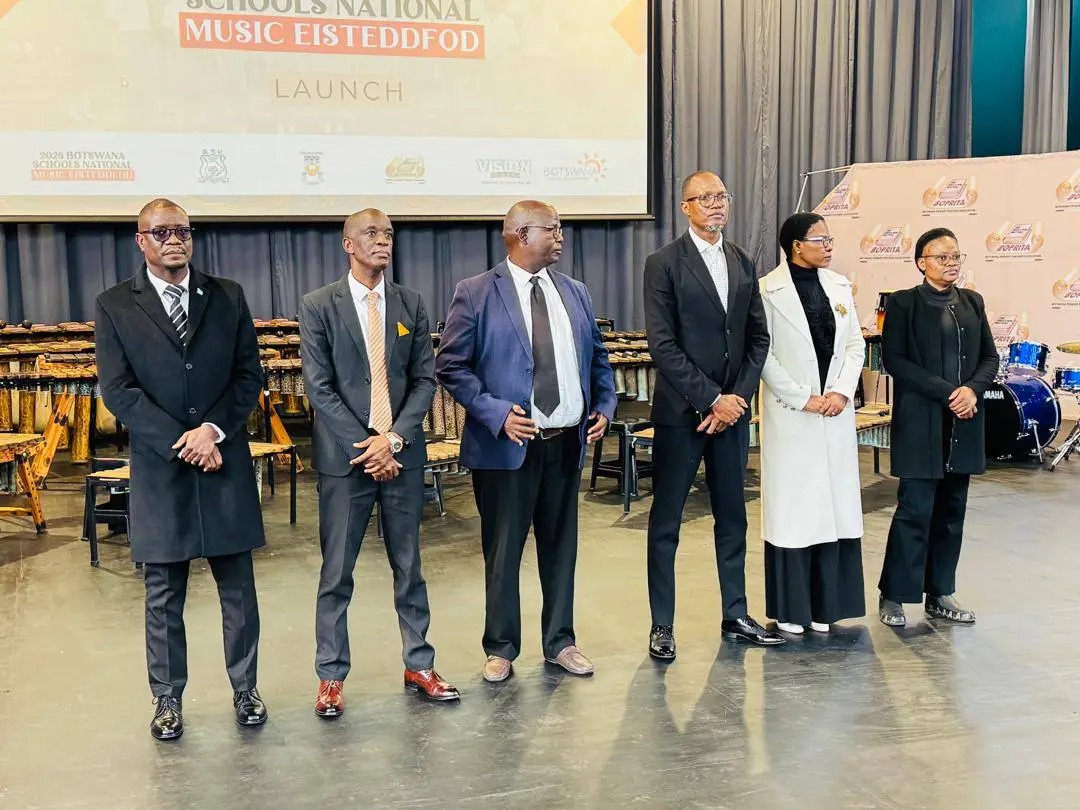
The Government of Botswana has officially revived choral music competitions in public and private primary and secondary schools as part of a broader strategy to strengthen discipline, creativity and national identity among learners. The initiative marks a renewed commitment to arts education as a tool for shaping behaviour and improving academic environments in schools across the country. The announcement was made during the launch of the 2026 Botswana Schools National Music Eisteddfod at Northside Primary School, where education stakeholders gathered to witness the return of structured school music competitions. The revival signals a shift toward using cultural and artistic development as part of learner development and school improvement strategies. It also reflects growing recognition of music education as a powerful influence on student growth and social cohesion.
Assistant Minister of Child Welfare and Basic Education, Mr Justin Hunyepa, led the official launch and confirmed the return of choral music competitions across both public and private schools. He explained that the programme is designed to rebuild discipline in schools while also encouraging creativity and teamwork among learners. The initiative will see structured competitions reintroduced at different levels, allowing schools to compete regionally and nationally. Mr Hunyepa emphasized that choral music is not only an artistic activity but also a developmental tool that strengthens focus, coordination and respect among students. The government views the programme as a long term investment in shaping responsible and engaged citizens.
A major component of the revived programme is the establishment of a National Choral Music Technical Team that will guide implementation and ensure consistency in standards across schools. This team will be responsible for developing competition guidelines, training educators and supporting schools in building strong choral programmes. It will also oversee the quality of performances and help identify areas where schools may need additional support or resources. The creation of this technical team is intended to professionalise school music activities and ensure that the programme delivers meaningful educational outcomes. It also provides a structured framework for sustaining the initiative beyond its initial rollout phase.
The government has positioned the revival of choral music competitions as a direct response to concerns about learner indiscipline in schools. According to Mr Hunyepa, the arts can play a significant role in addressing behavioural challenges by giving learners constructive outlets for expression and engagement. Participation in choral music requires teamwork, commitment and regular practice, all of which contribute to improved discipline and responsibility. Schools are expected to use the programme to reinforce positive values such as respect, cooperation and dedication to excellence. The initiative is also expected to help reduce disruptive behaviour by keeping learners actively involved in structured extracurricular activities.
Beyond discipline, the programme is designed to promote creativity and strengthen national identity among learners. Choral music in Botswana has long been a platform for storytelling, cultural expression and the preservation of local traditions. By reviving structured competitions, the government aims to reconnect learners with cultural heritage while also encouraging innovation in musical performance. Students will have opportunities to explore different styles, languages and themes that reflect the diversity of Botswana’s communities. This creative engagement is expected to build confidence and enhance communication skills among participants.
Mr Hunyepa also called on development partners and the corporate sector to support the initiative through funding, resources and technical assistance. He stressed that successful implementation of the programme requires collaboration between government, schools and the private sector. Corporate involvement could help provide instruments, training materials and logistical support for competitions at regional and national levels. Development partners are also encouraged to contribute expertise in arts education and youth development. This multi stakeholder approach is intended to ensure the sustainability and growth of the programme over time.
The launch of the 2026 Botswana Schools National Music Eisteddfod at Northside Primary School represents a symbolic restart of structured school music competitions in the country. The event brought together educators, learners and officials who share a common goal of improving the quality of education through arts integration. Schools are expected to begin preparations for participation in upcoming competitions, with guidelines to be provided by the newly established technical team. The programme is anticipated to gradually expand, reaching more schools and learners across the country in the coming years. Its rollout is seen as an opportunity to rebuild enthusiasm for music education at all levels of schooling.
The revival of choral music competitions reflects a broader government commitment to holistic education that goes beyond academic performance alone. By integrating arts into the education system, the government aims to develop well rounded learners who are disciplined, creative and culturally aware. The initiative also supports efforts to restore excellence in schools by creating structured platforms for talent development and recognition. Over time, it is expected that the programme will contribute to improved school environments and stronger learner outcomes. The emphasis on discipline, creativity and national identity positions choral music as a key pillar in Botswana’s education transformation agenda.
The return of school choral music competitions marks a significant milestone in efforts to strengthen education through cultural engagement and structured extracurricular programmes. With strong leadership, technical support and stakeholder collaboration, the initiative has the potential to reshape learner experiences across the country. It provides a platform for young people to express themselves while building important life skills that extend beyond the classroom. As implementation begins, the focus will remain on ensuring consistency, inclusivity and sustainability in all participating schools. The programme stands as a renewed investment in the future of Botswana’s youth and the preservation of its cultural identity.