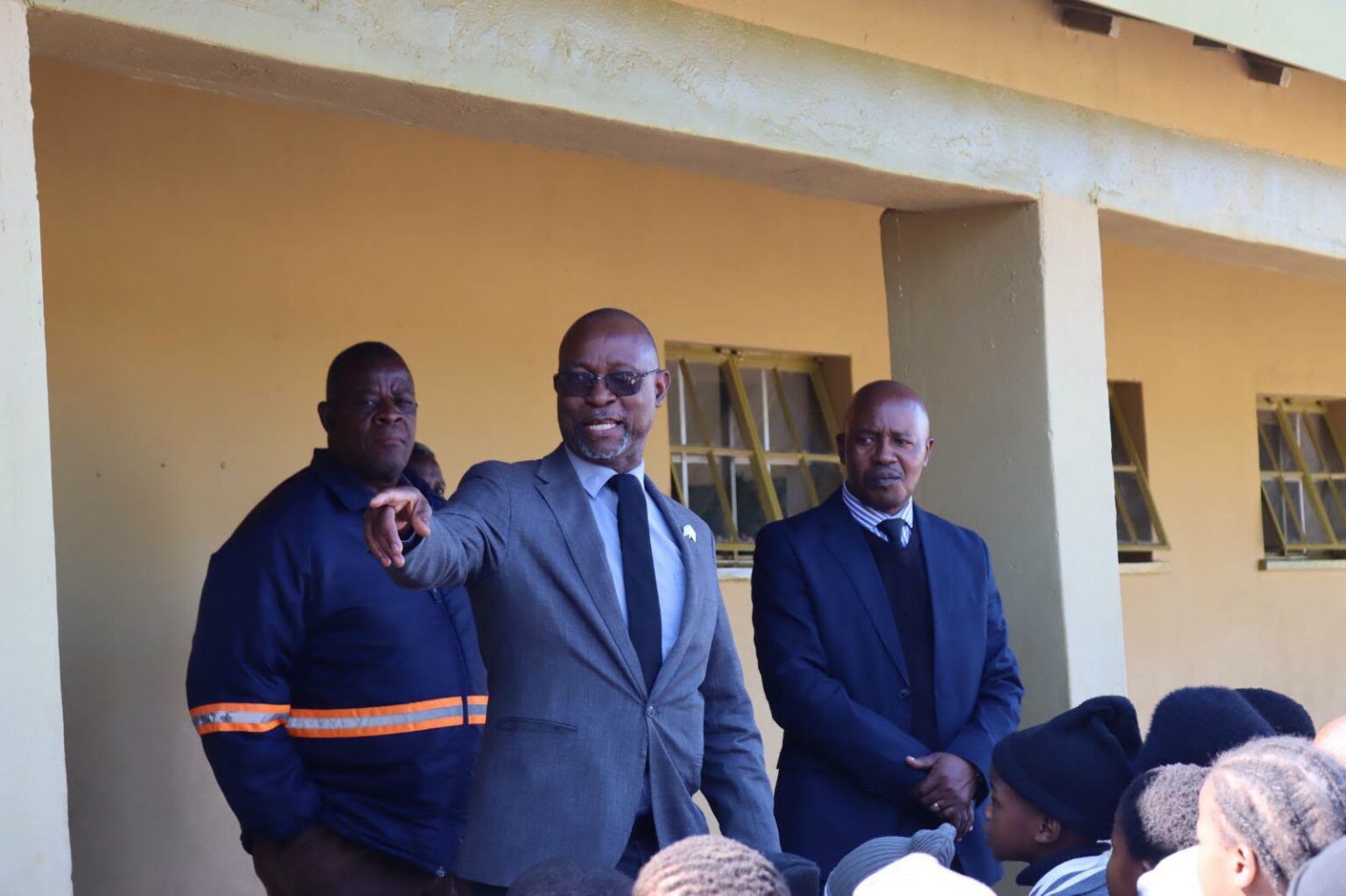
Assistant Minister of Child Welfare and Basic Education, Honourable Justin C. Hunyepa, has commended teachers and school staff in Kweneng East for their strong commitment to education despite ongoing challenges in the sector. His remarks came during visits to Shadishadi Primary School, Lephepe Primary School and Macheng Junior Secondary School, where he engaged directly with educators and school leadership teams. He described teachers as the architects of Botswana’s future, emphasising that their daily efforts shape the nation’s long-term development. The visit formed part of a broader effort by the Ministry to assess conditions in schools and strengthen support systems for educators and learners. His message highlighted the importance of recognising the critical role teachers play in building a skilled and responsible society.
During his engagements at the three schools, Honourable Hunyepa praised educators for continuing to deliver quality teaching under difficult circumstances. He noted that many teachers face resource limitations, infrastructure challenges and increasing workloads, yet remain committed to ensuring learners receive a proper education. According to him, this level of dedication represents true patriotism because it directly contributes to improving the lives of young people across Botswana. He emphasised that every lesson taught, every learner supported and every challenge overcome contributes to the country’s national development goals. His remarks reflected a strong appreciation for the sacrifices made by school staff in both rural and semi-urban communities.
Honourable Hunyepa also reassured teachers and school administrators that government is actively working to improve learning environments across the country. He pointed to ongoing efforts through the Education Infrastructure Management Company, the Botswana Economic Transformation Programme and National Development Plan 12 as key mechanisms driving school modernisation. These initiatives aim to refurbish and upgrade public schools, ensuring that learners have access to safe, functional and well-equipped learning spaces. He explained that improving infrastructure is essential for supporting effective teaching and learning outcomes. The government’s commitment, he said, is focused on creating long-term solutions that address both current and future educational needs.
In addition to infrastructure development, the Assistant Minister highlighted plans to revive co-curricular activities in schools, including scouting programmes, music choirs and sports. He explained that these activities are not optional extras but essential components of holistic education. Participation in co-curricular programmes helps learners develop discipline, teamwork, leadership skills and personal confidence. He stressed that schools must provide opportunities for learners to grow beyond the classroom in order to prepare them for real-world challenges. By strengthening these programmes, the education system can support the development of well-rounded individuals who are capable of contributing positively to society.
Acting Director for Kweneng Regional Operations, Ms Margaret Koko, also addressed educators during the visits and expressed appreciation for their resilience and commitment. She acknowledged the challenges faced by teachers but assured them that issues related to staff welfare and administrative support are being addressed. Ms Koko emphasised that while academic performance remains a key priority, child welfare is equally central to the Ministry’s mandate. She encouraged educators to continue prioritising the safety, well-being and development of learners in their care. Her remarks reinforced the importance of balancing academic excellence with a strong focus on learner protection and support.
The visits by Honourable Hunyepa to Kweneng East schools highlighted the importance of continuous engagement between government officials and education practitioners. Such interactions provide valuable opportunities to understand the realities faced by teachers on the ground while also identifying areas that require improvement. They also strengthen communication between policymakers and school staff, ensuring that decisions are informed by real classroom experiences. The discussions at Shadishadi Primary School, Lephepe Primary School and Macheng Junior Secondary School reflected a shared commitment to improving education outcomes across Botswana. Teachers expressed appreciation for the recognition of their work and the reassurance of ongoing government support.
Honourable Justin C. Hunyepa’s visit concluded with a strong message of encouragement to educators, reinforcing their essential role in shaping Botswana’s future. His recognition of teachers as nation builders underscored the value of their contribution to national development and social progress. With government initiatives focused on infrastructure development, co-curricular revitalisation and improved staff welfare, the education sector is expected to continue evolving in support of both teachers and learners. The commitment expressed during the visit signals ongoing efforts to strengthen the foundation of basic education in Botswana. As educators continue their vital work in classrooms across Kweneng East and beyond, their impact remains central to building a stronger and more prosperous future for the country.