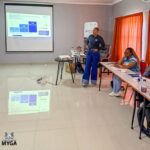
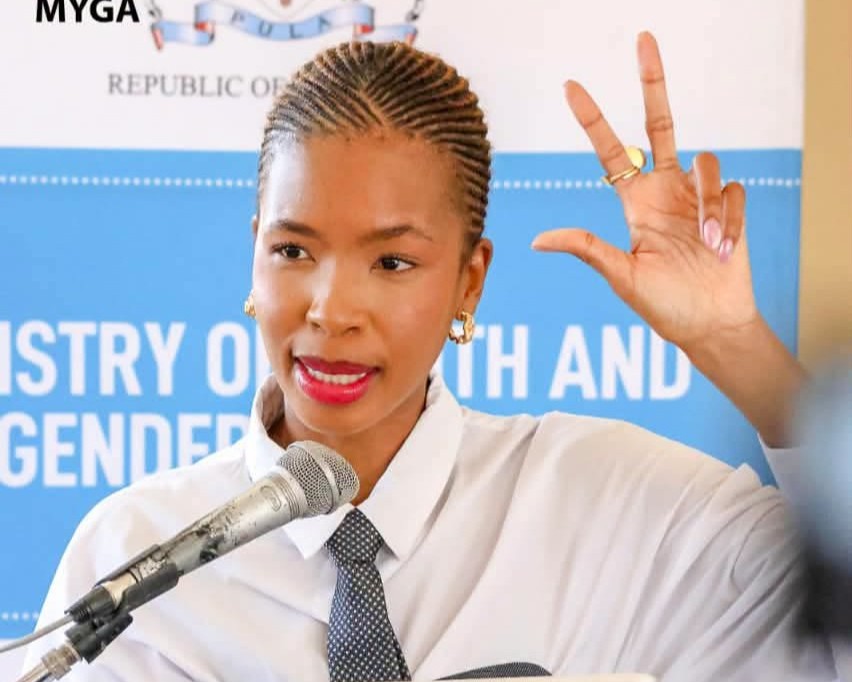
The Minister of Youth and Gender Affairs, Honourable Lesego Chombo, has urged young people in the Charleshill District to believe in their potential, take advantage of Government programmes and remain committed to building better futures for themselves and their communities. Chombo engaged young people from Tsootsha, Ncojane, Kole, Makunda, New Xanagas and Karakubis during a community engagement aimed at creating an open platform for discussing youth development and the challenges facing young people. The engagement followed an invitation from the Assistant Minister of Lands and Agriculture, Honourable Motsamai Motsamai. It gave young people an opportunity to learn more about Government initiatives while sharing their experiences and concerns directly with a Cabinet Minister. The discussions covered unemployment, entrepreneurship, leadership, gender-based violence, youth representation and the need to make development programmes more responsive to the realities faced by young people.
Welcoming Minister Chombo, Kgosi Bernard Kaome identified unemployment as one of the most pressing challenges affecting the community. He encouraged young people to listen carefully to the information provided by the Minister and to make full use of opportunities available through the Ministry of Youth and Gender Affairs. His remarks highlighted the importance of ensuring that young people understand how Government programmes work and what support they can access. Access to information can make a significant difference because young people cannot benefit from programmes they do not know about or understand. The engagement therefore created an important opportunity to connect communities in the Charleshill District with national youth development initiatives while allowing Government officials to hear directly from those expected to benefit from them.
Kgosi Kaome also raised concerns about cultural beliefs and attitudes that can contribute to gender-based violence, particularly when women become more financially successful than their spouses. He called for community education to accompany economic empowerment initiatives so that financial progress does not create conflict within families. His comments highlighted the need to address social attitudes alongside programmes designed to improve economic opportunities for women and young people. Economic empowerment can strengthen households and communities, but lasting benefits also depend on healthy relationships and respect between partners. Addressing harmful beliefs through community dialogue and education can therefore form an important part of broader efforts to prevent gender-based violence and promote equality.
Minister Chombo used her own life story to encourage the young people to believe that their circumstances do not have to determine their future. She shared her journey from Shorobe to becoming a lawyer, Miss Botswana, Miss World and ultimately a Cabinet Minister. Her experience provided a personal example of how education, preparation, persistence and confidence can open opportunities over time. Chombo said she was once shy about telling people that she came from Shorobe, but eventually learned to take pride in her roots and understand that her background did not limit her ambitions. She encouraged the young people to be proud of where they come from while continuing to work towards the lives and careers they want to build.
Chombo stressed that young people should not allow their birthplace or circumstances to convince them that their dreams are beyond reach. She reminded the gathering that Government programmes and leadership opportunities are intended for all Batswana, including those living outside major towns and cities. Her message was particularly relevant to young people in rural communities who may sometimes feel disconnected from national opportunities because of their location. She encouraged them to remain informed, participate in available programmes and take responsibility for pursuing opportunities when they arise. Her remarks also reinforced the importance of recognising talent and ambition in communities across the country rather than concentrating opportunities only in urban centres.
Drawing on her journey to the Miss Botswana and Miss World platforms, Chombo explained that meaningful success requires patience, preparation and determination. She said she spent eight years preparing herself for that journey, with each opportunity, interaction and business venture contributing towards the goal she had established. Her experience illustrates that major achievements often develop through a series of smaller steps rather than immediate results. She encouraged young people to remain committed to their goals even when progress appears slow or opportunities do not arrive immediately. The message was that persistence, combined with preparation and a willingness to learn, can help young people remain focused while working towards long-term ambitions.
Chombo also encouraged young people to be creative when looking for ways to generate income and to use their abilities to make positive contributions to their communities and country. She highlighted the importance of thinking beyond traditional employment and exploring entrepreneurship and other forms of economic activity. This approach is particularly relevant as young people seek ways to become financially independent and contribute to local economic development. However, entrepreneurship also requires planning, skills, market knowledge and resilience, which makes appropriate training an important part of youth empowerment. Chombo’s emphasis on creativity therefore connected directly with the Government’s efforts to improve youth development programmes and help young people build sustainable livelihoods.
Reflecting on her appointment in November 2024, Chombo explained that her professional journey, youth-focused work and volunteer activities through the Lesego Chombo Foundation had contributed to her preparation for leadership. She reminded the young people that their work and contributions can be noticed even when they do not immediately receive recognition. Her message encouraged them to approach their studies, employment, businesses, community work and volunteer activities with seriousness and commitment. Consistent effort can help young people develop skills and experience that may become valuable when future opportunities arise. She urged them to dream, work hard and think beyond personal success by considering how their abilities can benefit their communities and the country.
The Minister also provided an update on the review of the Youth Development Fund, known as YDF, which was awaiting Cabinet approval at the time of the engagement. She explained that the revised programme would place greater emphasis on entrepreneurship training before funding is released. The proposed approach aims to ensure that young people receive practical preparation to help them understand how to establish, manage and sustain businesses before accessing financial support. Business funding can provide an important starting point, but young entrepreneurs also need skills in areas such as planning, financial management, marketing and customer development. Chombo’s emphasis on training therefore reflects an effort to strengthen the support available to young entrepreneurs and improve the chances that funded businesses will survive and grow.
The Minister also invited young people to explain why some businesses supported through the YDF struggle or eventually fail. This invitation placed the experiences of programme beneficiaries at the centre of discussions about how the initiative should be improved. Young entrepreneurs can provide valuable information about challenges that may not be fully visible from an administrative perspective, including difficulties with funding requirements, markets, infrastructure and business operations. Listening to these experiences can help policymakers identify gaps and make future interventions more practical. The engagement therefore created a direct feedback channel between young people and Government at a time when the YDF is undergoing review.
Young people at the meeting raised concerns about some of the requirements associated with accessing the YDF. In particular, they questioned security and land requirements and asked how a 25-year-old applicant without land could realistically meet such conditions. Their concerns highlighted the differences between programme requirements and the circumstances of young people who may have business ideas but lack property or other forms of security. They called for a more practical and inclusive system that would allow a wider range of young entrepreneurs to benefit from financial support. Their contribution demonstrated why community consultations can be important when Government reviews development programmes intended to address youth unemployment and promote self-reliance.
Chombo also discussed the Botswana National Service Programme, commonly known as Tirelo Sechaba, which was undergoing review and the Cabinet approval process. She explained that proposed changes would aim to ensure participants leave the programme with relevant work experience and certificates that can strengthen their employment prospects. This focus could help make participation more useful to young people by linking national service with skills development and employability. Work experience can provide young people with practical exposure while helping them understand workplace expectations and build professional networks. The proposed changes therefore reflect the broader goal of ensuring that youth programmes provide tangible benefits that can assist participants as they move into employment or entrepreneurship.
The Minister further highlighted the role of the Botswana National Youth Council as a representative and advocacy structure through which young people’s concerns can reach national decision-making platforms. She expressed a desire to see more young people occupying leadership positions during her five-year term as Minister. Chombo stressed that ideas raised during Kgotla meetings should not end at community discussions, but should be carried forward and represented where decisions are made. She also said young people should not only be consulted during decision-making processes, but should become decision-makers themselves at different levels of governance. Youth centres are expected to play a role in helping young people apply for the YDF and access other opportunities available through Government.
Gender-based violence was another important issue addressed during the engagement. Chombo said the Ministry was developing GBV legislation in collaboration with the SADC Parliamentary Forum, with the Bill expected to be ready for the November parliamentary sitting. She also highlighted the work of the Inter-Ministerial Committee on GBV, which coordinates Government interventions aimed at preventing and responding to violence. The Minister commended Kgosi Kaome for recognising the connection between culture and gender-based violence and stressed that lasting change also requires individuals to take responsibility for their behaviour and relationships. The discussion demonstrated that addressing GBV requires coordinated action involving legislation, Government programmes, community education and individual responsibility.
The engagement ended with a renewed call for young people in the Charleshill District to remain patient, ambitious and willing to use the opportunities available to them. Honourable Motsamai thanked Minister Chombo for accepting the invitation and engaging directly with young people from the district. He said her message had given the youth renewed hope and reminded them that their birthplace and family background should not determine their future. He encouraged them to take advantage of Government programmes, remain patient and work towards becoming self-reliant. The Setswana saying, “Phiri o rile ga bose gangwe,” reinforced the message that worthwhile achievements require patience and perseverance.
The Charleshill engagement provided an important platform for young people to speak directly about unemployment, entrepreneurship, programme requirements, leadership and social challenges affecting their communities. Minister Chombo’s personal journey gave the discussion a strong focus on resilience and the belief that young people can achieve ambitious goals regardless of where they come from. At the same time, the concerns raised by participants showed that effective youth development requires Government programmes to reflect the practical circumstances of their intended beneficiaries. Stronger entrepreneurship training, accessible opportunities, meaningful youth representation and continued action against gender-based violence can all contribute to creating better prospects for young people. The engagement ultimately reinforced a clear message for the youth of Tsootsha, Ncojane, Kole, Makunda, New Xanagas and Karakubis: their origins do not define their potential, but their preparation, perseverance, choices and contribution to their communities can help shape the future they achieve.