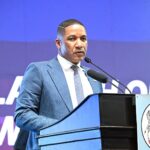

Botswana’s creative sector is receiving renewed attention as the government and private sector explore ways to strengthen the industry, attract investment and create sustainable economic opportunities. Minister of Sport and Arts, Hon. Jacob Kelebeng, yesterday met with a Business Botswana delegation led by Creative Arts and Trade Sector Coordinator, Mr Tonderai Tsara, to discuss the challenges facing Botswana’s creative industries and identify opportunities for greater collaboration. The engagement reflects growing recognition of the creative economy as an important contributor to economic development, employment and cultural expression. It also highlights the need for stronger partnerships between government, businesses and creative professionals to address barriers that continue to limit the sector’s growth. The discussions focused on practical ways to create an environment where Botswana’s artists, filmmakers, content producers and other creative businesses can develop and compete more effectively.
During the meeting, Hon. Kelebeng outlined the Ministry of Sport and Arts’ efforts to reposition itself through four revised pillars focused on organisational excellence, policy transformation and stakeholder partnerships, a high-performance sport ecosystem and monetisation. These pillars are intended to provide a stronger framework for improving the Ministry’s operations while increasing its ability to work with investors and commercial stakeholders. The Minister said the Ministry wants to position itself as an attractive partner for businesses that are interested in supporting and investing in Botswana’s sport and creative industries. Such a shift could help expand opportunities for private investment while encouraging more commercially sustainable approaches across the sector. Stronger institutional structures and effective stakeholder partnerships can also help ensure that creative businesses receive the support they need to grow beyond small-scale operations.
Policy transformation remains particularly important because the regulatory environment can influence the ability of creative businesses to attract investment and develop new products. One of the key milestones highlighted by the Minister was the adoption of the Cinematography Bill, which represents progress towards strengthening Botswana’s framework for the film and cinematography industry. A clear and supportive policy environment can provide greater certainty for filmmakers, producers, investors and other industry participants. It can also help create conditions for local productions to develop while opening opportunities for partnerships with regional and international companies. As Botswana continues to develop its creative economy, effective implementation of policies will be just as important as their adoption.
Another significant development highlighted during the engagement was the acquisition of content from 34 Batswana companies. Supporting locally produced content can provide creative businesses with opportunities to generate income while increasing the visibility of Botswana’s stories, talent and cultural identity. Content acquisition can also contribute to the development of a stronger local production ecosystem by creating demand for filmmakers, musicians, writers, performers, designers and other professionals. If supported by effective distribution and commercial strategies, locally produced content has the potential to reach audiences beyond Botswana’s borders. The initiative therefore demonstrates how government support and commercial activity can work together to create a more sustainable market for local creative products.
The Minister also pointed to progress towards the National Theatre as another important development for Botswana’s arts and entertainment landscape. A national theatre can provide artists and creative organisations with a dedicated platform for performances, cultural programmes and other events. It can also contribute to the development of audiences by providing spaces where people can regularly experience theatre, music, dance and other forms of artistic expression. Beyond its cultural value, such infrastructure can support economic activity through events, production services, hospitality and related businesses. Continued progress on the National Theatre could therefore play an important role in strengthening Botswana’s wider creative ecosystem.
Sport was also part of the Ministry’s broader development agenda, with Hon. Kelebeng highlighting the successful hosting of international sporting events. Hosting major sporting events can generate opportunities for local businesses while showcasing a country’s ability to manage large-scale competitions and attract visitors. The benefits can extend beyond the sporting venues through increased demand for accommodation, transport, food services, entertainment, marketing and other support services. International events can also give local athletes and sports professionals opportunities to gain experience and exposure. By connecting sport with commercial and economic opportunities, Botswana can strengthen the wider ecosystem surrounding its sporting sector.
Despite these positive developments, the Minister acknowledged that the creative and sporting sectors continue to face operational and structural challenges. These challenges can affect the ability of creative enterprises to expand, access markets, secure investment and operate sustainably. Addressing them requires more than government intervention because businesses and industry stakeholders often have practical experience that can help identify workable solutions. Hon. Kelebeng stressed that collaboration with the private sector is vital in finding practical and lasting responses to these challenges. A stronger relationship between government and business could help ensure that policies and programmes respond to the actual conditions experienced by people working within the creative economy.
Business Botswana welcomed the opportunity to engage directly with the Ministry and indicated its commitment to contributing ideas and partnerships that can help unlock the full potential of Botswana’s creative economy. Mr Tsara’s participation in the discussions signals an interest from the business community in becoming more actively involved in the development of creative industries. Private sector involvement can bring investment, commercial expertise, technology, market access and new business models into areas that have traditionally depended heavily on public support. Partnerships can also help creative enterprises understand commercial requirements and develop products that are attractive to both local and international audiences. This type of cooperation could become an important part of building a stronger and more competitive creative economy in Botswana.
The meeting between the Ministry of Sport and Arts and Business Botswana comes at an important time for Botswana’s creative sector, as artists and creative businesses seek greater opportunities to commercialise their work and access wider markets. The adoption of the Cinematography Bill, acquisition of locally produced content, progress towards the National Theatre and successful international sporting events provide a foundation for further development. However, long-term growth will depend on how effectively government, businesses and industry stakeholders turn these developments into sustainable opportunities. Continued dialogue can help identify gaps, improve policies and encourage investment in creative and sporting enterprises. The engagement between Hon. Jacob Kelebeng and Business Botswana therefore represents an important step towards building stronger stakeholder partnerships and positioning Botswana’s creative economy for greater growth, investment and international recognition.