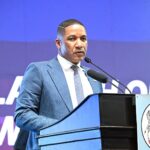

The condition of public safety infrastructure remains an important factor in ensuring that law enforcement officers can perform their duties effectively and safely. Minister for State President, Defence and Security, Honourable Moeti Caesar Mohwasa, yesterday, 31 August 2026, toured Serule Police Station to assess the condition of the facility and gain a clearer understanding of the infrastructure challenges requiring government intervention. The inspection formed part of ongoing efforts to ensure that public service facilities remain safe, functional and suitable for the delivery of essential services. Police stations serve as critical points of contact between communities and law enforcement agencies, making the condition of these facilities important to both officers and members of the public. The visit therefore provided an opportunity for government officials to assess the situation on the ground and consider practical measures to address the identified challenges.
Honourable Mohwasa was accompanied by Assistant Minister of Transport and Infrastructure, Honourable Letlhogonolo Barongwang, during the inspection of the Serule Police Station. Their presence demonstrated the importance of cooperation between government ministries when dealing with infrastructure challenges affecting public institutions. The inspection allowed the Ministers to observe the condition of the facility directly rather than relying solely on reports and administrative assessments. This type of engagement can help government officials better understand the practical impact of infrastructure deterioration on daily operations. It can also assist relevant authorities in determining the priority areas requiring attention and coordinating interventions between the responsible departments.
During the briefing, Permanent Secretary in the Ministry of Transport and Infrastructure, Ms Gorata Moleboge, provided background information on the history of the police station and its current condition. She explained that Serule Police Station was constructed during the 2003/2004 financial year and officially commissioned in 2005. Since its construction, the facility has served as an important public service institution supporting policing operations in the area. However, the building has developed several structural defects over the years, raising concerns about its long-term integrity and the working conditions faced by police officers. Addressing these defects is important not only to protect the physical structure but also to ensure that officers have an appropriate environment in which to carry out their responsibilities.
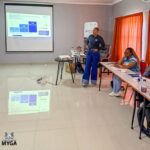
The technical condition of the building was further explained by Mr Keemenao Abotseng, a Civil/Structural Engineer from the Department of Building and Engineering Services, known as DBES. Mr Abotseng presented a technical assessment outlining the nature of the structural defects identified at the facility. His assessment also included recommendations for remedial work that could be undertaken to restore the building and improve its condition. Engineering assessments such as this provide government decision-makers with technical information that can guide maintenance, rehabilitation and infrastructure investment decisions. The recommendations can also help ensure that any future intervention addresses the underlying structural problems rather than simply treating visible signs of deterioration.
The need to maintain public buildings becomes increasingly important as facilities age and experience years of regular use. Police stations must accommodate officers, administrative operations, members of the public and various policing activities, placing different demands on the buildings. Structural problems that remain unresolved can potentially affect the efficiency of operations and create an unsuitable working environment. Regular inspections and professional assessments allow authorities to identify problems before they become more difficult and costly to address. The Serule inspection demonstrates the value of combining direct government oversight with technical expertise when evaluating the condition of public infrastructure.
The visit also highlighted the role of the Ministry of Transport and Infrastructure in supporting the maintenance and rehabilitation of government facilities. Infrastructure management involves more than constructing new buildings, as existing facilities require regular inspection, maintenance and, where necessary, major remedial work. Ensuring that government buildings remain functional can protect public investments and extend the useful life of infrastructure. In the case of Serule Police Station, the technical recommendations will provide a basis for considering the appropriate intervention. Effective follow-through will be important to ensure that the identified structural challenges receive the necessary attention.
Senior officials from the Botswana Police Service and the Ministry of Transport and Infrastructure also attended the inspection. Among those present was Deputy Commissioner of Police for Support Services, Deputy Commissioner Stephen Tsheko, together with other senior officials from both institutions. Their involvement reflects the need for coordination between the police service and infrastructure authorities when addressing challenges affecting police facilities. Police management can provide insight into how infrastructure problems affect daily operations, while technical officials can determine the appropriate engineering responses. Working together can help ensure that future interventions address both operational needs and structural requirements.
The inspection of Serule Police Station also reflects the government’s broader responsibility to maintain infrastructure that supports essential public services. Public safety depends on police officers having the resources, facilities and working conditions necessary to perform their duties effectively. Infrastructure challenges can affect staff morale, operational efficiency and the ability of institutions to provide services to communities. By physically visiting facilities and assessing their condition, government leaders can gain a more direct understanding of the issues facing public servants. Such inspections can also help strengthen accountability around the maintenance and management of public assets.
The next stage will depend on the technical findings, available resources and decisions by the relevant government authorities regarding the recommended remedial works. A structured approach to rehabilitation can help address the most urgent structural defects while ensuring that future maintenance needs are also considered. Continued monitoring will be important once repairs are undertaken to ensure that the facility remains safe and functional. The experience at Serule Police Station may also provide useful information for assessing other older government facilities facing similar infrastructure challenges. Proper planning, engineering oversight and timely maintenance can reduce the risk of infrastructure problems becoming more serious over time.
Honourable Moeti Caesar Mohwasa’s inspection of Serule Police Station underscores the importance of maintaining the infrastructure that supports Botswana’s public safety services. The facility, which was commissioned in 2005 after being constructed during the 2003/2004 financial year, now requires attention following the development of structural defects. The technical assessment presented by DBES provides government with important information on the condition of the building and possible remedial measures. Continued cooperation between the Ministry of State President, Defence and Security, the Ministry of Transport and Infrastructure and the Botswana Police Service will be important in addressing the identified challenges. Ensuring that Serule Police Station receives appropriate intervention will help protect public infrastructure while supporting police officers in delivering essential services to the community.