
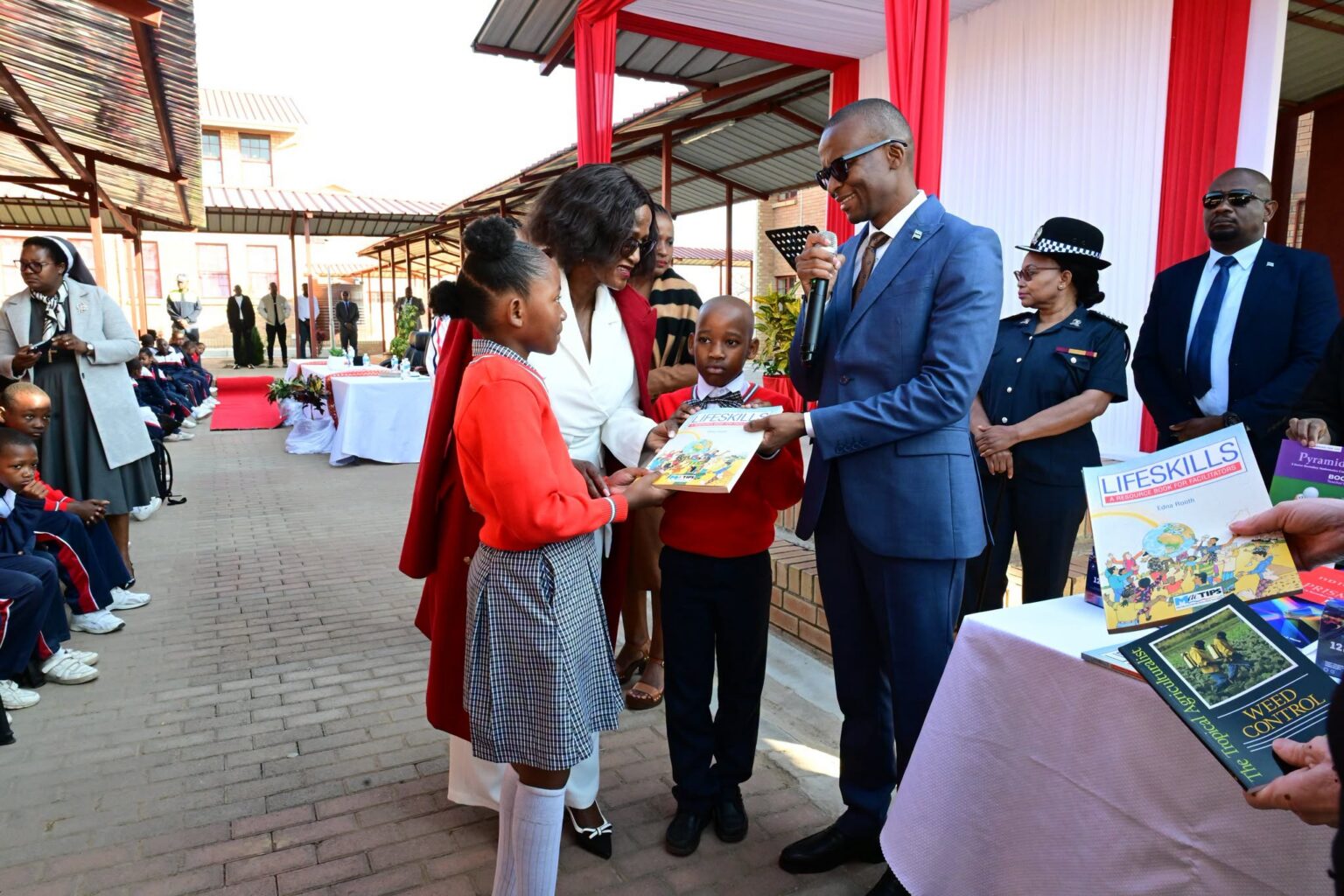
Vice President and Minister of Finance Ndaba Gaolathe paid a courtesy visit to Marulamantsi Primary School in Phase 4, Gaborone, this morning, commending the school for its strong leadership, organisation and commitment to academic discipline. His visit provided an opportunity to engage directly with learners and staff while recognising the progress made by the relatively young school. Gaolathe encouraged the school community to continue building a culture based on scholarship, respect, vision, discipline and strong character. He emphasised that these values are essential not only for achieving good academic results but also for preparing young people to become responsible and capable citizens. The visit highlighted the important role schools such as Marulamantsi Primary can play in shaping Botswana’s future through education, innovation and the development of young learners.
Addressing learners and staff, Gaolathe stressed the importance of taking education seriously and maintaining high standards in both academic and personal conduct. He encouraged learners to develop a strong culture of scholarship while remaining respectful towards their teachers, parents and fellow pupils. Discipline, he noted, provides an important foundation for learners who want to achieve their goals and make the most of educational opportunities. Vision is equally important because young people need to understand what they want to achieve and work consistently towards those ambitions. By placing scholarship, respect, vision, discipline and character at the centre of his message, Gaolathe reinforced the idea that excellence requires more than strong examination results.
School Head Mamsie Utlwang expressed appreciation for the Vice President’s continued interest in education and his support for learners. She reaffirmed the school’s commitment to its motto, “Inspiring Excellence,” which reflects its focus on encouraging learners to pursue high standards. A school’s leadership plays an important role in establishing an environment where learners understand the value of hard work, discipline and continuous improvement. Utlwang’s remarks also highlighted the importance of maintaining the school’s identity and values as it continues to grow. The support and recognition from senior government leadership can further encourage the school community to maintain its focus on learner development and academic achievement.
Marulamantsi Primary School has already demonstrated strong academic performance, with its inaugural Standard Seven cohort achieving a 97.7% pass rate in the 2025 Primary School Leaving Examinations. The result is a significant achievement for a relatively young school and provides evidence of the commitment of its learners, teachers and leadership. A strong examination performance also reflects the importance of effective teaching, learner support, parental involvement and disciplined study habits. Maintaining such standards will require continued investment in teaching quality and a learning environment that encourages pupils to reach their full potential. The 97.7% pass rate has nevertheless established a strong academic foundation for the school’s future cohorts.
The school’s focus extends beyond traditional academic subjects, with Marulamantsi introducing robotics and artificial intelligence at primary school level. Early exposure to emerging technologies can help learners develop problem-solving, creativity and analytical skills that may become increasingly important in their future studies and careers. Robotics can provide practical opportunities for learners to understand how technology works while encouraging teamwork and experimentation. Artificial intelligence education can also introduce pupils to an area that is rapidly influencing workplaces, industries and societies around the world. By bringing these areas into primary education, Marulamantsi is positioning its learners to engage with technological developments from an early stage.
The introduction of robotics and artificial intelligence also reflects the changing expectations of modern education. Schools are increasingly expected to prepare learners for an economy shaped by digital technologies, automation and innovation. Providing pupils with opportunities to interact with technology can help them develop confidence and curiosity about subjects that may otherwise seem distant or difficult. These programmes can also complement traditional learning by encouraging pupils to apply concepts through practical activities and projects. For Marulamantsi, the focus on emerging technologies adds another dimension to its commitment to inspiring excellence and preparing learners for future opportunities.
Another important aspect of the school’s approach is its integration of learners with special educational needs. Inclusive education seeks to ensure that learners can participate meaningfully in school regardless of their individual learning requirements. Creating an inclusive environment requires appropriate support, understanding and teaching approaches that recognise differences among learners. It also helps promote respect and acceptance among pupils by encouraging them to learn alongside classmates with different abilities and needs. Marulamantsi’s commitment to inclusion demonstrates that academic excellence can be pursued alongside efforts to ensure that learners receive the support they need to participate in education.
Gaolathe has previously described learners as Botswana’s “diamonds”, emphasising the value that education and opportunity can unlock in young people. The description reflects the importance of investing in children as a foundation for the country’s long-term development. Education can equip learners with knowledge and skills while also helping them develop confidence, discipline and a sense of responsibility. However, young people need supportive schools, dedicated teachers and access to meaningful opportunities to realise their potential. Gaolathe’s message at Marulamantsi reinforced the importance of ensuring that learners are encouraged to recognise their capabilities and use their education as a pathway towards future achievement.
The Vice President’s visit also highlights the connection between school culture and measurable academic outcomes. Marulamantsi’s strong examination results have developed alongside efforts to promote discipline, innovation and inclusion. These elements can reinforce one another by creating an environment where learners are encouraged to work hard while exploring new areas of knowledge. A school that combines academic expectations with technological innovation and inclusive education can provide learners with a broader educational experience. Maintaining this balance will be important as Marulamantsi grows and seeks to build on the achievements of its first Standard Seven cohort.
For a young institution, building a strong reputation requires consistent performance and a clear commitment to its values. Marulamantsi Primary School is steadily establishing such a reputation through its academic results, emphasis on discipline and introduction of innovative learning programmes. Its 97.7% pass rate in the 2025 Primary School Leaving Examinations provides a strong benchmark for future learners, while robotics and artificial intelligence give pupils opportunities to explore emerging fields. The integration of learners with special educational needs also demonstrates a commitment to ensuring that excellence includes participation and opportunity for all learners. With continued leadership, teacher commitment and support from parents and the wider community, the school has a strong foundation from which to build.
Gaolathe’s courtesy visit to Marulamantsi Primary School therefore served as both recognition of the school’s achievements and encouragement for it to maintain its high standards. His message to learners placed education within a wider framework of scholarship, respect, vision, discipline and character, all of which can influence their future success. The school’s commitment to “Inspiring Excellence” is already supported by a strong academic record, technological innovation and an inclusive approach to education. As Marulamantsi continues to develop, its challenge will be to sustain these standards while creating even more opportunities for learners to grow. Its progress demonstrates how a relatively young school can establish a culture of excellence and provide learners with the knowledge, skills and opportunities needed to contribute meaningfully to Botswana’s future.