
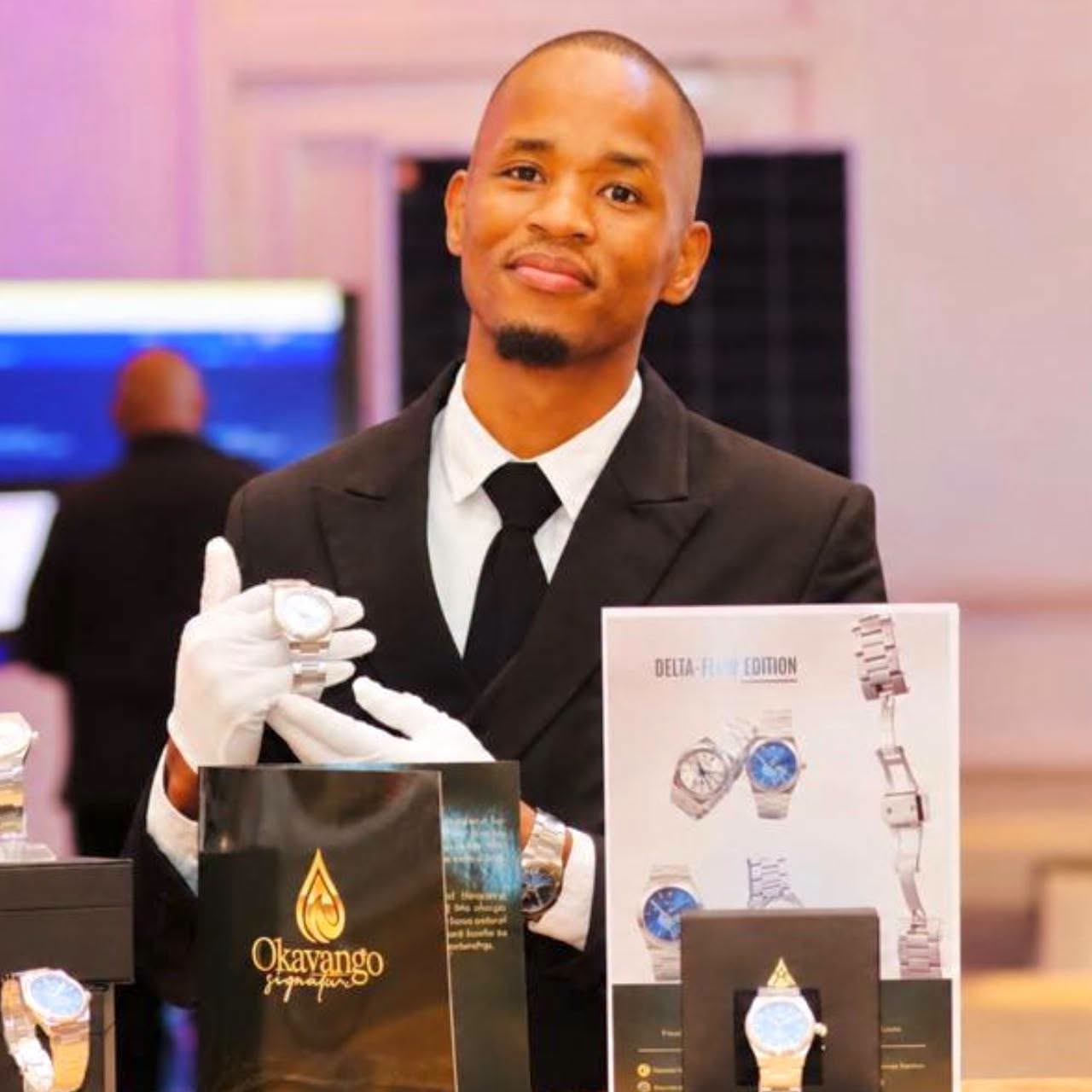
From Ramotswa to the luxury market, Botswana entrepreneur Ofanna Olive Sera is building a brand that connects local heritage with modern craftsmanship. Through Okavango Signature, he aims to show that luxury products can carry the identity, culture and natural beauty of Botswana while meeting international standards. The proudly Botswana-owned brand has introduced the Delta Flow Edition, a collection of watches inspired by the distinctive waterways of the Okavango Delta. Each timepiece combines design details drawn from the country’s heritage with materials selected for quality and durability. For Sera, the goal is not simply to sell watches but to create products that tell a meaningful Botswana story to customers at home and abroad.
The Okavango Delta provides the central inspiration for the Delta Flow Edition. Known for its complex network of waterways and rich natural environment, the Delta is one of Botswana’s most recognisable natural treasures. Its winding channels give the collection a distinctive visual identity, reflected in the patterns featured on the watch dials. The casebacks carry engravings of mokoros, traditional dugout canoes associated with travel through the Delta’s waterways. These design elements connect the watches to the landscapes and cultural traditions that helped shape them. By placing these details into a luxury product, Okavango Signature offers customers a way to appreciate Botswana’s identity through everyday accessories.
Sera describes the concept as more than a practical way to keep track of time. “It is not simply about telling time but wearing a story,” he says. This idea places storytelling at the centre of the brand’s identity. Rather than relying only on appearance or technical features, the watches draw meaning from the places and traditions they represent. The Delta Flow Edition gives the Okavango Delta a central role in the product’s design, allowing its waterways and cultural heritage to influence the finished piece. This approach also helps distinguish the brand in a luxury market where design, identity and craftsmanship can shape a customer’s connection with a product.
Sera’s professional background has influenced the way he approaches luxury watchmaking. His experience spans tourism, hospitality, gemology and the diamond industry, giving him exposure to areas where presentation, quality and attention to detail are important. Tourism connects him to the landscapes and cultural experiences that attract visitors to Botswana. His hospitality experience offers an understanding of customer expectations and the importance of service. His knowledge of gemology and the diamond industry adds another perspective on materials, precision and the value associated with luxury goods. Together, these experiences inform his ambition to create products that combine craftsmanship with African storytelling.
The technical features of the Delta Flow Edition are also part of its appeal. According to Sera, the watches use sapphire crystal, Japanese Miyota quartz movement and 316L stainless steel cases. They also offer water resistance rated at 50 metres. These specifications provide customers with information about the materials and components used in the collection. Sapphire crystal is valued in watchmaking for its resistance to scratches, while quartz movements are commonly used for reliable timekeeping. Stainless steel is widely used in watches because of its durability and suitability for everyday wear. By combining these features with designs inspired by Botswana, Okavango Signature seeks to balance practical performance with a distinct sense of place.
The use of Japanese Miyota quartz movement brings a recognised watch component into a product shaped by Botswana’s identity. The movement helps keep the watch operating, while the case and crystal protect its internal components and display. The 316L stainless steel case provides a durable exterior, and the sapphire crystal helps protect the dial from scratches during normal use. The stated 50-metre water resistance adds practical protection, although water resistance does not mean a watch is suitable for every water-based activity. Customers should follow the manufacturer’s guidance on water exposure and maintenance. These technical details help explain how the brand aims to combine design with everyday functionality.
Okavango Signature is already available in Botswana through Sunglasses Boutique in Gaborone and Phusha BW Store at Sir Seretse Khama International Airport. These retail locations give customers and visitors opportunities to discover the watches in person. Availability at the airport also creates a potential point of contact with international travellers who may be interested in taking home a product connected to Botswana. For a locally owned luxury brand, retail placement can help establish visibility and build relationships with customers. It also provides a starting point for introducing the collection to a wider market.
The connection between the brand and Botswana’s tourism industry could be an important part of its identity. Visitors often look for products that reflect the places they have experienced, particularly when those products carry a clear connection to local culture. A watch inspired by the Okavango Delta offers a different option from conventional souvenirs because it combines a recognisable local story with a functional luxury item. The mokoro engravings and waterway-inspired dials give the collection a connection to Botswana that goes beyond a name or logo. This design approach could appeal to travellers seeking meaningful keepsakes as well as local customers who want to support homegrown businesses. The brand’s future reach will depend on how effectively it communicates this identity while maintaining quality and customer confidence.
Sera’s ambitions extend beyond watches. Okavango Signature is looking to expand into leather goods and jewellery, creating opportunities to develop a broader collection of luxury products. These categories could allow the brand to explore more materials, design techniques and forms of cultural expression. Leather accessories, for example, could provide another way to combine practical use with distinctive design, while jewellery could create opportunities to draw on Botswana’s artistic identity and Sera’s experience in the gemology and diamond industry. The company has not detailed specific products or launch dates for these planned categories. However, the expansion ambition indicates that Sera sees Okavango Signature as a long-term brand rather than a single watch collection.
International expansion is another part of the company’s plans. Entering overseas markets could introduce Okavango Signature to customers who are interested in African design, independent luxury brands and products with a strong sense of origin. Yet competing internationally can be challenging for a developing brand. Luxury customers often expect consistent quality, reliable after-sales service, clear product information and a distinctive identity. Distribution, pricing, marketing and customer support also influence whether a brand can grow beyond its home market. Building on its Botswana roots while meeting these expectations will be important as Okavango Signature explores opportunities outside the country.
The brand’s development also reflects a wider opportunity for Botswana entrepreneurs to create products with value beyond the domestic market. Botswana is widely associated with its natural landscapes, tourism industry and diamond sector, but its business potential also includes design, manufacturing and consumer brands. Entrepreneurs who turn local inspiration into well-developed products can offer customers something distinctive while building businesses around intellectual creativity and commercial skills. Okavango Signature’s approach places Botswana’s heritage at the centre of a luxury product rather than treating it as a secondary detail. Its progress could help encourage further interest in locally developed brands that draw on the country’s culture and environment.
Sera has said that his ambition goes beyond selling watches. He wants to build a globally recognised Botswana luxury brand, create employment opportunities and demonstrate that world-class brands can originate locally. Achieving these goals will require more than an attractive design. The business will need to maintain product quality, develop a dependable retail network and build customer trust as it grows. Expanding into new product categories will also require careful planning so that each item remains consistent with the brand’s identity. If the business develops successfully, it could create opportunities for local talent and contribute to a stronger culture of entrepreneurship in Botswana.
The idea of wearing a piece of Botswana is central to Okavango Signature’s purpose. The Delta Flow Edition brings together the natural patterns of the Okavango Delta, the cultural significance of the mokoro and technical features associated with contemporary watches. This combination gives the collection a story that customers can connect with while offering a practical product for everyday use. Its presence in local retail outlets provides an initial platform for growth, while its plans for leather goods, jewellery and international markets point towards a broader ambition. As Ofanna Olive Sera works to establish Okavango Signature, the brand represents an effort to place Botswana’s identity within the global luxury conversation and show that locally inspired ideas can reach customers around the world.