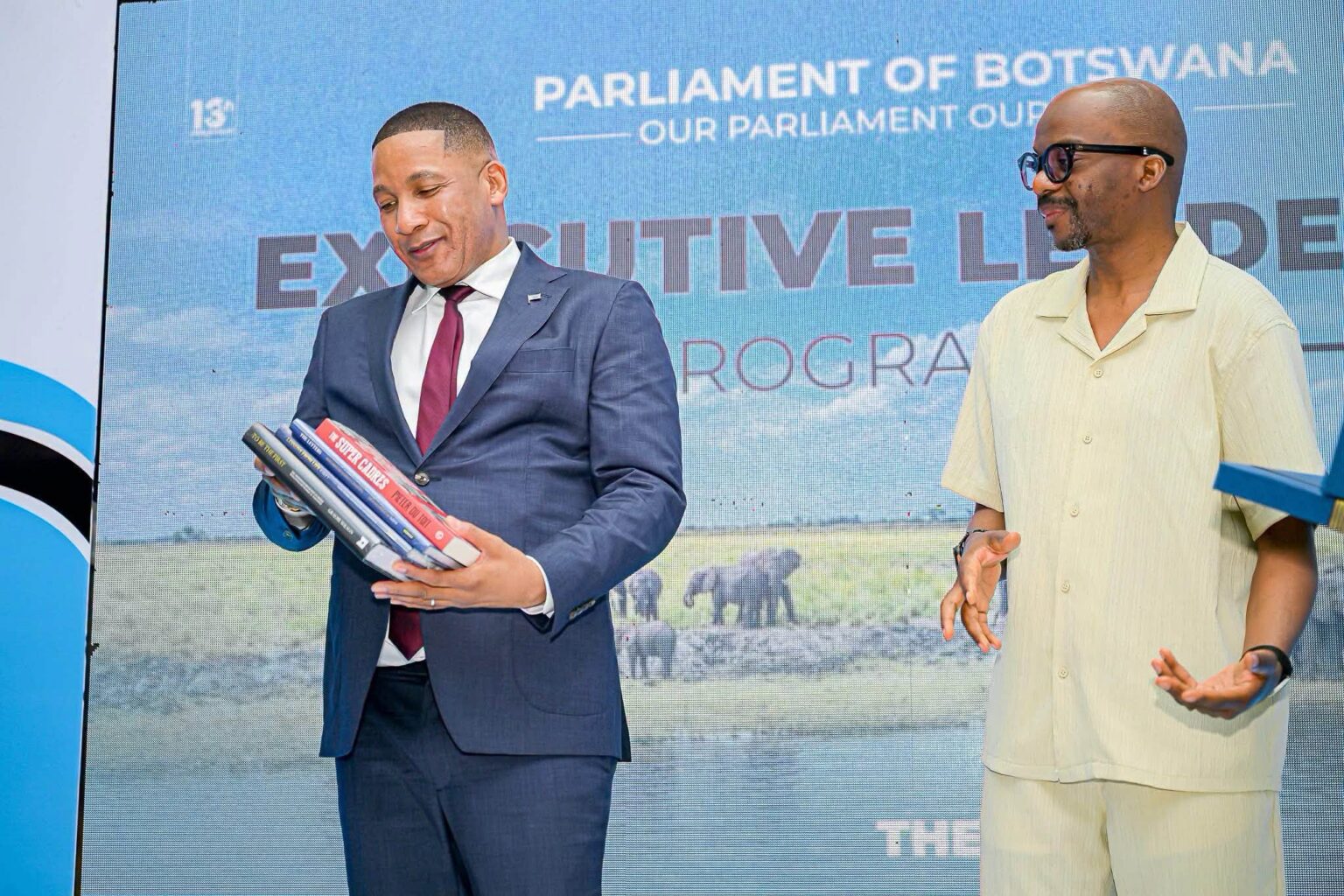
President Advocate Duma Boko has called on Members of Parliament to strengthen parliamentary oversight, improve legislation and ensure that decisions made in the National Assembly deliver tangible benefits for the people of Botswana. He made the call during the opening of the Parliament Executive Leadership Programme in Kasane, where he emphasised the importance of an effective, accountable and people-centred Parliament. The President said Parliament’s success should not be judged solely by the quality of debates or the number of laws passed, but also by its contribution to national development and the improvement of citizens’ livelihoods. His remarks highlighted the need for legislators to focus on practical outcomes that address the needs and priorities of Batswana. The call comes as Botswana seeks to strengthen public institutions and ensure that government policies and development programmes produce meaningful results for communities across the country.
President Boko stressed that Members of Parliament have a constitutional responsibility to hold the government accountable and ensure that public resources serve the interests of the nation. He urged legislators to approach their duties with integrity, transparency and a strong commitment to public service. Effective parliamentary oversight, he indicated, is essential for examining government decisions, scrutinising public expenditure and assessing whether development programmes are achieving their intended objectives. By carrying out these responsibilities diligently, MPs can help identify weaknesses in public administration, improve the use of national resources and strengthen public confidence in government institutions. The President’s message placed accountability at the centre of Parliament’s role in supporting good governance and sustainable national development.
A key part of the President’s address focused on the importance of improving the way Parliament monitors public spending. Scrutinising government expenditure allows legislators to examine how public funds are allocated, whether spending reflects national priorities and whether programmes deliver value for money. Strong financial oversight can also help identify inefficiencies and areas where resources may not be reaching the communities that need them most. Parliament must therefore have the capacity to examine budgets carefully, ask informed questions and assess government performance against clear objectives. These efforts can help ensure that public money supports essential services, infrastructure development and other priorities that directly affect the daily lives of Batswana.
President Boko also highlighted the importance of effective legislation in strengthening Botswana’s democratic institutions. Laws passed by Parliament should respond to the country’s needs, protect citizens’ rights and provide a sound framework for economic and social development. Achieving these objectives requires careful consideration of proposed legislation, thorough examination of its potential effects and meaningful debate among elected representatives. MPs must assess whether laws are practical, fair and capable of addressing the problems they are intended to solve. Improving the legislative process can help ensure that parliamentary decisions are informed by evidence, reflect public concerns and contribute to the country’s long-term development goals.
The President further emphasised the need to strengthen Parliament’s institutional capacity through independent research, effective committees and professional support services. Legislators face complex policy questions involving public finance, economic development, social services and government administration. Access to reliable research and technical advice can help MPs understand these issues and make decisions based on accurate information rather than assumptions. Parliamentary committees also play an important role by examining specific policy areas, questioning relevant officials and investigating matters that require closer attention. Strengthening these structures can improve the quality of parliamentary debate and make oversight more consistent, thorough and effective.
Among the proposed reforms highlighted by President Boko were a Parliamentary Service Act and the establishment of a Budget Office. These proposals point to the importance of developing professional support systems that enable Parliament to carry out its constitutional responsibilities effectively. A Parliamentary Service Act could provide a framework for the administration and professional functioning of parliamentary services, depending on its final provisions. A dedicated Budget Office could strengthen Parliament’s ability to analyse budget proposals, examine public finances and assess the financial implications of government policies. Such institutional arrangements could give MPs greater access to independent expertise and help them evaluate national spending priorities more effectively. Their practical value would depend on the design of the reforms, the resources available and the independence and capacity of the institutions established.
Public participation was another central issue in the President’s address. President Boko called for Parliament to ensure that young people, women, persons with disabilities and rural communities have a meaningful voice in national decision-making. Inclusive participation is important because policies and laws can affect different groups in different ways. When citizens have opportunities to express their concerns and contribute their experiences, legislators gain a clearer understanding of the challenges facing communities. Parliament can support this process by creating accessible opportunities for public consultation, improving communication with constituents and considering community feedback during legislative and oversight work. A more inclusive approach can help make parliamentary decisions more responsive to the needs of people throughout Botswana.
The President’s emphasis on young people reflects the importance of including the next generation in decisions that will shape the country’s future. Young Batswana have a direct interest in policies concerning education, employment, skills development, entrepreneurship and economic opportunities. Their participation can help Parliament better understand the barriers they face and the changes they believe are necessary to improve their prospects. Women also need meaningful opportunities to influence policies affecting their economic participation, access to services and representation in public life. Similarly, persons with disabilities and residents of rural communities should be able to participate in decision-making without unnecessary physical, social or institutional barriers. Ensuring that these groups are heard can strengthen the legitimacy of parliamentary decisions and improve their relevance to the wider population.
The Parliament Executive Leadership Programme in Kasane provides a platform for strengthening the leadership and institutional effectiveness of Botswana’s Parliament. Hosted by the National Assembly in collaboration with the United Nations Development Programme, the programme brings attention to the importance of effective parliamentary leadership and responsible governance. Its focus, as reflected in President Boko’s remarks, extends beyond theoretical knowledge to the practical responsibilities of legislators. Strong parliamentary leadership requires the ability to examine complex issues, encourage constructive debate, demand accountability and keep public interests at the centre of decision-making. The programme also presents an opportunity to consider how institutional reforms and improved working methods can strengthen Parliament’s contribution to national development.
President Boko challenged Parliament to ensure that the programme leads to practical improvements in oversight, accountability and citizen engagement. This challenge places responsibility on legislators to turn discussions about parliamentary reform into changes that can be seen in their everyday work. Progress could be reflected in stronger committee investigations, more detailed examination of government spending, better use of independent research and more effective engagement with constituents. It could also involve clearer ways of assessing whether government programmes are meeting their targets and addressing the needs of intended beneficiaries. Measuring progress through concrete outcomes would help Parliament demonstrate the value of its work and identify areas where further improvement is needed.
Ultimately, President Duma Boko’s message was that Parliament must remain focused on its constitutional responsibilities and its duty to the people of Botswana. Strong oversight, effective legislation, independent research and inclusive public participation are essential to building an accountable and responsive democratic institution. Proposed reforms, including a Parliamentary Service Act and a Budget Office, could support these objectives if they provide the necessary professional capacity and independence. However, institutional changes must translate into better scrutiny of public spending, more effective laws and decisions that respond to citizens’ concerns. By turning the objectives of the Parliament Executive Leadership Programme into practical action, Members of Parliament can strengthen public trust and help ensure that parliamentary work delivers tangible benefits for Batswana.