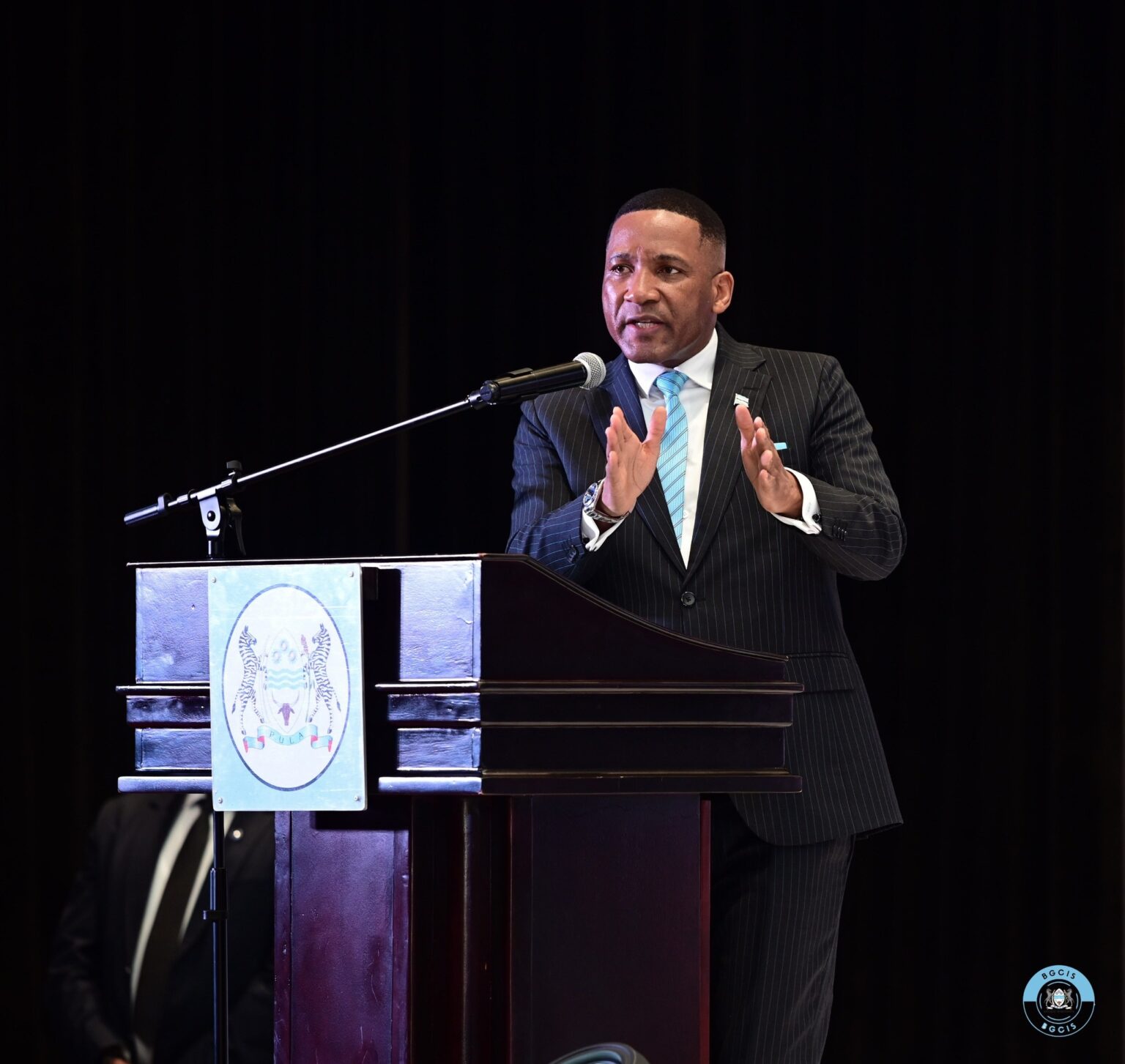
President Advocate Duma Gideon Boko has called for a transformative reset in the relationship between Botswana’s government and the private sector, urging an end to rhetoric and a shift towards tangible results. Speaking during a high-level engagement with the Ambrosetti Members CEO Community, Africa Chapter, at Hotel 430 in Gaborone yesterday morning, President Boko set a decisive tone for a new era of economic cooperation.
The President highlighted excessive bureaucratic red tape as a critical barrier hampering collaboration and meaningful progress. He noted that delays in approvals, regulatory inconsistencies, and limited responsiveness within government systems are stifling the agility needed for Botswana to remain competitive and attractive to investors.
“We must confront the truth: our administrative processes are holding us back,” President Boko stated. “We need a leaner, more responsive government structure that enables — not obstructs — economic progress.”
The President emphasized that real change requires more than policy speeches. He called for measurable delivery and transparent accountability in both public and private sectors, noting that transformation will only happen when ambition is matched with action.
Challenging the private sector to step into a leadership role, Boko encouraged industry leaders to be proactive catalysts for reform and economic diversification. He urged them to harness their innovation, agility, and deep sectoral expertise to unlock Botswana’s full economic potential.
“Our economy will not diversify itself,” he said. “It will take deliberate, collaborative effort — and the private sector must lead with boldness and creativity.”
President Boko’s remarks mark a renewed push to revitalise Botswana’s economic development strategy, especially in light of global uncertainties and regional competition. His administration has signalled strong intent to streamline governance and create a conducive environment for investment, entrepreneurship, and sustainable growth.
As Botswana aims to reduce its reliance on traditional sectors and build a resilient, diversified economy, this morning’s address may well serve as a pivotal moment in reshaping the country’s development trajectory.