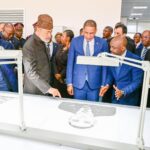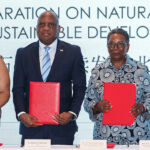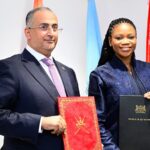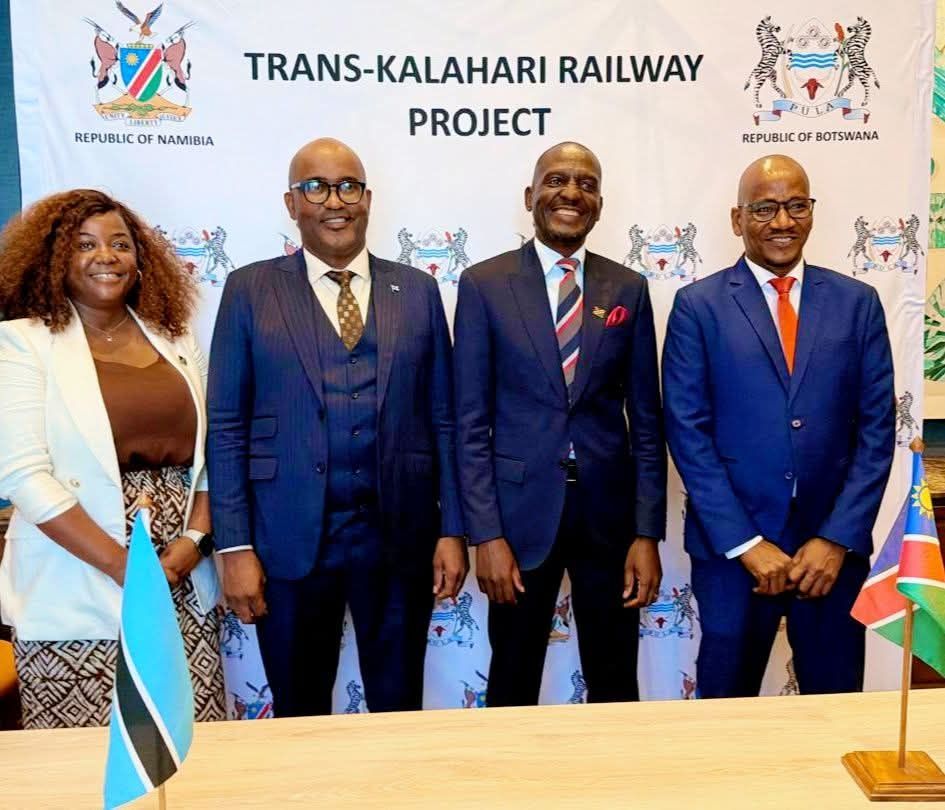
The Minister of Transport and Infrastructure, Hon. Noah Salakae, is in Namibia on a one-day working visit focused on accelerating the implementation of the Trans-Kalahari Railway (TKR) project. The visit forms part of ongoing bilateral efforts between Botswana and Namibia to strengthen regional transport infrastructure and improve cross-border trade efficiency. The TKR is regarded as a strategic infrastructure project that could reshape logistics networks across Southern Africa. It aims to create a direct rail link that enhances movement of goods between inland producers and international shipping routes. The discussions taking place in Namibia are expected to reinforce cooperation between the two countries on project planning and execution.
The Trans-Kalahari Railway is positioned as a major regional corridor designed to improve connectivity and reduce trade costs for Botswana and neighbouring economies. By providing a more efficient transport route, the railway is expected to shorten delivery times for exports and improve access to global markets. This is particularly important for Botswana’s key export sectors, including minerals and other bulk commodities that rely on cost-effective transport systems. The project also aligns with broader regional development goals aimed at improving infrastructure integration across Southern Africa. Strong rail connectivity is seen as a key driver of long-term economic competitiveness.
Once construction begins, the TKR is expected to generate significant employment opportunities for Batswana across multiple sectors. Job creation will likely span construction, engineering, logistics support and long-term railway operations. These opportunities are expected to benefit both skilled and semi-skilled workers, contributing to local economic empowerment. The project also has the potential to stimulate small business growth in communities along the proposed railway corridor. Increased economic activity during construction and operation phases could provide sustained income opportunities for households.
Beyond employment, the railway is expected to strengthen Botswana’s position as a logistics and trade hub within Southern Africa. By improving transport efficiency, the country can enhance its role in regional supply chains and attract increased investment in trade-related infrastructure. Efficient rail systems are often linked to reduced transportation costs, which can make exports more competitive in global markets. This positions Botswana to better leverage its geographic location as a gateway between inland producers and coastal ports. The TKR is therefore viewed as a long-term strategic asset for national economic diversification.
During his visit, Hon. Salakae is scheduled to meet with his Namibian counterpart, Hon. Veikko Nekundi, to discuss progress and alignment on the project’s implementation framework. The meeting is expected to focus on coordination mechanisms, timelines and technical planning to ensure smooth advancement of the railway initiative. Strengthening bilateral cooperation is seen as essential for overcoming cross-border infrastructure challenges. Both governments are working to maintain momentum as regional interest in large-scale transport corridors continues to grow. These discussions reflect shared commitment to regional integration and infrastructure-led development.
The Trans-Kalahari Railway has attracted increasing attention from regional stakeholders and international partners due to its potential economic impact. Southern Africa’s growing demand for efficient transport corridors has placed renewed focus on rail infrastructure as a solution to logistical bottlenecks. The TKR is viewed as part of a broader vision to improve connectivity between landlocked countries and global trade routes. By linking key economic zones, the railway could support industrial growth and regional value chain development. This makes it a priority project within long-term infrastructure planning frameworks.
The project also reflects broader efforts to position Southern Africa as a competitive trade region through improved infrastructure networks. Rail transport is considered more cost-effective for bulk goods compared to road transport, especially over long distances. The TKR is expected to reduce pressure on existing road networks while improving environmental sustainability through lower emissions per ton of cargo. These benefits align with global trends toward greener and more efficient transport systems. As a result, the railway is seen as both an economic and environmental investment.
The one-day working visit by Hon. Noah Salakae highlights the urgency placed on advancing the Trans-Kalahari Railway project. With continued collaboration between Botswana and Namibia, the initiative is expected to move closer to implementation stages in the near future. The project represents a shared opportunity to unlock economic growth, create employment and strengthen regional integration. As discussions continue, the focus remains on ensuring that planning efforts translate into tangible progress on the ground. The Trans-Kalahari Railway stands as a significant step toward building a more connected and economically dynamic Southern Africa.