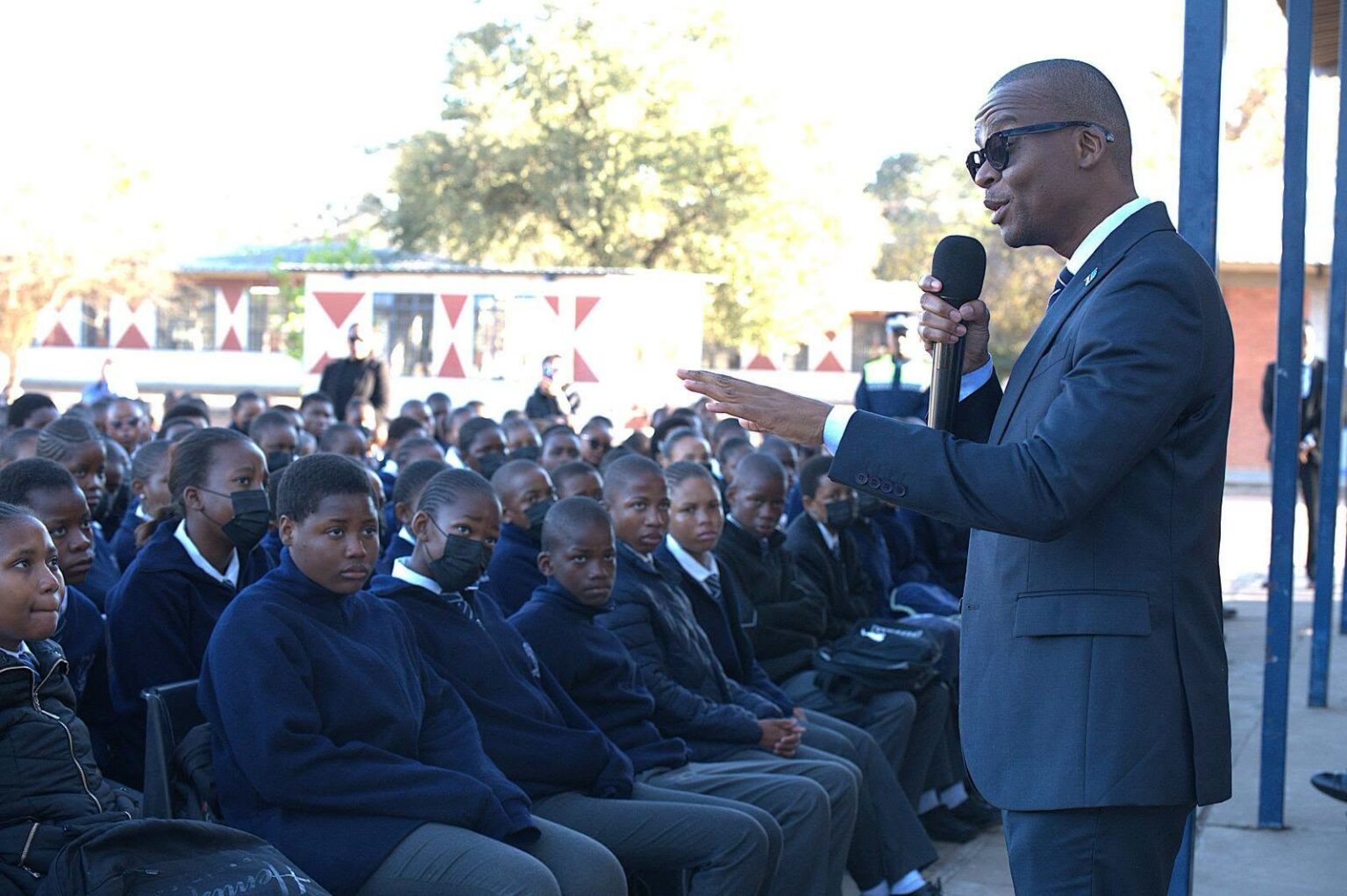
Vice President and Minister of Finance Ndaba Gaolathe has encouraged learners at Maikano Junior Secondary School in Gaborone to believe in their abilities, dream beyond their current circumstances and start building the future they want from an early age. Speaking to the learners, the Vice President emphasised that young people should not underestimate their potential or wait until they reach the final years of secondary school before taking their education seriously. He reminded them that success begins with the daily choices they make, including how they approach their studies, treat other people and manage their responsibilities. His message placed discipline, hard work, character and ambition at the centre of personal development. By encouraging learners to start preparing for their future now, Vice President Gaolathe highlighted the important role young Batswana can play in shaping the country’s next generation of leaders, professionals and innovators.
Addressing the learners, Vice President Gaolathe said greatness starts with discipline, hard work, good character and the courage to dream. He encouraged them to understand that academic success and personal achievement do not happen by accident, but develop through consistent effort and responsible choices. He also warned learners against postponing their commitment to education until Form Four or Form Five, stressing that preparation for their future should begin immediately. The habits developed during the early years of secondary education can influence how learners approach challenges, opportunities and responsibilities later in life. By taking their education seriously from an early stage, learners can develop the confidence, knowledge and discipline needed to pursue their ambitions.
The Vice President challenged the learners to dream beyond what previous generations considered possible. He reminded them that every generation grows up with different opportunities, technologies, resources and possibilities that can change what young people are capable of achieving. For today’s learners, this could include access to international education, new career paths, digital opportunities and professions that may not have existed or been widely available to earlier generations. He encouraged them to look at these possibilities with ambition rather than limiting themselves to what they have already seen around them. His message was that the achievements of previous generations should provide inspiration, but they should not become a ceiling for what younger people believe they can accomplish.
Vice President Gaolathe also encouraged the learners to take advantage of opportunities available to their generation, including opportunities to study abroad and explore different careers. International education can expose young people to different ideas, cultures, academic systems and professional environments while helping them build skills that can later benefit Botswana. At the same time, learners can consider careers across a wide range of fields as the country’s economy continues to evolve. The Vice President urged them to think about how their individual talents and ambitions could contribute to Botswana’s development. Whether they become professionals, entrepreneurs, researchers, educators or leaders, their future contributions can help strengthen the country’s economy and society.
Another important part of Vice President Gaolathe’s message focused on the importance of supporting one another. He urged learners to assist classmates who may struggle academically rather than allowing them to fall behind or feel isolated. He used the eagle as a symbol of excellence and encouraged the learners to “dream together and fly together,” reinforcing the idea that achievement does not have to be an individual journey. Strong peer support can help create a school environment where learners feel encouraged to ask questions, seek assistance and improve their performance. By lifting one another up, young people can develop a culture of cooperation that benefits individuals as well as the wider school community.
Respect was another central value in the Vice President’s message to the learners. He stressed that learners should respect their parents, teachers and every other person regardless of their social or professional position. He explained that respect can be demonstrated through simple acts of discipline and courtesy, including standing when parents or teachers enter a room. These actions may appear small, but they can help young people develop habits of responsibility, consideration and good conduct. He also encouraged learners to appreciate the people who contribute to their wellbeing and education because success often depends on the support of many individuals.
Vice President Gaolathe further encouraged the learners to seek guidance from people who have already achieved success. He urged them not to be afraid to approach their uncles, aunts, community leaders and other accomplished people and ask them about their journeys. Young people can learn valuable lessons by asking successful individuals how they started, what obstacles they encountered and what they did to overcome those challenges. Such conversations can help learners understand that successful careers and achievements often involve setbacks, difficult decisions and years of consistent effort. Seeking mentorship can also help learners make better-informed choices about education, career paths and personal development.
The Vice President reinforced his message by sharing aspects of his own educational journey, including his experience studying abroad. His personal example demonstrated that young people’s ambitions do not have to be limited by the circumstances or achievements of previous generations. He encouraged the learners to view their own potential as something that can extend beyond what they have already witnessed. His words, “You can do better than me. Much better. You can go higher,” gave the learners a direct challenge to set ambitious goals for themselves. The statement also reflects the importance of leaders encouraging young people to surpass them rather than simply reproducing the achievements of those who came before.
The message delivered at Maikano Junior Secondary School is particularly relevant as Botswana continues to focus on developing a skilled and capable generation that can contribute to national development. Education provides young people with knowledge, but character, discipline, teamwork and ambition also influence how effectively they use that knowledge. Learners who develop strong habits early can become better prepared to respond to changing economic conditions and new opportunities. Encouraging young people to dream broadly can also help Botswana develop future professionals and entrepreneurs who are willing to explore new ideas and solve complex challenges. The responsibility for building that future does not rest entirely with schools, as families, communities and national leaders also have important roles to play.
Vice President Gaolathe concluded his engagement by challenging the learners to make a personal commitment to work hard, dream big, respect their parents and teachers, support one another and strive for excellence. His message placed responsibility firmly in the hands of the learners by reminding them that the future they want requires action in the present. The encouragement to dream bigger was matched with practical values that can help learners turn ambition into progress. Discipline, education, respect, teamwork and mentorship can provide a strong foundation for young people as they navigate their academic and personal journeys. By inspiring learners to believe that they can go higher and achieve more than previous generations, Vice President Ndaba Gaolathe has reinforced the importance of investing in Botswana’s young people and encouraging them to become active builders of the country’s future.