The Ministry of Youth and Gender Affairs has strengthened its support for young entrepreneurs through a Youth Development Fund (YDF) beneficiaries training session held for the Mogoditshane-Thamaga Constituency. The training was conducted under the theme “Enterprises Growth and Digital Transformation” and focused on helping young business owners build stronger enterprises, improve their management skills and make better use of digital tools. The session also placed strong emphasis on responsible use of government funding and the importance of repaying YDF loans so that other young people can access similar opportunities. Participants received guidance from several organisations with expertise in entrepreneurship, financial management and digital innovation. The programme also provided an opportunity for successful entrepreneur Ms Tshireletso Seoromeng to share her journey from operating a backyard garden to building a growing fresh produce business.
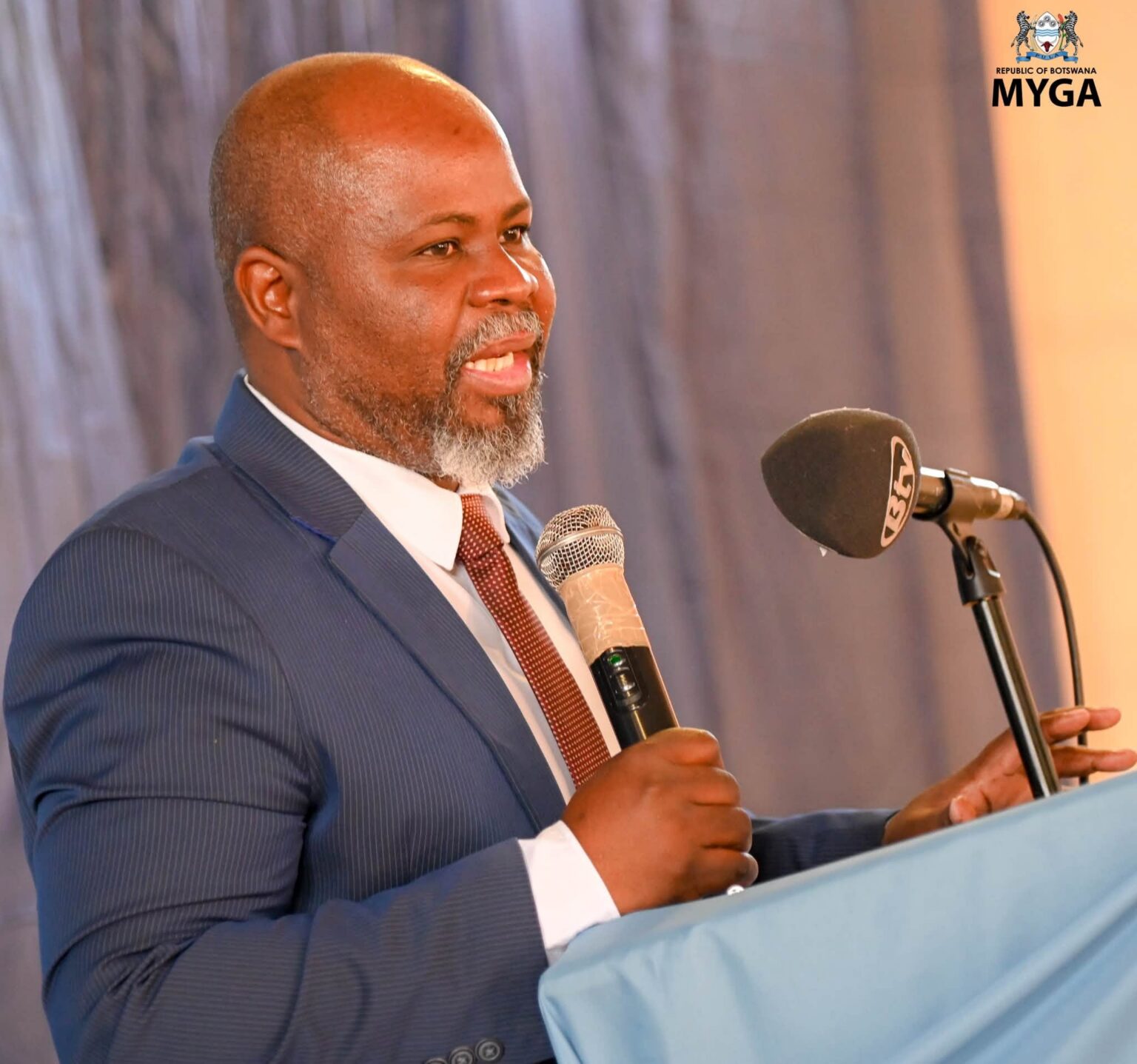
Delivering his speech at the training, Mr Mogorosi said the session was designed to help young entrepreneurs explore and use digital platforms to strengthen their businesses. Digital tools can help small businesses reach new customers, promote products, manage transactions, communicate with clients and improve daily operations. For young entrepreneurs operating in competitive markets, having a strong digital presence can make it easier to identify customers and respond to changing market demands. Mogorosi also encouraged YDF beneficiaries to meet their repayment obligations for the funds they received from Government. He explained that repayments allow the programme to recycle its resources and provide funding to other young people who have viable business ideas and projects.
The issue of YDF repayments was highlighted strongly during the training, with District Coordinator Ms Madisa providing an overview of the programme’s performance in the district. She revealed that YDF had funded 685 youth businesses since 2009, with the total funding reaching approximately P59 million. Despite this significant investment, the district expected to receive at least P29 million in loan repayments but had received only P349,144 from 10 beneficiaries. Madisa described the repayment situation as disappointing and unexpected, while acknowledging that entrepreneurs face different challenges while operating their businesses. She nevertheless stressed that beneficiaries have a responsibility to repay the funds because the programme’s continued success depends on money being returned and made available to other young entrepreneurs.
The repayment figures highlight the scale of the opportunity created by YDF as well as the responsibility that comes with receiving public funding. Government programmes that provide financing to young entrepreneurs can help people establish businesses, purchase equipment, create employment and develop sustainable sources of income. However, beneficiaries also need to manage their enterprises carefully so that they can meet their financial obligations while continuing to grow. Effective record keeping, budgeting, cash flow management and separation of personal and business finances can help entrepreneurs make better financial decisions. The training therefore served an important purpose by reminding beneficiaries that receiving funding represents both an opportunity and a commitment to contribute to the continued development of the programme.
The theme of Enterprise Growth and Digital Transformation was chosen because young businesses need more than access to finance to remain competitive. Entrepreneurs must understand how to manage their businesses, identify customers, market their products and use available resources efficiently. Digital transformation can support these objectives through online marketing, social media, digital payments, online customer communication and other technology-based business solutions. Entrepreneurs who understand these tools can potentially reduce some administrative burdens while improving the way they engage with customers and suppliers. The training therefore sought to give beneficiaries practical knowledge that they could apply directly to their businesses rather than focusing only on theoretical concepts.
One of the most notable contributions to the training came from Ms Tshireletso Seoromeng, founder and owner of ERBA Farm. Seoromeng shared an entrepreneurial journey that began in a backyard garden in 2018 and developed into a fresh produce business with an expanding customer base. Her story demonstrated the importance of persistence when an entrepreneur faces setbacks or struggles to secure funding. She explained that she applied for YDF funding in 2022 but was unsuccessful, yet she continued working on her business and searching for alternative sources of financial support. Rather than allowing the unsuccessful application to end her plans, she focused on developing herself and pursuing other opportunities.
Seoromeng’s persistence eventually helped her secure international grants that supported the expansion of ERBA Farm. She received P55,000 from international funders, including funding from the United States, which helped her increase her farm’s fresh produce operations. Her business has since grown to supply fresh vegetables to selected Mr Veg outlets, Shoprite outlets across the country and 21 KFC restaurants in Botswana. These supply relationships demonstrate how a small agricultural operation can develop into a business capable of serving established retail and food service customers. Her experience also shows why entrepreneurs need to continue developing their skills and exploring different funding opportunities when their first approach does not succeed.
Seoromeng later succeeded in obtaining YDF funding in 2024, which enabled her to purchase a greenhouse for the farm. Her international funders subsequently supported her with another greenhouse, bringing the total number of greenhouses at ERBA Farm to two. They also provided an additional P265,000, which she used to purchase a refrigerated truck and obtain a PRDP licence. The investment strengthened her ability to handle and transport fresh produce while maintaining the requirements needed to serve her customers. Seoromeng said she now personally drives the refrigerated truck when delivering produce, highlighting her hands-on approach to running and expanding the business.
Another major development came in May 2026, when Seoromeng said her international funders contacted her with an offer to make a further investment in her fresh produce enterprise. She received P500,000, which she plans to use to expand the farm and acquire additional greenhouses. The planned expansion is also expected to create more employment opportunities as the business increases its production capacity. Her latest funding demonstrates how a business can attract additional investment when an entrepreneur builds a credible operation and demonstrates the ability to use previous support productively. Her journey offered the YDF beneficiaries a practical example of how persistence, continuous learning and effective use of funding can contribute to long-term enterprise growth.
The training also benefited from the participation of the Local Enterprise Authority, Stanbic Bank and Botswana Digital and Innovation Hub. These organisations provided guidance covering different areas of business development, including business management, responsible use of funds, financial management and digital solutions. Their involvement reinforced the idea that successful entrepreneurship requires a combination of financial discipline, business knowledge and the ability to adapt to technological changes. Entrepreneurs can benefit from learning how to monitor their finances, identify growth opportunities and use digital resources to improve their operations. The collaboration also gave beneficiaries access to perspectives from organisations involved in supporting businesses and innovation.
Gender-based violence was another important issue addressed during the programme. Ms Jessica Motiba from the Gender Affairs Office explained that GBV can have serious consequences for businesses and entrepreneurs. Victims may be forced to use business profits or available funds to cover medical expenses, which can weaken the financial position of an enterprise. In some cases, businesses can ultimately collapse because of challenges linked to GBV. Motiba encouraged young entrepreneurs to pay attention to relationships and individuals who discourage, undermine or negatively influence their businesses and projects, as unhealthy relationships can contribute to harmful situations within business environments.
The inclusion of GBV awareness in an entrepreneurship training programme reflects the wider challenges that can affect the ability of young people to build sustainable businesses. Financial support alone cannot guarantee business success if entrepreneurs face serious personal, social or relationship-related difficulties that interfere with their ability to operate their enterprises. Young business owners need to understand the importance of maintaining healthy relationships and protecting their personal and business interests. They also need to recognise warning signs when relationships become controlling, threatening or harmful to their economic independence. Addressing these issues alongside business skills can give young entrepreneurs a broader understanding of the factors that influence enterprise sustainability.
Closing the programme, Youth Commissioner Ms Gagoope Mazazuru expressed appreciation for the training and said she hoped beneficiaries had gained useful knowledge that would help them strengthen their enterprises. She encouraged participants to put the lessons from the session into practice rather than allowing the training to remain a theoretical exercise. She also reminded beneficiaries of the importance of honouring their commitments, particularly when it comes to repaying YDF funds. According to the message delivered at the programme, responsible repayment can help ensure that more young people receive an opportunity to establish businesses and pursue their own economic ambitions. She further linked the success of individual enterprises to the broader objective of contributing to the growth of the country’s economy.
The YDF training for Mogoditshane-Thamaga Constituency highlighted both the opportunities and responsibilities associated with youth entrepreneurship. The programme showed that access to funding can provide an important starting point, but entrepreneurs also need financial discipline, business management skills, digital knowledge and persistence to build sustainable enterprises. The experience of ERBA Farm founder Tshireletso Seoromeng provided a strong example of what can happen when an entrepreneur continues pursuing opportunities despite an unsuccessful funding application and gradually builds a business capable of attracting customers and additional investment. At the same time, the concerns around YDF repayments demonstrated the need for beneficiaries to treat government funding as a serious financial commitment. By applying the lessons from the training, embracing digital transformation, managing funds responsibly and meeting repayment obligations, young entrepreneurs can strengthen their businesses while helping create space for more young people to benefit from the Youth Development Fund.