
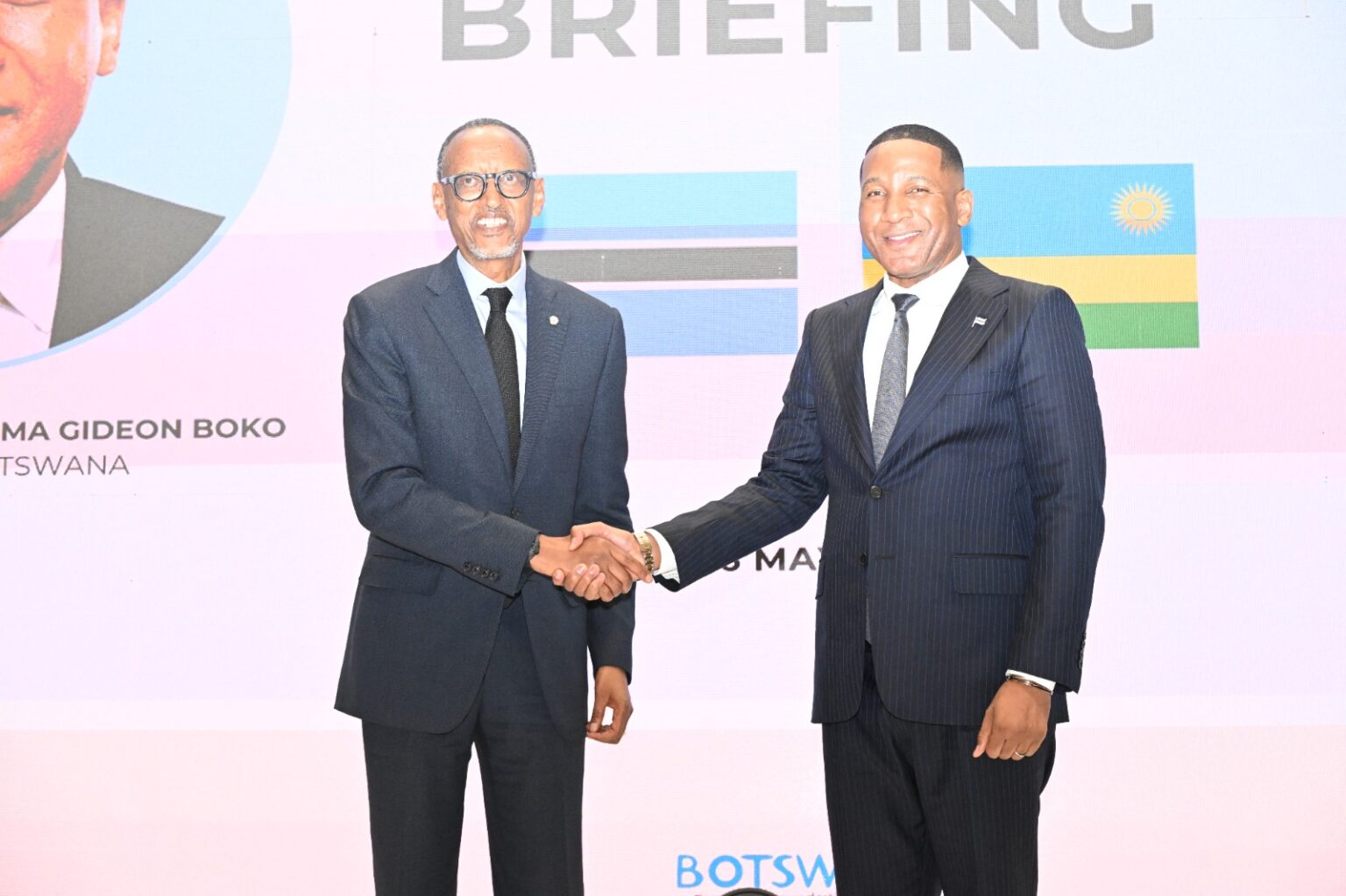
Botswana and Rwanda have taken a major step toward deepening diplomatic and economic cooperation after signing six bilateral agreements aimed at strengthening trade, investment and regional collaboration. The agreements were signed in Gaborone during a joint press briefing addressed by President Advocate Duma Boko of Botswana and President Paul Kagame of Rwanda. The development reflects the growing relationship between the two African nations and highlights their commitment to improving economic ties while removing barriers that limit cooperation. The agreements cover several important areas including double taxation avoidance, visa abolition, health cooperation and economic trade and investment. Leaders from both countries described the agreements as practical measures that will create opportunities for businesses, investors and ordinary citizens while also promoting stronger regional integration across Africa.
President Advocate Duma Boko said President Kagame’s visit to Botswana reaffirmed the strategic alignment between the two countries and demonstrated a shared commitment to long-term cooperation. He explained that Botswana and Rwanda are focused on increasing trade and investment while creating a business environment that encourages growth and innovation. According to President Boko, the agreements are not symbolic gestures but practical tools designed to deliver measurable benefits to both nations. He urged government officials and relevant institutions to move quickly in implementing the agreements so that the intended outcomes can be achieved without delays. The Botswana leader also confirmed that the visa abolition agreement takes immediate effect, noting that Rwanda has already implemented the arrangement while Botswana will follow suit as part of the implementation process.
The visa abolition agreement is expected to play a significant role in boosting tourism, business travel and cultural exchange between Botswana and Rwanda. Easier movement between the two countries could encourage entrepreneurs and investors to explore new markets and strengthen partnerships across sectors such as technology, mining, agriculture and services. For ordinary citizens, the agreement represents greater accessibility and convenience, especially for those involved in trade, education and tourism. The removal of visa requirements is also aligned with broader African Union goals aimed at improving regional mobility and strengthening intra-African trade. Analysts believe that simplified travel regulations often create stronger people-to-people connections while also increasing economic activity between participating countries.
One of the most important agreements signed relates to the avoidance of double taxation, a move that is expected to attract investors and encourage cross-border business operations. Double taxation agreements help businesses avoid paying taxes on the same income in two different countries, making investment environments more predictable and attractive. By addressing this issue, Botswana and Rwanda are positioning themselves as business-friendly destinations that support regional and international investors. The agreement could encourage companies from both countries to expand operations into new markets while reducing financial and administrative burdens. Economic experts often view such agreements as essential tools for promoting trade, investment confidence and sustainable economic growth.
Health cooperation also formed a key part of the agreements signed in Gaborone. The partnership in the health sector could allow Botswana and Rwanda to share expertise, improve healthcare systems and strengthen responses to public health challenges. African countries continue to prioritize cooperation in healthcare following lessons learned from global health crises and the increasing demand for stronger medical infrastructure. Through closer collaboration, Botswana and Rwanda may improve access to training, medical research and healthcare innovation. The agreement also demonstrates how African nations are increasingly working together to develop homegrown solutions to common challenges affecting the continent.
President Paul Kagame emphasized that Botswana and Rwanda share a true sense of purpose in their partnership and are determined to remove barriers that hinder development and cooperation. He explained that the agreements were designed for mutual benefit and reflect the trust and respect that exist between the two countries. President Kagame praised Botswana for its prudent management of natural resources, particularly diamonds, highlighting how the country has used its resources to benefit its people and support national development. Botswana has long been recognized for its stable governance and effective management of its diamond industry, which remains a key pillar of the country’s economy. Kagame’s remarks reflected admiration for Botswana’s development model and reinforced the importance of sharing knowledge and best practices among African nations.
The relationship between Botswana and Rwanda has continued to grow over the years through structured diplomatic engagements and institutional cooperation. The two countries maintain a Joint Permanent Commission on Cooperation, which was established in Kigali in April 2019 to facilitate collaboration across various sectors. This platform has helped strengthen dialogue and coordination while creating opportunities for both governments to identify areas of shared interest. The signing of the six agreements demonstrates how the commission continues to produce tangible outcomes that support economic and diplomatic progress. It also reflects a broader trend across Africa where countries are increasingly focusing on bilateral partnerships to advance regional development goals.
President Kagame’s visit to Botswana also included a tour of the Diamond Trading Company Botswana, one of the country’s most significant economic institutions. The visit provided an opportunity for the Rwandan leader to gain insight into Botswana’s diamond industry and its contribution to national development. Botswana’s diamond sector has played a central role in transforming the country’s economy and funding public services such as healthcare, education and infrastructure. The visit highlighted the importance of resource management and economic planning in achieving sustainable growth. It also created space for discussions around investment opportunities and potential cooperation in areas linked to mining, trade and value addition.
The signing of these agreements marks another important chapter in the relationship between Botswana and Rwanda as both countries continue to pursue stronger economic integration and diplomatic cooperation. The agreements are expected to create new opportunities for trade, investment and mobility while strengthening collaboration in key sectors such as health and economic development. Both leaders presented a united vision focused on practical cooperation, shared prosperity and the removal of barriers that limit growth. As President Kagame prepares to depart Botswana following his official visit, the focus now shifts to implementation and ensuring that the agreements translate into real benefits for citizens and businesses in both countries. The strengthened partnership between Botswana and Rwanda also sends a positive message about the importance of African nations working together to drive development, economic transformation and regional unity.