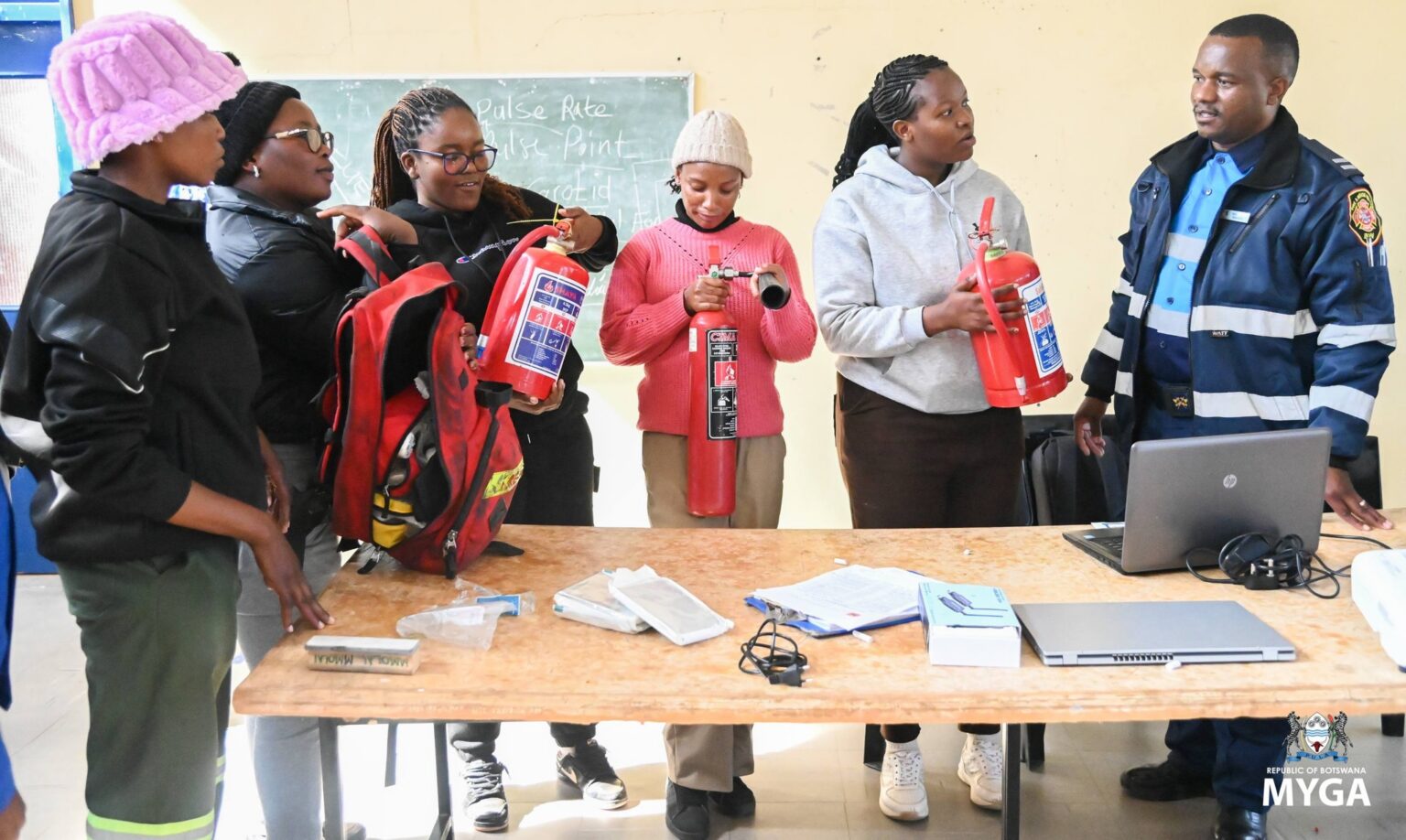
Moshupa District recently hosted a focused two-day training workshop at the Moshupa Brigade, aimed at improving practical workplace and community safety skills among TSPs participants. The initiative responded to a growing need for workers to develop competencies that go beyond routine office tasks and extend into emergency response situations. The workshop brought together participants from different parts of the district with a shared goal of strengthening preparedness in real life scenarios. It placed strong emphasis on practical learning that can be applied immediately in both professional and community environments. The training also reflected a wider commitment within the district to improve safety awareness and response capacity among local participants.
The core focus of the workshop was First Aid and Fire Marshalling, both of which are critical life-saving skills in emergencies. Participants were trained on how to respond to injuries, provide immediate assistance, and stabilize individuals before professional medical help arrives. The first aid component covered essential procedures such as wound care, basic life support principles, and assessing emergency situations quickly and accurately. The fire marshalling segment focused on fire prevention, evacuation procedures, and coordinated responses during fire incidents. Participants also learned how to identify fire hazards early and how to act decisively to protect lives and property during emergencies.
The training was designed to expand the participants’ skill sets and prepare them to handle unexpected incidents in their daily environments. By combining both medical and fire safety knowledge, the workshop ensured that trainees developed a well-rounded understanding of emergency response. The inclusion of participants from Moshupa and surrounding villages made the program more impactful and far-reaching. This broad participation helped ensure that the knowledge gained would not remain confined to a single workplace but would spread across households and community spaces. It also strengthened local resilience by building a network of individuals capable of responding effectively in different emergency situations.
The workshop concluded with a strong emphasis on the importance of continued learning and community responsibility in safety matters. Participants left better equipped to respond to emergencies with confidence and practical competence, both at work and in their personal environments. The initiative demonstrated how targeted training can significantly improve readiness and reduce risks in everyday life. It also reinforced the value of investing in people as first responders within their own communities. The overall outcome of the workshop highlighted a clear step forward in building a safer and more prepared Moshupa District.