The five-day EntreprenHER Climate Smart Agriculture Training has officially started at the Nkashi Knowledge Centre in Beetsha, located in Botswana’s Okavango District. The programme brings together 30 women entrepreneurs and 7 Youth Development Fund beneficiaries with a focus on practical agricultural skills, business development and long-term sustainability. Participants come from multiple villages across the district, creating a wide network of shared learning and collaboration. The initiative aims to strengthen rural livelihoods by equipping participants with tools to respond to climate challenges while improving productivity. It also supports broader efforts to build resilient local economies through agriculture driven entrepreneurship in Botswana.
The training cohort includes participants from Habu, Gumare, Beetsha, Kajaja, Nxamasere, Sepopa, Samochima, Chukumuchu, Sakawe, Xakao, Seronga and Kauxwi. These communities represent diverse farming conditions and agricultural potential within the Okavango District. The programme focuses on climate smart practices that help farmers adapt to changing weather patterns, improve soil management and increase crop yields. Participants are also being trained on how to scale agricultural businesses and improve market access for their products. The initiative places strong emphasis on practical application, ensuring that skills gained can be immediately implemented in home villages and farming projects.
In his welcome remarks, Kgosi Bonang Karondu encouraged participants to take full advantage of the training and apply the knowledge to grow their enterprises. He highlighted the importance of agriculture, particularly crop and fruit production, as a pathway to economic stability in the region. He also urged communities to remain proactive in identifying and using available opportunities to improve livelihoods. Leadership support, he noted, will play a role in helping farmers access broader markets for their produce. His message reinforced the importance of local participation in driving sustainable agricultural development in the district.
Delivering the keynote address, Ms. Otsile Mabeo, Vice President: Social Impact and Sustainability at De Beers Botswana, emphasized the importance of investing in people as a long-term strategy for economic transformation. She described empowered communities as the “diamonds of tomorrow” who will continue shaping Botswana’s development for future generations. She stressed that programmes like EntreprenHER are essential in building resilience and supporting inclusive growth. She also highlighted the role of partnerships in advancing social impact initiatives across rural areas. Her address reinforced the connection between skills development, sustainability and national economic progress in Botswana.
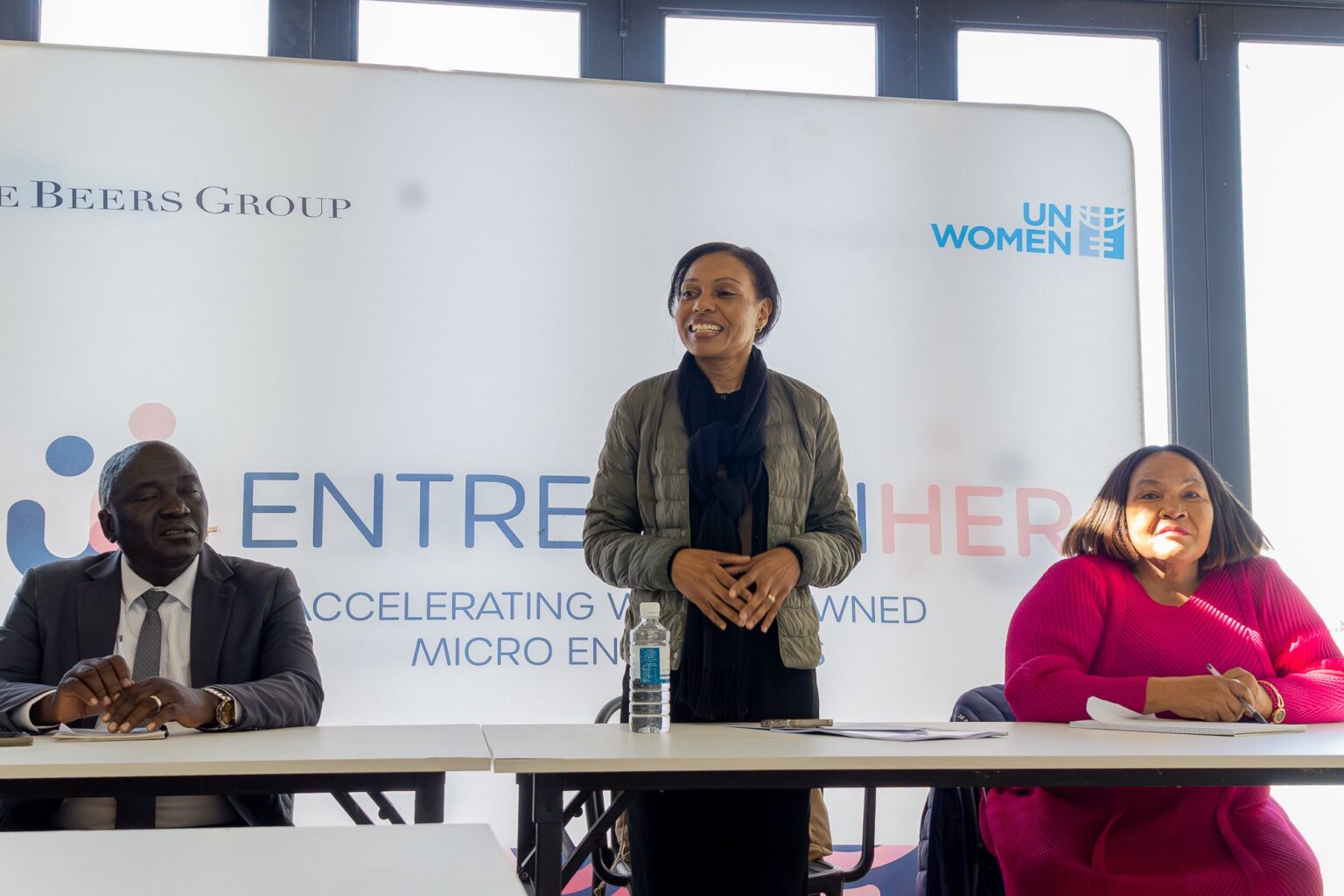
Providing an overview of the programme, EntreprenHER Coordinator Ms. Lydia Mafhoko-Ditsa explained that the initiative is funded by De Beers Group in partnership with UN Women. The programme aims to support 1,500 women entrepreneurs across Botswana, Namibia and South Africa between 2024 and 2026. It delivers structured business and life skills training using the internationally recognised Start and Improve Your Business model. The training is complemented by mentorship, coaching and networking opportunities designed to strengthen enterprise growth. She also noted that more than 1,068 women entrepreneurs in Botswana have already benefited from the programme since its launch, contributing to job creation and improved business performance.
The vote of thanks was delivered by Mr. Jimmy, Head of Beetsha Primary School, who commended the organisers for their commitment to empowering women and youth in the district. He encouraged participants to treat the training as a serious opportunity for growth and to share the knowledge gained with others in their communities. The programme continues throughout the week at the Nkashi Knowledge Centre and is expected to deliver practical skills that will strengthen agricultural enterprises. It also aims to improve household incomes and support broader food security goals across the region. The initiative leaves participants better prepared to build sustainable businesses that can adapt to climate challenges and contribute to long term community development.