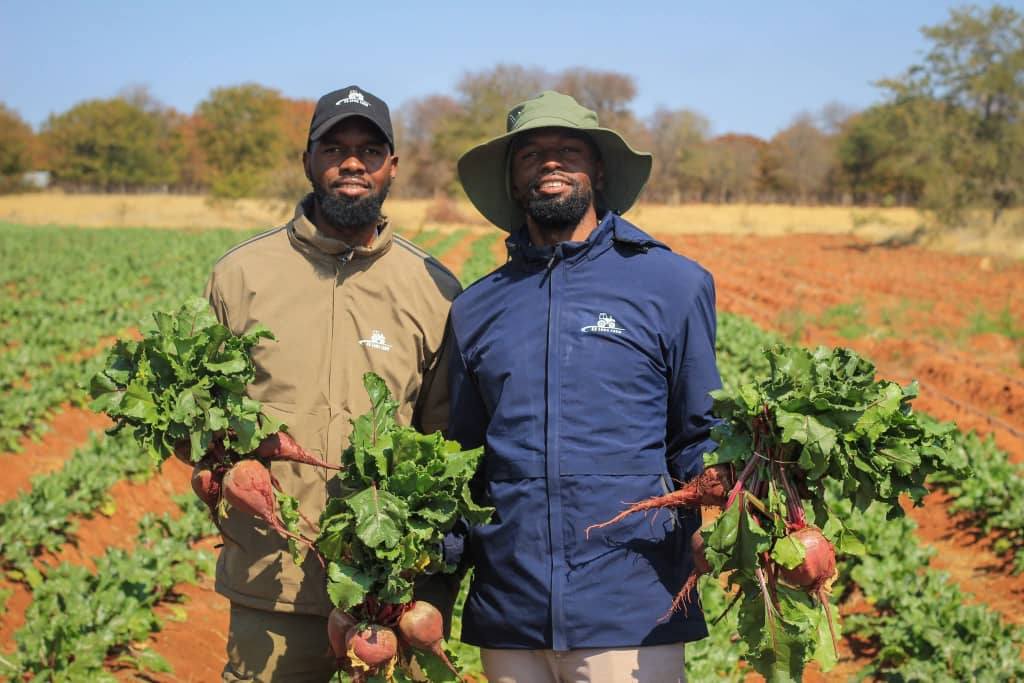
Twin brothers Larona and Lesego Molebalwa, both 33, are making a strong impact in Botswana’s agricultural landscape through their horticulture business, Kosams Farm. The farm is located in the Taukome lands of Lerala village and has become a growing example of rural agricultural entrepreneurship. Over the past four years, the brothers have built a steady production system focused on vegetable farming and consistent supply to local markets. Their work reflects a practical response to both economic opportunity and food production needs in the region. Through disciplined farming practices, they are positioning themselves as emerging contributors to Botswana’s food supply chain.
Kosams Farm produces a wide range of vegetables including butternut, beetroot, tomatoes, green peppers and other seasonal crops. The produce is primarily sold to street vendors operating in the Tswapong area, where demand for fresh vegetables remains strong. Additional distribution channels extend to nearby communities such as Serowe, Palapye and Selebi-Phikwe. This market reach has allowed the brothers to maintain steady sales while building relationships with local traders. Their focus on fresh, locally grown produce supports both small businesses and household food access in surrounding areas.
The farm spans 13 hectares and operates with a strong emphasis on sustainability and efficiency. It is fully powered by solar energy, which reduces operational costs and ensures reliable energy supply for irrigation and farm activities. Water access is supported by two boreholes with a combined storage capacity of 10 cubic metres. This infrastructure allows the farm to maintain production even during dry periods when water scarcity often affects agricultural output. The combination of solar power and borehole irrigation has strengthened the farm’s ability to operate consistently throughout the year.
The brothers have invested in building a system that supports continuous production and long term stability. Their approach to farming reflects careful planning around resource management and climate conditions. By using renewable energy, they reduce dependence on external power sources while improving operational reliability. The irrigation system ensures that crops receive consistent water supply, which is critical for maintaining quality and yield. These systems have allowed Kosams Farm to remain productive despite environmental and economic challenges common in small scale agriculture.
Beyond production, Larona and Lesego are focused on expanding their role within Botswana’s agricultural sector. Their goal is to become leading horticulture farmers in the country by increasing output and improving distribution networks. They continue to navigate challenges such as market competition, input costs and climate variability. Despite these pressures, they remain committed to growing their business and improving efficiency. Their work demonstrates how young farmers can build sustainable enterprises through innovation and persistence.
Kosams Farm also contributes to broader national goals around food security and agricultural development. By supplying fresh vegetables to multiple communities, the farm helps reduce reliance on imported produce and strengthens local food systems. The brothers’ commitment to quality production supports both consumers and small traders who depend on consistent supply. Their success highlights the potential of horticulture farming as a viable economic activity in rural Botswana. As they continue to expand their operations, Kosams Farm stands as an example of how determination and smart resource use can transform small scale farming into a sustainable business.