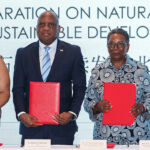

The Ministry of Higher Education has officially launched its 2026/27 performance management cycle following the signing of annual performance agreements at its headquarters in Gaborone. The event, held this morning, marked an important milestone in the ministry’s efforts to strengthen accountability, improve service delivery, and ensure that strategic objectives are translated into measurable outcomes. The signing ceremony brought together senior leadership and key departmental heads who will be responsible for driving the ministry’s priorities throughout the financial year. By formalizing performance expectations at the start of the cycle, the ministry has reaffirmed its commitment to effective governance and continuous improvement across all areas of operation.
The agreements were signed by the Permanent Secretary, Prof. Richard Tabulawa, alongside several strategic departmental leaders whose roles are central to the ministry’s success. Among the key signatories were the Transformation Coordinator, Director of Procurement Oversight, Legal Advisor, Chief Public Relations Officer, Chief Economist, Manager of Internal Audit, and Deputy Project Manager for Anti-Corruption. Each agreement outlines specific responsibilities, targets, and performance indicators that will guide departmental activities during the 2026/27 financial year. The contracts serve as a framework for measuring progress and ensuring that every department contributes meaningfully to the ministry’s overall objectives. Through this process, the ministry aims to maintain a strong focus on results while promoting accountability at all levels of leadership.
The newly signed performance agreements are closely aligned with the ministry’s strategic plan as well as Botswana’s National Development Plan 12. This alignment ensures that departmental goals support broader national priorities and contribute to the country’s long-term development agenda. The agreements cover several critical areas, including service delivery, resource management, staff development, operational efficiency, and measurable outputs that departments are expected to achieve over the next twelve months. By clearly defining expectations and performance standards, the ministry seeks to improve coordination and ensure that resources are used effectively. This structured approach allows leaders to focus on achieving tangible results while maintaining transparency and accountability throughout the organization.
A key feature of the performance agreements is the emphasis on regular monitoring and evaluation. Progress against agreed targets will be reviewed on a quarterly basis, providing an opportunity to assess achievements, identify challenges, and implement corrective measures where necessary. The findings from these reviews will be reported internally and shared with relevant stakeholders, ensuring that performance remains visible and measurable throughout the year. Regular monitoring also enables the ministry to respond quickly to changing circumstances and emerging priorities. This ongoing evaluation process is designed to support informed decision-making and foster a culture of continuous improvement across all departments.
The signing ceremony was the culmination of months of planning, consultation, and target-setting across the ministry. During this period, departments worked to identify priorities, establish realistic objectives, and develop performance indicators that accurately reflect their responsibilities. This collaborative process ensures that organizational goals are translated into practical actions that can be tracked and measured over time. By involving departments in the development of their targets, the ministry promotes ownership and accountability while encouraging greater commitment to achieving desired outcomes. The result is a performance management framework that is both strategic and operational in its focus.
The initiative also highlights the Ministry of Higher Education’s dedication to building and maintaining a strong performance management culture. In an environment where public institutions are increasingly expected to demonstrate value and effectiveness, performance agreements provide a clear mechanism for measuring delivery and evaluating impact. They create a structured system through which achievements can be recognized, challenges addressed, and lessons incorporated into future planning. This approach strengthens institutional capacity and supports the ministry’s broader goal of delivering high-quality services to stakeholders across Botswana’s higher education sector.
The 2026/27 performance agreements will remain in effect until March 2027 and will play a significant role in guiding operational activities, budgeting decisions, and reporting processes throughout the financial year. By linking departmental objectives to strategic priorities and national development goals, the ministry is positioning itself to achieve meaningful and measurable progress. The formal launch of the performance cycle reflects a clear commitment to accountability, transparency, and results-driven leadership. As departments begin implementing their agreed targets, the focus will remain on delivering outcomes that support institutional excellence and contribute to Botswana’s development aspirations. The agreements provide a solid foundation for the ministry’s work over the coming year and reinforce the importance of performance as a driver of organizational success.